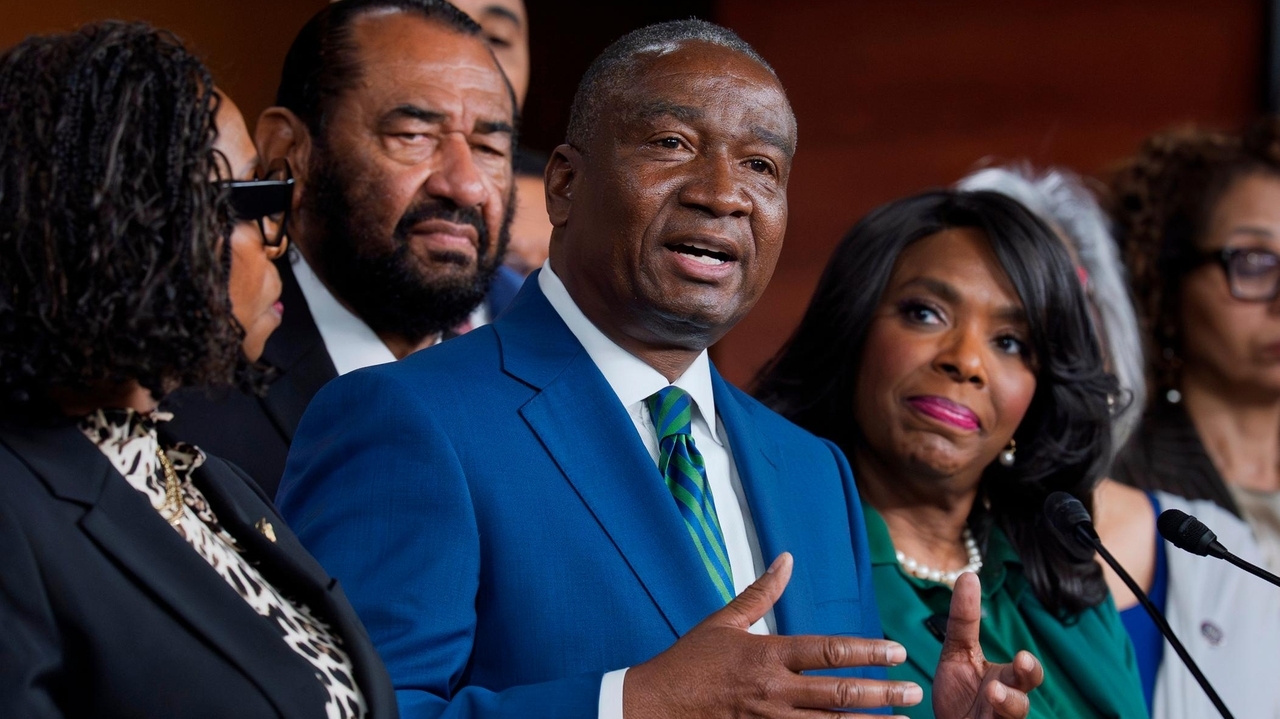
The Supreme Court ruling guts a key section of the Voting Rights Act, increasing the risk of Republican-led redistricting that could shrink the Congressional Black Caucus and alter dozens of House seats. Redistricting experts said more than a dozen minority-held seats could be targeted, with impacts most likely for the 2028 cycle and beyond. The decision is triggering expected legal fights and accelerated map-drawing in Southern states, including Florida.
The market implication is not the legal headline itself; it is the asymmetry in where redistricting risk now sits. A broadening of GOP-friendly maps in the South raises the probability of incremental Republican House seats in 2026–2028, which matters less for national vote share than for committee control, appropriations leverage, and the durability of policy gridlock. The second-order effect is higher legislative uncertainty for sectors that rely on federal action staying stuck: healthcare reimbursement, renewable subsidies, antitrust, and labor regulation all become more hostage to a slimmer set of swing districts.
The immediate winners are not obvious equity sectors so much as political-risk hedges: firms exposed to federal funding volatility, state-level procurement, and regulatory outcomes should see implied-policy uncertainty rise. Utilities, hospitals, managed care, and education names with heavy exposure to Medicaid, ACA rulemaking, or DOJ/FTC discretion are vulnerable if a more conservative House tightens oversight or pushes budget offsets. Conversely, defense, detention, and private-prison-adjacent beneficiaries could gain if the ruling accelerates a tougher southern-state policy mix and keeps Washington in perpetual brinkmanship.
The key timing issue is that the trading impact is not a one-day event; it compounds over the next 6–24 months as states redraw maps and legal challenges move through courts. That creates a gap between headline risk and realized seat changes, which argues for buying volatility rather than outright directional exposure. The biggest contrarian risk is that investors overestimate near-term seat turnover: court fights, state constitutional constraints, and political overreach can slow or blunt the map changes, limiting immediate shifts in power even if the long-term trend is adverse for Black representation.
AI-powered research, real-time alerts, and portfolio analytics for institutional investors.
Request DemoOverall Sentiment
strongly negative
Sentiment Score
-0.55
