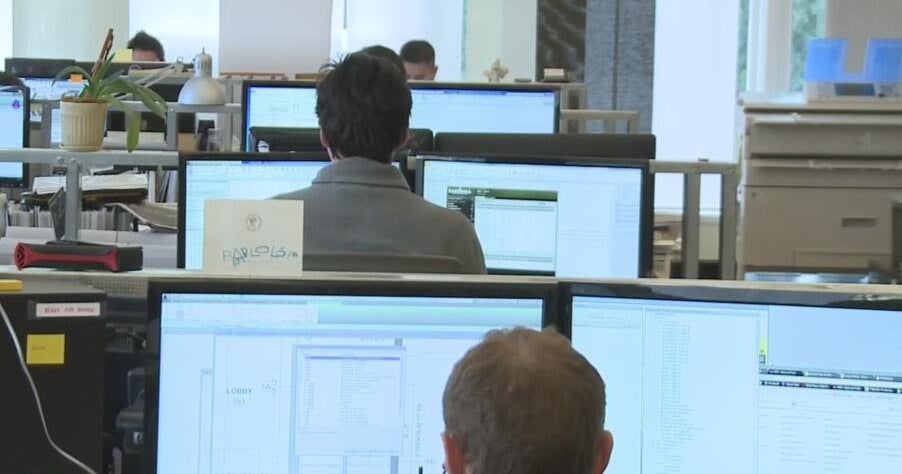
Tech companies have announced more than 92,000 layoffs this year and roughly 900,000 positions have been eliminated since 2020, underscoring a still-weak hiring environment across the sector. Meta added to the pressure by announcing 8,000 job cuts, about 10% of its workforce, as firms continue to pull back on hiring amid earlier overexpansion and increased AI-related investment. The article points to a highly competitive job market and elevated long-term unemployment risk for displaced tech workers.
The immediate read-through is not just weaker sentiment for META; it is a slow-down in the labor intensity of the entire software stack. When headcount growth stalls, the second-order effect is less incremental demand for cloud, collaboration, recruiting, travel, and office spend — a subtle but meaningful drag on vendors whose growth assumptions still embed “normalization” in tech hiring. The more important signal is that AI is acting as both a cost-cutting tool and a capex reallocation mechanism: dollars previously spent on people are being redirected toward infrastructure, model training, and automation, which tends to favor a narrower set of picks-and-shovels winners while pressuring broader software budgets.
For META specifically, layoffs are less about near-term margin support than about protecting the narrative that AI can offset slower revenue growth. That can be bullish for earnings quality over a 6-12 month window, but it also raises the risk that product and execution velocity suffer if talent retention becomes more fragile. The market may initially reward the optics of discipline, yet if the restructuring cycle persists, it can become a tell that management sees weaker monetization elasticity than consensus expects.
The contrarian angle is that the market may be underpricing the wage deflation effect across Bay Area tech. A prolonged glut of experienced workers should compress compensation growth for adjacent companies over the next 2-4 quarters, which is margin-positive for selective software and internet names with high labor costs. The flip side is a likely rebound in entrepreneurship and small-business formation, but that benefits a different basket than public megacaps; in the near term, the cleaner trade is against labor-sensitive tech expense lines rather than against the market as a whole.
AI-powered research, real-time alerts, and portfolio analytics for institutional investors.
Request TrialOverall Sentiment
strongly negative
Sentiment Score
-0.55
Ticker Sentiment
