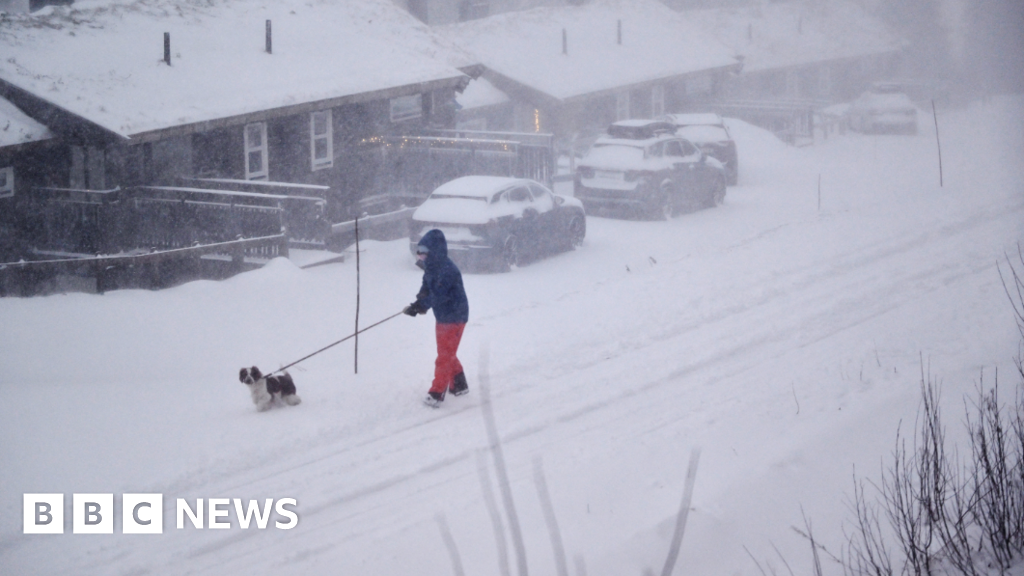
Storm Johannes (Hannes) swept across Sweden, Norway and Finland, killing three people in Sweden and causing widespread travel disruption and power outages — more than 40,000 homes affected in Sweden, ~32,000 without power in parts of Norway (23,000 in Nordland and 9,000 in Inland) and over 60,000 in Finland. Numerous flights, rail and ferry services were cancelled and Kittilä airport grounded after strong winds pushed a Swiss Air jet and a smaller 400XT aircraft off the runway; no injuries reported. The event creates short‑term operational risks for regional carriers, utilities and insurers and localized infrastructure strain, but is unlikely to produce broad market-moving effects.
Market structure: Immediate winners are grid/repair contractors and grid-equipment suppliers (higher short-term revenue for companies providing poles, transformers, switchgear) and owners of flexible generation/peakers who can capture spot premia; losers are regional carriers, ferry operators and rail operators with cancelled services and lost revenue. Competitive dynamics favor well-capitalized utilities and global suppliers (scale and inventory of spare parts) who can bid for emergency contracts, allowing 5–15% short-term pricing power on repair work in constrained regions. Cross-asset: expect 1–3 week spikes in Nordic day‑ahead power prices (+20–50% in affected bidding zones), transient SEK/NOK weakness vs EUR/USD (‑0.5–1.5%), and modest safe‑haven flows into Scandinavian sovereigns pushing 2–5bp yields lower overnight. Risk assessment: Tail risks include a cascade grid failure or a series of follow‑on storms forcing multi-week outages that materially hit Q1 revenues for travel and small utilities and trigger regulatory inquiries with capex mandates (high‑impact, <5% probability). Time horizons: days — operational disruptions; weeks — repair activity, power price volatility; quarters — capex reallocation and regulatory response. Hidden dependencies: spare‑parts inventory, cross‑border grid bottlenecks, and labor availability; catalysts that would amplify moves are additional storms within 30 days or government emergency procurement and spending announcements. Trade implications: Direct plays — establish 2–3% long in ABB (ABBN.SW / ABB.N) to capture grid-repair orders over 3–12 months; 1–2% long in Fortum (FORTUM.HE) to benefit from higher spreads and ancillary services for 1–3 months. Short 1–2% positions or buy 3‑month puts on regional carriers SAS (SAS.ST) and Norwegian Air (NAS.OL) expecting operational strain and weak Q1 traffic. Buy 1‑month call options or long EPADs on Nordic power (SE3/NO1) to play transient price spikes; consider a 3‑month call spread on ABB to cap premium. Contrarian angles: Consensus may overreact by pricing large insurer losses — expect insured claims to be a mid-single‑digit % of quarterly earnings for majors (Sampo (SAMPO.HE) exposure limited), so insurers could rebound. The market may underprice medium‑term utility CAPEX programs that follow repeated storms (if government funds ≥€100–200m per region, add to utility longs). Historical precedents (Nordic storms 2013–2015) show price spikes are short lived; therefore size positions conservatively and set thresholds: trim utility longs if power futures fall back to pre‑storm levels for >10 trading days or add to airline shorts if cancellations remain >10% regionally for 2 consecutive weeks.
AI-powered research, real-time alerts, and portfolio analytics for institutional investors.
Request DemoOverall Sentiment
moderately negative
Sentiment Score
-0.45
