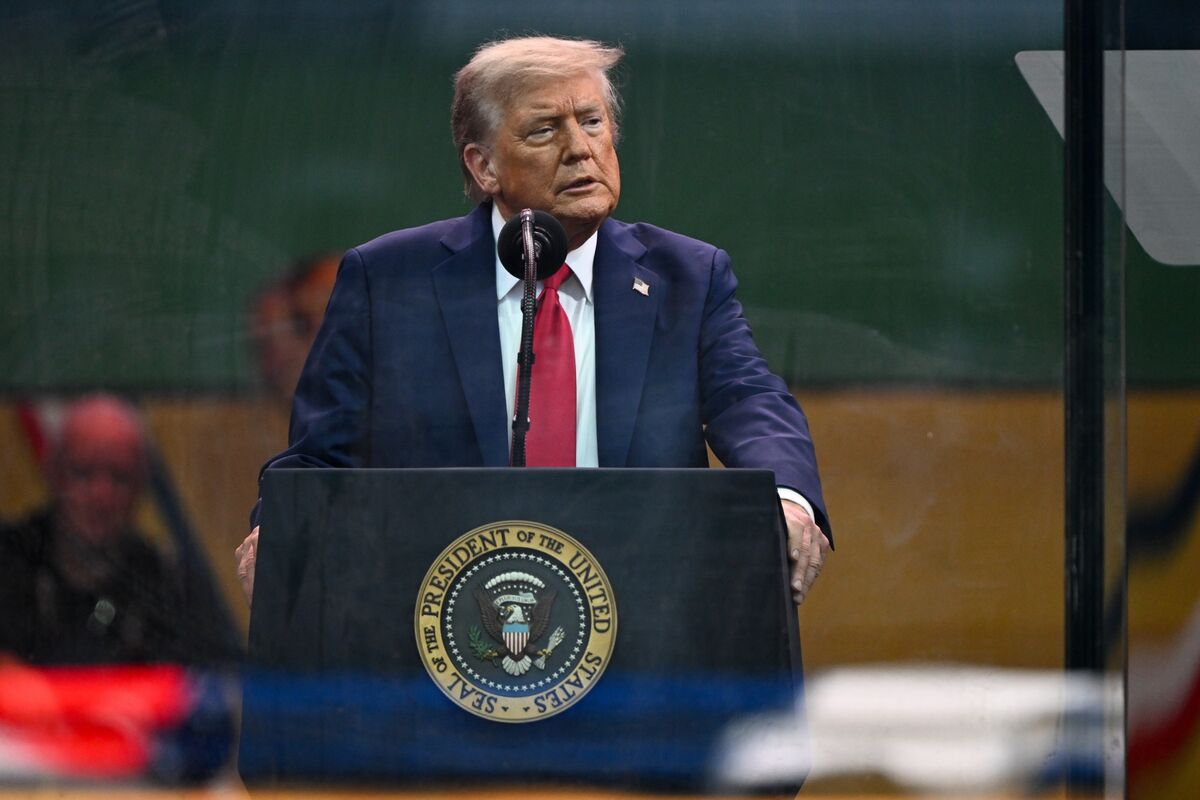
President Trump is attending the G-7 summit in Canada amidst escalating Middle East tensions, positioning him as the focal point of discussions. Other G-7 leaders, aiming to avoid further discord with the U.S., are reportedly foregoing unified statements on contentious issues like Ukraine and climate change, suggesting a strategy of appeasement.
President Donald Trump's arrival in Kananaskis, Alberta, for the Group of Seven (G-7) summit, described in the article as the first major international summit of his second term, positions him as the central figure in discussions reportedly aimed more at mollifying him than achieving unified stances on critical global issues. This dynamic occurs against the backdrop of an intensifying crisis in the Middle East, which further tests the G-7's cohesion. Other G-7 leaders are reportedly set to avoid attempts at unified statements on contentious topics such as Ukraine or climate change, a strategic move to prevent new rifts with the US president. This cautious approach highlights potential fractures within the G-7 and points towards increased unpredictability in coordinated international policy. The overall sentiment signal of "neutral" (-0.1) with an "uncertain" tone, despite a low immediate market impact score (0.1), reflects this delicate diplomatic situation, while the thematic classifications of "Geopolitics & War" and "Elections & Domestic Politics" underscore the significant underlying risks and potential for future market volatility stemming from these developments.
AI-powered research, real-time alerts, and portfolio analytics for institutional investors.
Request DemoOverall Sentiment
neutral
Sentiment Score
-0.10
