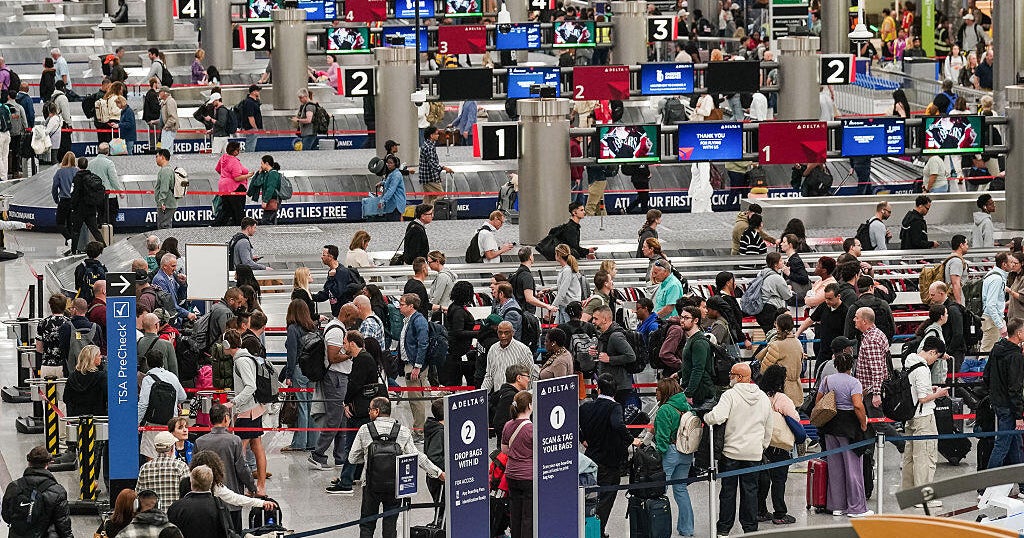
Hartsfield-Jackson Atlanta International Airport remained the world's busiest airport for passenger traffic in 2025, handling about 106.3 million passengers and staying ahead of Dubai and Tokyo Haneda. Chicago O'Hare ranked first globally for aircraft movements with more than 857,000 flights, versus about 807,000 in Atlanta. Globally, airports handled an estimated 9.8 billion passengers in 2025, up 3.6% year over year and more than 7% above 2019 pre-pandemic levels.
The key market takeaway is not the rankings themselves, but the confirmation that global mobility demand is still running above pre-pandemic trend while capacity discipline remains uneven. That is supportive for the airline complex near term, but it is also a margin squeeze setup: the highest-traffic hubs are the ones most exposed to congestion, turn-time inefficiency, and ATC/airport bottlenecks, which means the incremental passenger can become less profitable if delays persist into peak seasons.
The bigger second-order winner is airports and adjacent infrastructure rather than airlines. Strong passenger growth tends to flow into non-aeronautical revenue streams faster than ticket yields — concessions, parking, premium services, and leasing — so operators with pricing power and capex flexibility should see cleaner earnings leverage than carriers facing fuel, labor, and maintenance inflation. The Asia strength matters because it likely supports a relative-strength trade in airports, duty-free, and global hospitality names versus U.S.-centric domestic airline exposure over the next 2-6 quarters.
For airlines, the risk is that traffic growth without proportional throughput improvements compresses operational reliability and forces either higher labor spend or lower utilization. That tends to favor network carriers with strong loyalty ecosystems over ultra-low-cost models that rely on density and schedule precision. A meaningful reversal would require either a macro slowdown in discretionary travel or a step-up in geopolitical/visa friction that hits international recoveries first; both are more 6-12 month risks than immediate catalysts.
The consensus is probably underpricing the distinction between passenger growth and aircraft movement growth. More movements at a major hub imply more operational intensity, not necessarily more economic value per flight, so the equity upside is not broad-based across transportation. The market should be selective: airports and travel infrastructure are the cleaner beneficiary, while airlines remain a trading vehicle only if fuel and labor stay contained.
AI-powered research, real-time alerts, and portfolio analytics for institutional investors.
Request TrialOverall Sentiment
neutral
Sentiment Score
0.10
