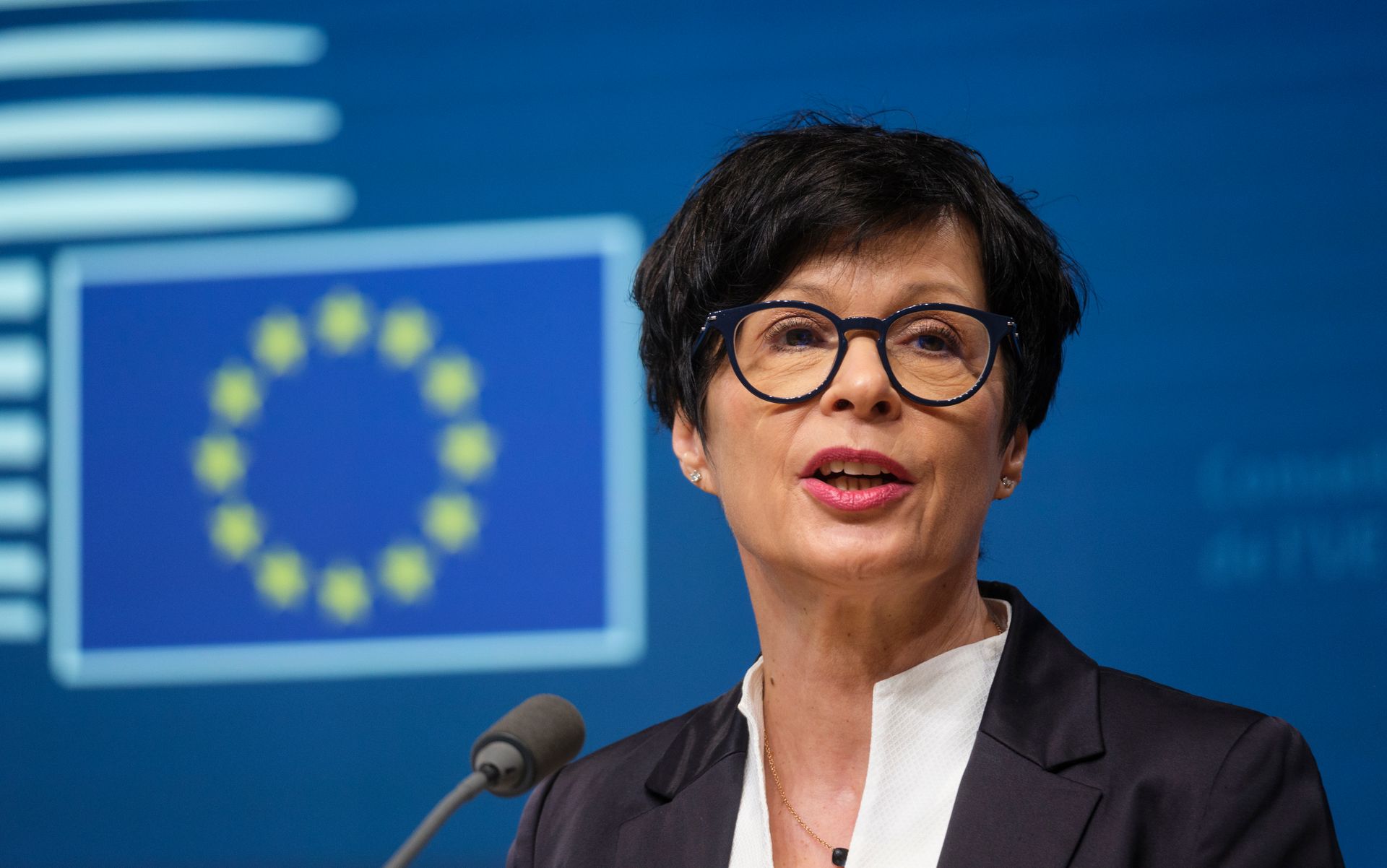
EU Enlargement Commissioner Marta Kos said Ukraine’s first accession negotiation cluster could open as soon as the Hungarian government transition is complete, with the goal of formally opening all six clusters by year-end. Hungary’s incoming more pro-European government in May is seen as the key obstacle removal after Viktor Orban’s vetoes on Ukraine-related EU actions. The article is policy-focused and modestly supportive for Ukraine accession prospects, but it is unlikely to move markets materially on its own.
This is less a headline about near-term enlargement and more about the removal of an option-value overhang on Eastern European risk assets. Once a vetoing member state exits the equation, the market can reprice a multi-quarter probability shift: EU funding disbursement, procurement normalization, and a lower perceived tail risk of institutional drift. That matters most for assets that are sensitive to external financing continuity and policy credibility rather than to immediate accession itself.
The first-order winners are likely to be Ukrainian sovereign-linked instruments, frontier EM lenders, and regional reconstruction proxies, but the second-order effect may be stronger in Hungary. A more pro-integration government would likely reduce Budapest’s blocking premium, which can compress spreads on Hungarian assets even if domestic politics remain noisy. Conversely, any delay or reversal in the government transition would reintroduce a binary veto risk that can keep Ukraine/Moldova-linked trades cheap despite improving fundamentals.
The important contrarian point is that the market may be overestimating how quickly legal readiness translates into actual funding and accession progress. The cluster-opening process is a political sequencing problem, not a technical one, so the next 8-12 weeks are the key catalyst window, but the real cash-flow impact is months to years out. That means the best risk/reward is not chasing the headline, but owning convexity into the next ministerial votes while fading complacency if the calendar slips into summer.
A broader implication is that successful progress here would support a stronger EU narrative on fiscal integration and security burden-sharing, which can modestly help European cyclicals and defense supply chains via a higher probability of sustained continental rearmament and reconstruction spending. If negotiations advance, Ukrainian industrial, transport, and telecom capex demand should improve earlier than full accession, because counterparties start underwriting to a lower political-risk discount long before treaty ratification. If talks stall, the unwind should be sharper in illiquid frontier names than in liquid EU benchmarks, creating a useful relative-value setup.
AI-powered research, real-time alerts, and portfolio analytics for institutional investors.
Request DemoOverall Sentiment
neutral
Sentiment Score
0.15
