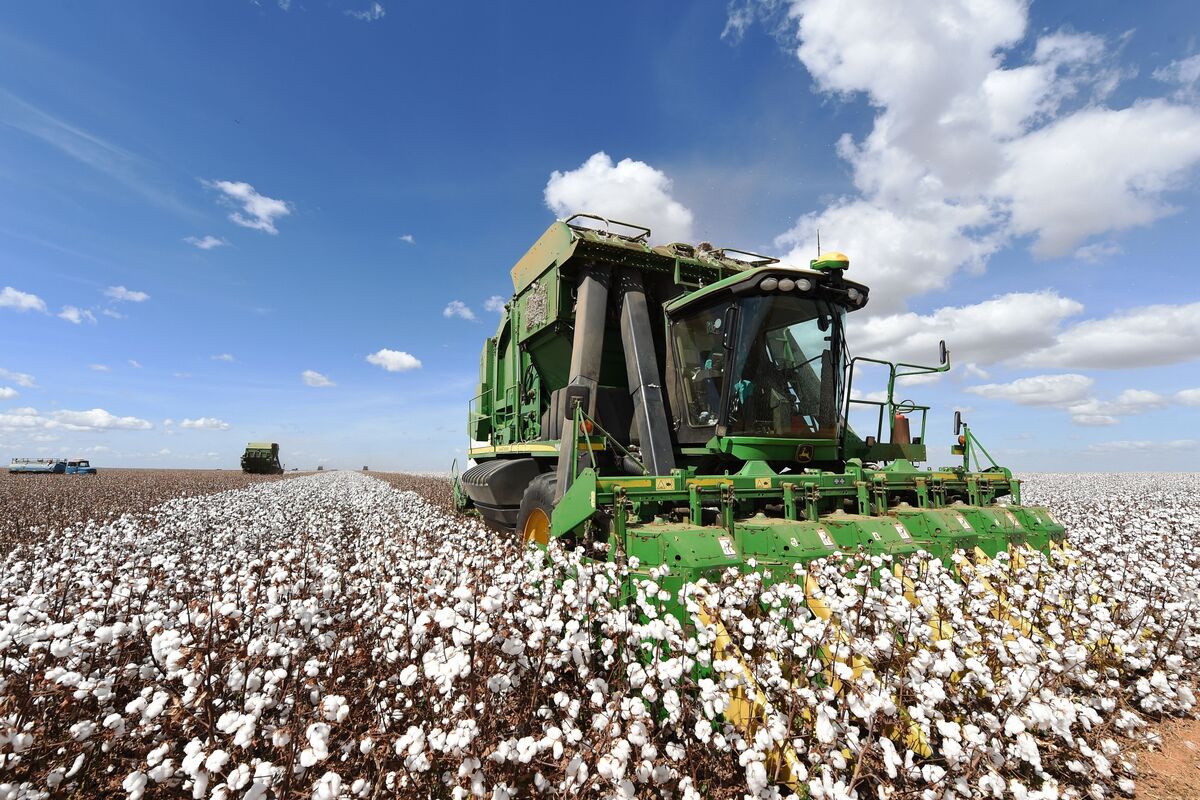
Cotton prices are up more than 20% this year and recently reached their highest level since 2024, benefiting Brazilian cotton farmers and traders. The rally is being driven by disruptions tied to the Iran war, which slowed naphtha shipments and lifted demand for natural fiber, along with forecasts for dry weather in key U.S. growing areas. The news is supportive for cotton producers and price-sensitive textile supply chains, but the broader market impact is likely limited.
This is less a pure cotton story than a relative-value shock across the fiber complex. The first-order beneficiary is not just Brazilian growers but any asset tied to plant fiber pricing power versus petrochemical inputs: when naphtha logistics tighten, synthetic substitutes lose their cost advantage and downstream buyers are forced to re-source, often with a lag that extends beyond the initial price spike. That lag matters because textile procurement is sticky; once mills reweight blend ratios, it can take a quarter or more for pricing and inventory policies to normalize, which supports a multi-month tailwind even if the immediate geopolitical headline fades.
The bigger second-order effect is margin compression for downstream apparel and home-textile manufacturers that are already locked into fixed-price retail calendars. If cotton stays elevated while synthetic feedstocks remain supply-disrupted, the usual hedge of swapping into polyester becomes less effective, meaning gross margin pressure can show up later in the chain rather than in the farmgate. In practice, this favors vertically integrated suppliers and merchants with inventory optionality, while punishing converters with weak pricing power and high working-capital needs.
The contrarian risk is that the rally has a self-limiting feature: cotton acreage response and demand destruction both arrive with a delay. Higher prices can trigger substitution into blends, lower unit volumes in discretionary apparel, and a supply response from Brazil and other exporters into the next planting cycle, so the cleanest bullish window is measured in weeks to a few months, not years. The market may also be over-assigning causality to geopolitics; if weather improves in U.S. growing regions, the rally can unwind quickly because speculative length is likely crowded after a 20% move.
For timing, the highest-probability setup is to fade any sharp pullback only if export-led demand remains intact; otherwise, use strength to monetize through options rather than cash longs. The most attractive asymmetry is in beneficiaries with low input-cost pass-through and in under-owned grain/softs managers who can monetize volatility, while outright cotton futures near recent highs are vulnerable to a headline reversal or a weather normalization shock.
AI-powered research, real-time alerts, and portfolio analytics for institutional investors.
Request DemoOverall Sentiment
mildly positive
Sentiment Score
0.35
