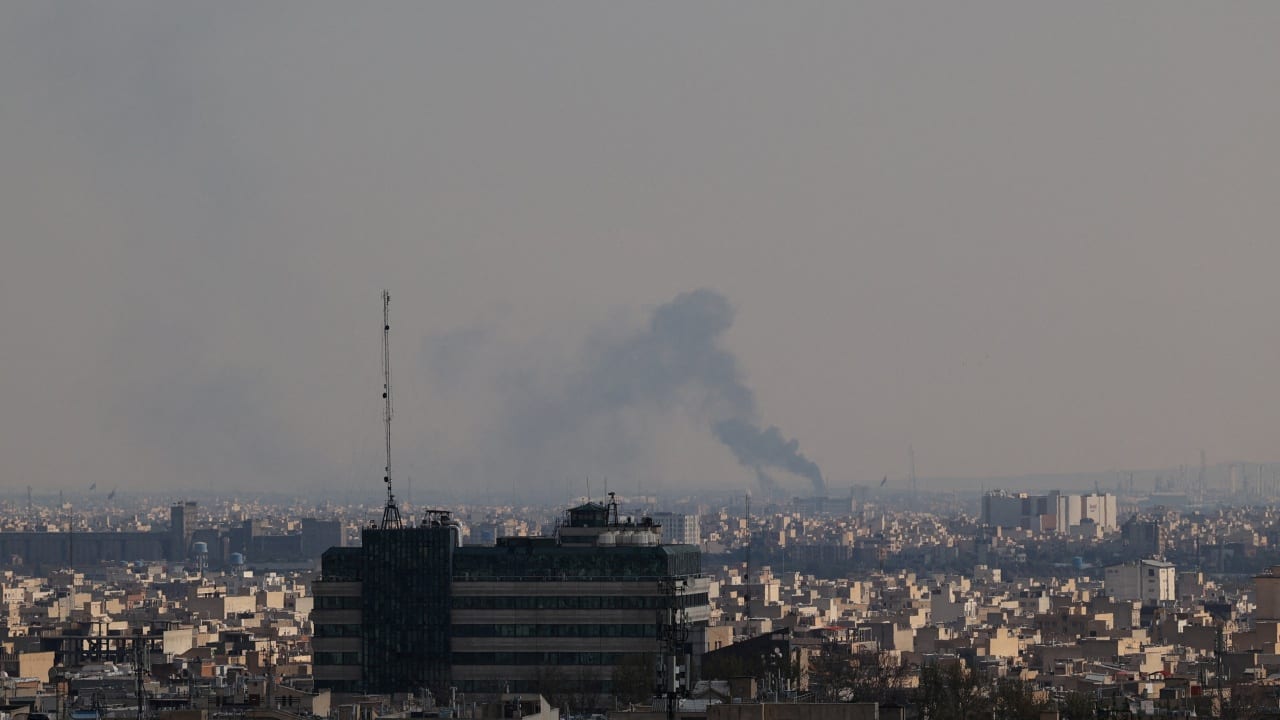
Fresh drone and air-defense activity was reported over Tehran overnight, with smoke seen rising in western parts of the city, reinforcing concerns that the fragile ceasefire may be under strain. The article also says Iran has proposed new peace talks with the US via Pakistan while the Strait of Hormuz blockade remains in place, keeping oil prices more than 50% above prewar levels. The prolonged disruption is pressuring global energy and supply chains and has already fed into inflation worries, prompting the ECB to hold rates amid elevated price risks.
The key market implication is not the headline itself but the persistence of a low-probability, high-impact regime: even without open escalation, intermittent air-defense activity keeps the risk premium embedded in energy, shipping, and regional FX/credit. That matters because markets are increasingly pricing the conflict as a ceasefire-without-settlement, which can suppress near-term vol while leaving upside convexity in crude and tanker rates whenever verification of stability is absent.
The bigger second-order effect is on inflation expectations and duration. Prolonged disruption through Hormuz is not just an oil story; it is a broad input-cost shock that bleeds into fertiliser, industrials, and European manufacturing margins, forcing central banks to stay cautious even if growth weakens. That is structurally bearish for cyclicals and rate-sensitive assets, while favoring energy producers, defense, and select commodity-linked equities with pricing power.
The diplomatic channel via a third party is the main catalyst to watch, but it cuts both ways: any credible negotiating framework could rapidly compress the war premium, especially if it suggests a timetable for reopening maritime flows. Conversely, the market is probably underestimating how quickly a “limited” aerial incident can trigger another round of asymmetric retaliation, which would reprice crude in days rather than weeks. The tail risk is not a full restart of war, but a prolonged series of calibrated disruptions that keep supply chains impaired and inflation sticky for months.
AI-powered research, real-time alerts, and portfolio analytics for institutional investors.
Overall Sentiment
strongly negative
Sentiment Score
-0.55
