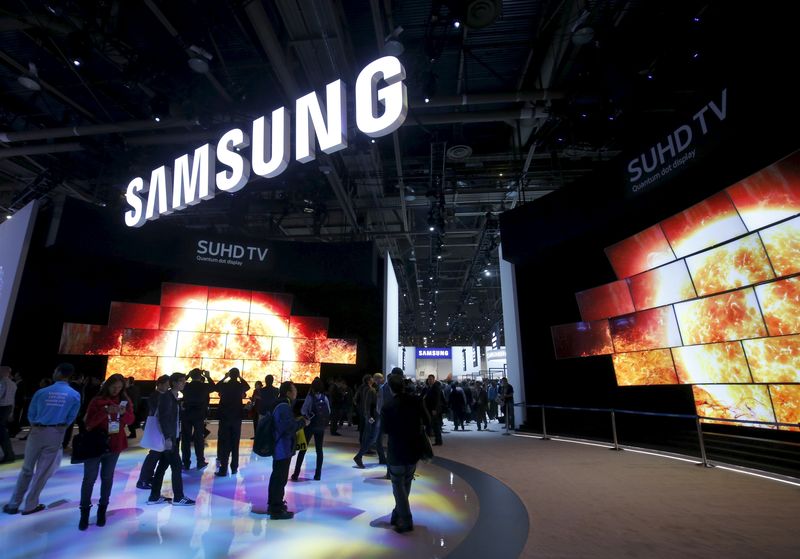
Samsung Electronics awarded memory-chip employees bonuses of up to $400,000 after strong AI-driven earnings, highlighting how the chip boom is lifting profits in South Korea. South Korea's chip exports surged 202% in the first 20 days of May year over year, while policymakers are debating taxes, a citizen dividend, and a sovereign wealth fund to share AI gains. The article is broadly positive for Samsung and SK Hynix but centers more on income distribution and policy spillovers than immediate market-moving news.
The real market signal here is not just stronger memory pricing; it is the emergence of labor and political spillover from an unusually concentrated AI profit pool. When one division can pay life-changing bonuses while the rest of the enterprise lags, management’s bargaining power becomes a macro factor: it can reduce strike risk near term, but it also raises the odds of wage benchmarking across the sector, which is inflationary for a capital-light but labor-sensitive export economy.
Second-order winners extend beyond the two obvious chip names. Korean equipment, advanced packaging, and industrial automation suppliers should see a longer tail of capex as the memory cycle translates into capacity expansion and retention spending. The less obvious loser is the downstream hardware stack that depends on memory input costs staying cheap; if HBM pricing remains tight, server OEM margins can compress before end-demand fully normalizes, creating a lagged squeeze in the AI supply chain.
The policy debate is the bigger medium-term catalyst. A citizen-dividend or sovereign-wealth-fund framing would make the AI windfall more redistributive but also more taxable, which is fine while profits are surging and less fine when the cycle cools. Over 3-12 months, watch for any sign that wage and bonus politics bleed into broader settlement patterns; that would strengthen domestic consumption at the margin but could also push inflation expectations and bond yields higher than consensus expects.
The contrarian view is that this is not a clean bullish signal for “AI exposure” broadly; it is a signal of scarcity pricing at the top of the stack. The market may be underpricing the risk that the best earnings in memory are also the most cyclical, and that a political response to visible inequality could quietly tax or cap the upside just as the industry’s cash generation peaks.
AI-powered research, real-time alerts, and portfolio analytics for institutional investors.
Request TrialOverall Sentiment
mildly positive
Sentiment Score
0.25
