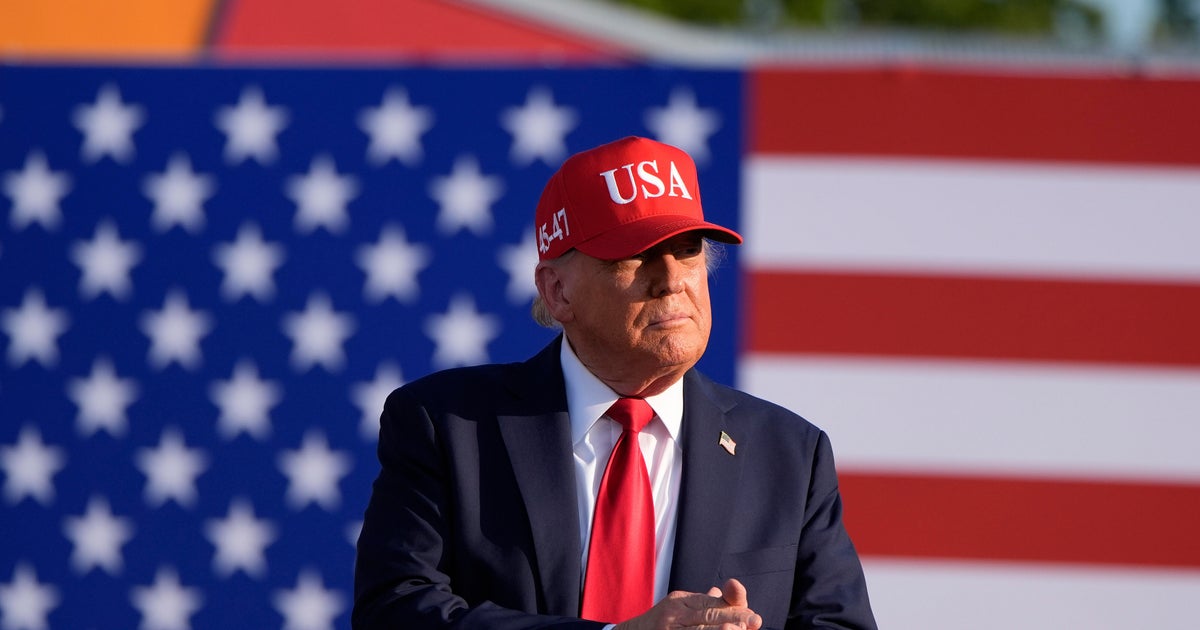
President Trump made his first campaign-style trip of 2026 to the Des Moines area to tout the economy and rally voters, endorsing three of Iowa's four Republican House members (Ashley Hinson, Mariannette Miller-Meeks, Zach Nunn) while Randy Feenstra, who is running for governor, accompanied him. The visit underscores a competitive 2026 landscape in Iowa — an open governor's race after Gov. Kim Reynolds said she won't run, Democratic frontrunner Rob Sand has raised roughly $9.5 million in 2025 versus Feenstra's $4.3 million, and polls show Trump with 90% approval among Republicans but substantial disapproval from independents — political dynamics that could shape policy expectations ahead of the midterms.
Market structure: A Trump-led, Republican-favoring midterm environment increases the probability of policies comfortable to fossil fuels, biofuels, and incumbent-friendly regulatory stances. Direct winners: large integrated ag processors (ADM, BG), farm equipment (DE), and traditional energy (XLE) via higher ethanol mandates and less aggressive clean-energy subsidies; losers: pure-play solar/clean-tech (TAN constituents) and early-stage EV/green infra reliant on subsidies. Expect modest repricing (5–15%) in these sector ETFs across a 3–9 month window if House control stays Republican.
Risk assessment: Tail risks include contested election outcomes, surprise tariff or trade policy shifts, or abrupt regulatory moves that could swing commodity prices (corn, ethanol) >10% in days. Immediate (days): local sentiment volatility; short-term (weeks–months): poll-driven sector rotation; long-term (quarters): enacted legislation or committee-driven investigations that change capex or tax outlook. Hidden dependencies: Iowa outcomes are a signal, not a determinant — national generic ballot moves >5 pts should be treated as regime-change triggers.
Trade implications: Favor 3–9 month directional trades: long ADM/DE and XLE, short TAN/ENPH via options to control risk; use 3–6 month call spreads on energy/ag and put spreads on solar to express views with defined loss. Implement pair trades (long ADM, short a small-cap ethanol-exposed name) and size initial positions 1–3% NAV, scaling into conviction around polling inflection points.
Contrarian angles: The market may underprice the chance Democrats flip the House if independent dislike of Trump (69% disapprove) drives turnout; this is asymmetric risk—overweight political-hedge instruments (short-dated SPX puts or VIX call spreads) rather than levered sector bets. Small-cap ag names could be overbought on local optimism; prefer large-cap, liquid names where policy risk is diversifiable.
AI-powered research, real-time alerts, and portfolio analytics for institutional investors.
Request DemoOverall Sentiment
neutral
Sentiment Score
0.00
