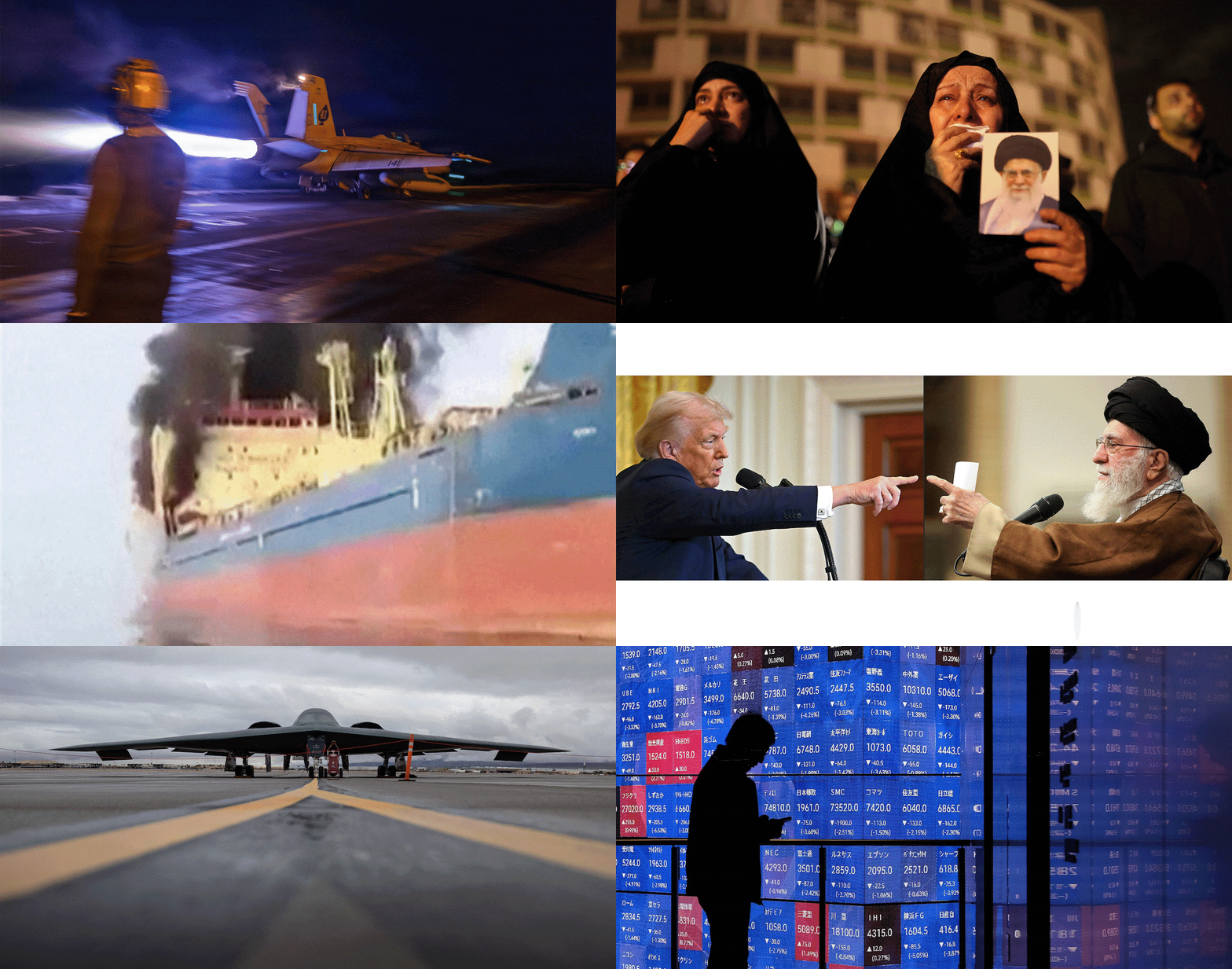
U.S. airstrikes on Iran, together with pressure on Venezuela, are constraining China's options for securing foreign crude and forcing adjustments to its oil procurement strategy. These developments raise geopolitical risk and could tighten global crude flows and logistics, boosting price volatility and creating near-term trade, sanctions and shipping exposures that investors should monitor across energy, emerging-market and related asset classes.
Market structure is shifting toward winners: global integrated oil majors (pricing power + higher upstream cashflow), defense contractors, and physical commodity traders able to take delivery of discounted heavy sour barrels. Losers include Chinese refiners dependent on Venezuelan/Iranian barrels if sanctions tighten, Venezuelan state firms, and emerging‑market FX/credit where oil trade flows are disrupted; expect a near‑term oil risk premium of roughly $3–10/bbl and higher crack‑spread dispersion for 1–3 months.
Risk profile: immediate (days) sees volatility spikes in oil, shipping insurance and EM FX; short term (weeks–months) exposes supply rerouting, discounting and contract disputes; long term (quarters–years) favors suppliers that lock in long‑term offtakes or get sanctioned off markets. Tail risks include escalation to tanker attacks or broader sanctions (low prob <15% but high impact: $20–40/bbl shock) and banking counterparty exposure to PDVSA receipts; watch P&I insurance rates and SWIFT/sanctions actions as binary catalysts.
Trade implications: bias overweight Energy (XOM/CVX/SLB) and Defense (LMT/RTX/NOC), hedge with commodity options and underweight Chinese refiners (PTR/SNP/CEO) and EM local debt. Use 3‑month WTI/Brent call spreads to express oil risk premium (10–20% OTM) and prefer short duration rates and TIPS to guard vs inflation pass‑through. Entry: act within 1–10 trading days; horizon 3–6 months for energy/defense, 12+ months for strategic reallocation.
Contrarian angles: consensus may overprice China abandoning Venezuelan crude — Beijing can sustain purchases at steeper discounts which would support Chinese refiners’ margins and break short calls. Historical parallels (2019 tanker incidents) show price spikes often mean‑revert in 6–8 weeks absent physical choke points; downside risk is rapid mean reversion if OPEC adds incremental supply or China backstops flows. Monitor concrete signs (OPEC+ quotas, state crude liftings >5mn bbls, P&I rate doubling) before reversing positions.
AI-powered research, real-time alerts, and portfolio analytics for institutional investors.
Request TrialOverall Sentiment
moderately negative
Sentiment Score
-0.45
