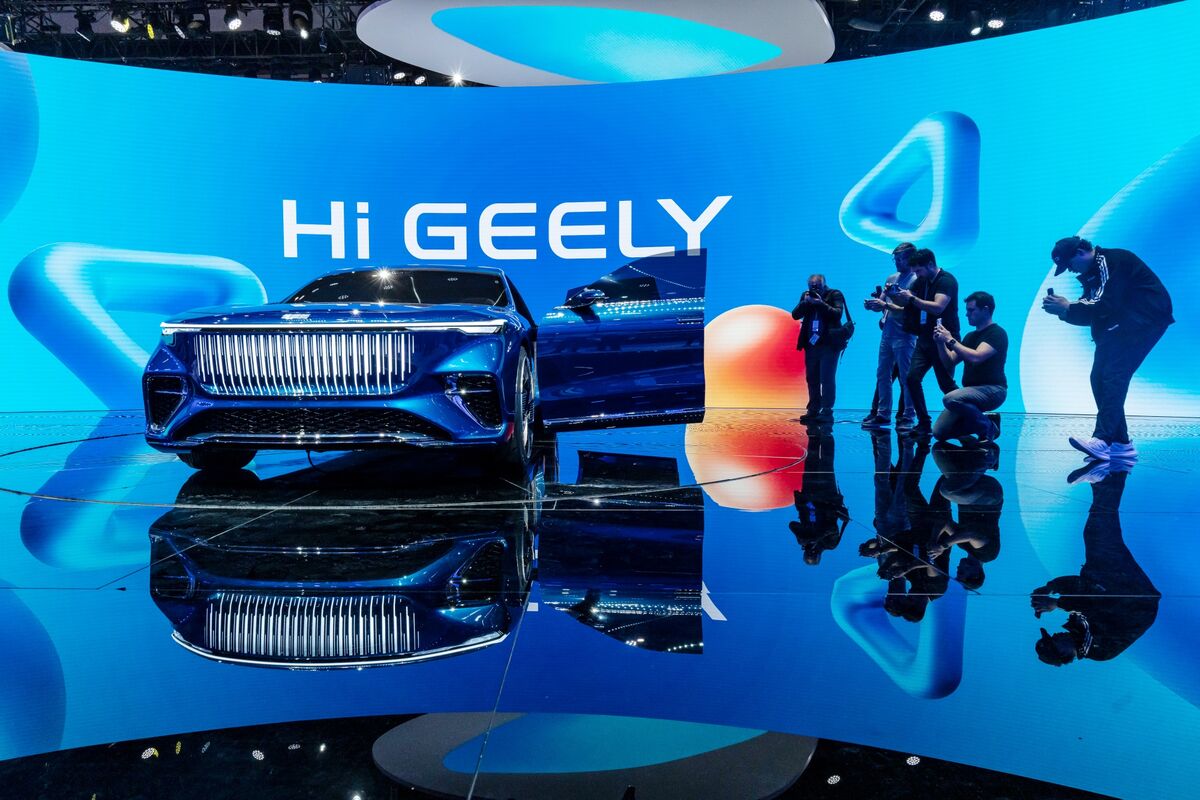
Geely Automobile’s first-quarter net income fell 27% to 4.2 billion yuan, missing analyst expectations of 4.5 billion yuan as China’s auto market weakened after government subsidies were scaled back. Revenue still rose 15% to 83.8 billion yuan, but the profit decline highlights softer demand conditions for Chinese automakers.
The key read-through is not just weaker near-term earnings power, but a likely reset in the price-discount architecture across China’s EV and ICE domestic players. If subsidy withdrawal is enough to dent a scaled name with strong brand equity, the marginal buyer is likely even more price sensitive, which shifts competition from unit growth to gross-margin defense and raises the probability of another round of incentive-led share grabbing. That typically benefits the lowest-cost manufacturers and vertically integrated battery suppliers, while pressuring legacy OEMs with thinner channel economics and higher dealer inventory risk.
Second-order effects should show up first in the supply chain rather than the headline automaker cohort. Parts suppliers, logistics providers, and dealer networks tend to absorb the initial margin squeeze as OEMs protect reported revenue with rebates and financing support; that creates a lagged earnings hit over the next 1-2 quarters even if reported deliveries appear stable. Watch for a rotation from premium/aspirational brands toward value and export-oriented names, since domestic demand softness often forces a push into overseas markets at lower realized ASPs.
The catalyst path is asymmetric: if policy support is not reintroduced within the next 1-2 months, market expectations for 2H volume recovery are likely too high, and guidance cuts could drive another leg lower across the space. Conversely, any renewed local subsidies or financing support would matter more for sentiment than for structural profitability, because it would likely reflate volume at the expense of margin. The contrarian point is that this may be less about a collapsing auto cycle and more about normalization after an artificially supported demand spike; in that case, the best short may be the most domestically exposed, premium-multiple OEMs rather than the whole sector.
For portfolios, the risk/reward favors avoiding broad China auto exposure and expressing the view through names with the weakest domestic pricing power or through suppliers with obvious end-demand sensitivity. The trade horizon is weeks to months, not days: the market usually underestimates how long inventory and rebate pressure persists after a demand air pocket forms. The best setup is to wait for any bounce on policy hopes and fade it, because the fundamental repair is likely slower than the headline sentiment cycle.
AI-powered research, real-time alerts, and portfolio analytics for institutional investors.
Request DemoOverall Sentiment
moderately negative
Sentiment Score
-0.45
