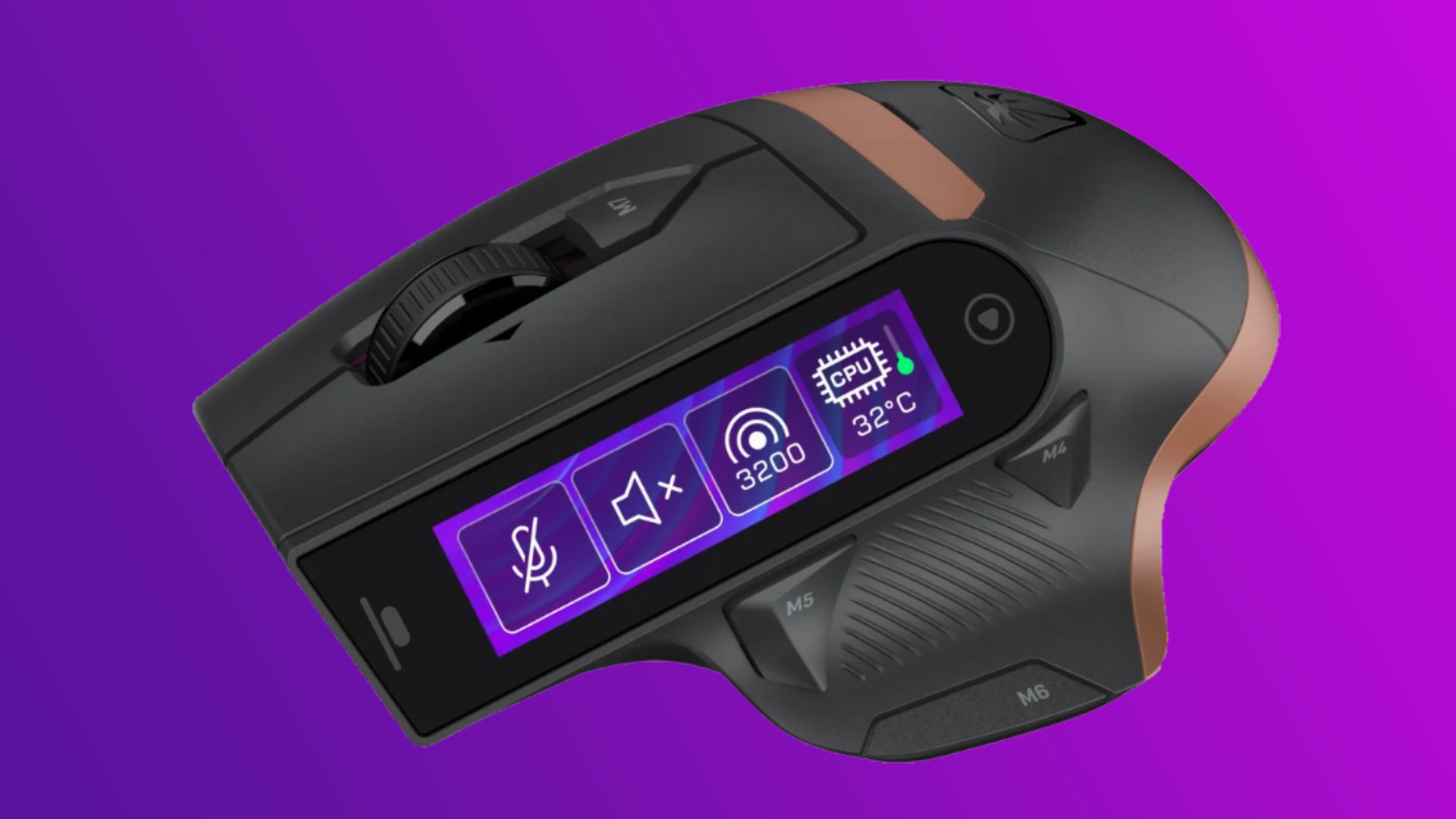
Turtle Beach has opened pre-orders for the Command Series MC7, an 8K wireless gaming mouse with a 30K sensor, a 2.25-inch touchscreen, and dual swappable 1000 mAh batteries. The mouse is priced at $160/$140 MSRP and offers up to 10 hours of playtime per battery, or 15 hours with lighting off. The article is largely opinionated commentary, with no sign of material financial results or market-moving company news.
This is less a near-term product-catalyst story than a signal on where the peripheral market is heading: differentiation is shifting from sensor performance toward software surfaces, personalization, and ecosystem lock-in. That favors incumbents with broad installed bases and app ecosystems, because a touchscreen on a mouse is only valuable if users actually set it up and keep the device long enough to learn it; that creates a switching-cost wedge rather than a pure hardware spec advantage. In that framing, the bigger strategic beneficiary is LOGI if it can continue to layer software, profiles, and companion-device integration onto mainstream mice without overcomplicating the industrial design.
For TBCH, the risk is not the novelty itself but the possibility that the feature is too niche for the mass gaming market while materially raising BOM, weight, and return rates. A premium mouse is a repeat-purchase category where comfort and latency are table stakes; if the add-on screen becomes a review anchor rather than a purchase driver, it can compress sell-through and force discounting inside a 1-2 quarter window. The hot-swap battery design is the more commercially defensible feature because it solves a real pain point and can be replicated across SKUs, whereas the touchscreen risks being a capex-heavy marketing gimmick.
Consensus may be underestimating how fast the market penalizes “spec inflation” when it doesn’t map to competitive gaming use cases. If early reviews focus on ergonomics, weight, and accidental input rather than utility, this could become a cautionary example that actually strengthens the value proposition of simpler flagships from Razer/Logitech over the next product cycle. Conversely, if content creators and streamers adopt it as a desk-side telemetry/control device, there is a small but real halo effect into adjacent high-end accessories; that would matter more for brand awareness than unit volume.
AI-powered research, real-time alerts, and portfolio analytics for institutional investors.
Request DemoOverall Sentiment
neutral
Sentiment Score
-0.10
Ticker Sentiment
