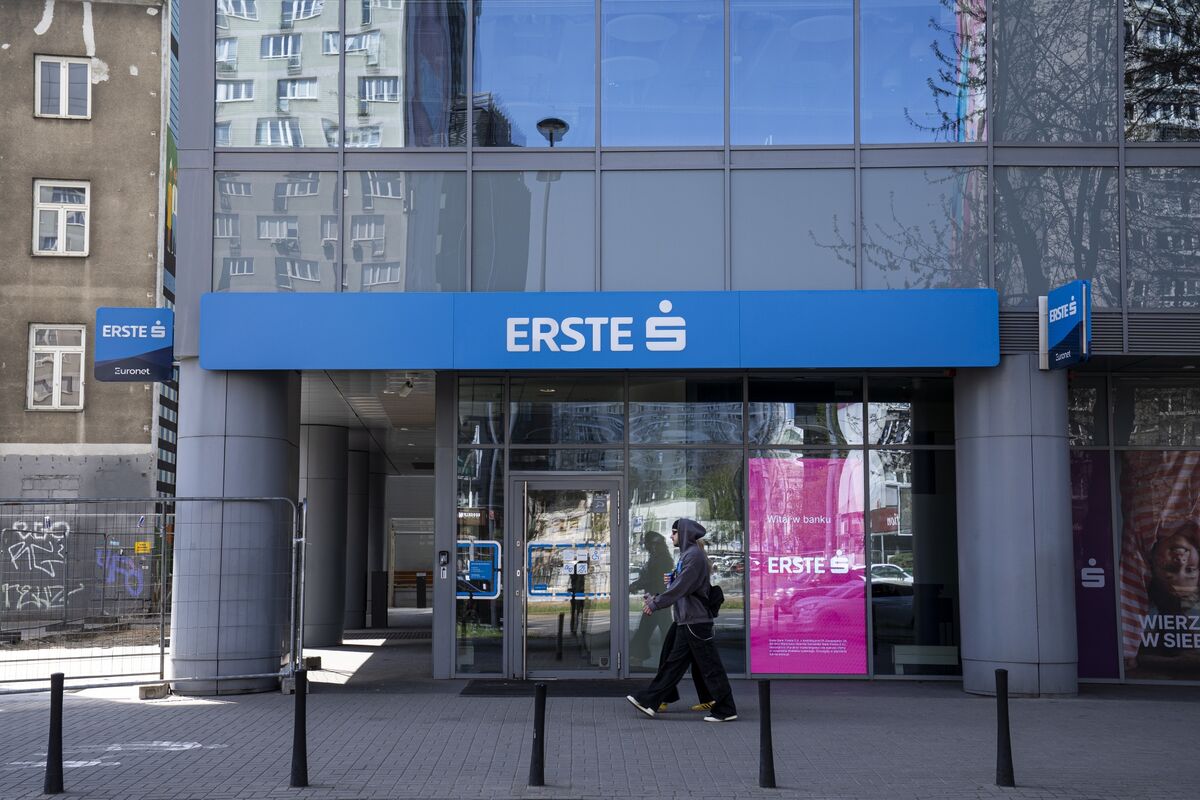
Erste Group completed its €7 billion purchase of a 49% stake in its Polish unit from Banco Santander and has already rebranded the business. Management said the bank is generating enough profit to consider additional bolt-on acquisitions across its markets while it continues integrating IT systems. The deal expands Erste’s footprint in Poland and supports a broader M&A growth strategy.
Erste’s message is less about a single acquisition and more about a shift in strategic optionality: once a bank proves it can absorb a large deal and keep capital generation intact, the market usually starts to underwrite a higher M&A cadence and a higher terminal growth assumption. That is bullish for franchise value, but it also raises the probability of overpaying for smaller assets later in the cycle, especially in markets where competition for retail deposits and SME lending is already tightening spreads. The second-order effect is that regional banks with weak funding bases become more attractive targets, which can compress valuations across central/eastern European financials over the next 6-12 months.
The clearest loser is the seller’s franchise exposure: this removes a strategic asset from Santander’s CEE footprint and reinforces the idea that large European banks are willing to pay for local density rather than just buy growth through organic share gains. For peers, the signal is that scale now matters more than beta to rates—banks with excess capital, stable deposit franchises, and under-penetrated CEE exposure should see a modest re-rating, while capital-constrained lenders may trade as funding-cost stories instead of growth stories. The immediate impact is probably limited to sentiment, but over a 3-9 month horizon the real catalyst is whether Erste can extract cost synergies without dragging on CET1 or forcing a conservative payout stance.
The contrarian risk is that this turns into a classic “good deal, then good money after bad” cycle if management starts buying bolt-ons before the integration playbook is fully proven. In that scenario, the market could punish the stock for strategy drift and renewed execution risk, even if the headline acquisition is accretive. Another underappreciated risk is that CEE bank consolidation can invite political scrutiny around branch rationalization, pricing power, and SME credit availability, which can slow synergy realization and cap valuation upside.
AI-powered research, real-time alerts, and portfolio analytics for institutional investors.
Request DemoOverall Sentiment
mildly positive
Sentiment Score
0.35
Ticker Sentiment
For Santander, the market may be underestimating the opportunity cost of redeploying capital away from CEE into higher-ROTE areas; the negative read-through is not just the sold stake, but the signal that it preferred de-risking to defending regional scale. That can be mildly supportive for SAN near term if capital return expectations rise, but it is not a growth-positive outcome. The better expression is likely relative value versus banks with cleaner organic growth and less transaction-execution risk.
