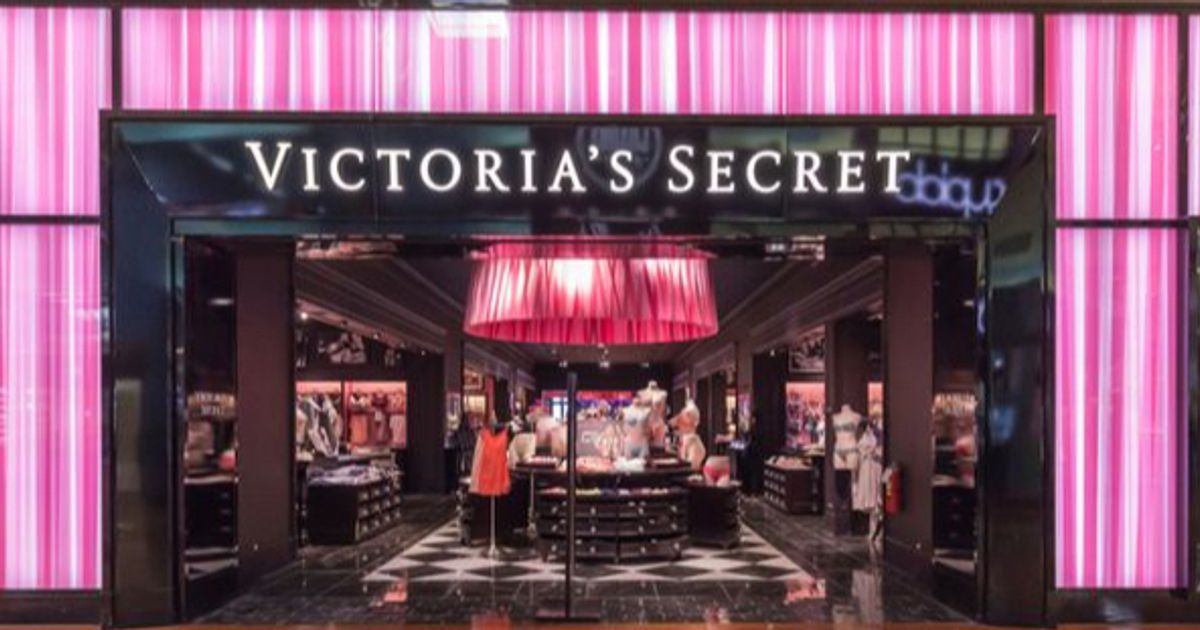
Victoria's Secret reported Q4 adjusted EPS of $2.77 versus $2.52 expected and revenue of $2.27 billion versus $2.23 billion consensus, with net and comparable sales up 8% year-over-year. For fiscal 2025 the company posted net sales of $6.55 billion (up 5%) and comp sales +5%, and it gave Q1 sales guidance of $1.49–1.53 billion (above ~$1.42B est.) and Q1 operating income of $32–42 million. Fiscal 2026 guidance calls for net sales of $6.85–6.95 billion and operating income of $430–460 million, indicating continued traction from the turnaround; nonetheless shares traded down ~12% post-open, likely reflecting profit-taking after recent rallies.
Market structure: Victoria’s Secret (VSCO) beat Q4 and raised FY26 guidance, signaling durable pricing power (AUR gains) and new-customer acquisition that directly benefits VSCO, its branded suppliers and digital/omnichannel logistics partners; malls and apparel suppliers with fixed-cost leverage are secondary beneficiaries if comps hold. Losers include promotional-heavy fast-fashion peers (who may lose share) and any wholesale partners that cannot match VSCO’s elevated AUR without sacrificing units. The AUR lift implies tighter supply-demand for on-trend assortments; inventory turns and sell-through rates will be the leading indicator for sustainable margin expansion. Cross-asset: stronger retail datapoints should modestly tighten IG spreads for retail credits, lift consumer discretionary equity beta, and modestly support CAD/GBP via retail-driven FX flows; options IV should compress if guidance is proved conservative after two quarters.
Risk assessment: Tail risks include a macro slowdown (consumer credit stress or higher unemployment) that truncates discretionary spend, inventory markdown shocks if assortment misses, or reputational/marketing missteps that reverse new-customer gains; each could shave 20–35% off EBITDA in a severe scenario. Short-term (days–weeks) risk is sentiment/profit-taking — evidenced by a ~12% intraday drop — while medium-term (3–12 months) hinges on Q1 sell-through, inventory and AUR sustainability; long-term (12–36 months) depends on store footprint optimization and e-commerce mix. Hidden dependencies: promotional cadence, international FX, and supplier lead-times; catalysts include the Q1 print (next 6–10 weeks), competitor results (AEO/Aerie), and macro CPI/consumer credit data.
Trade implications: The beat + conservative-seeming FY26 guide supports a tactical long bias in VSCO: consider establishing a core long and supplement with time-limited option exposure to lever upside while capping downside. Relative-value: long VSCO vs short AEO (AEO) or other promotional-led peers for 3–6 months to capture share shifts; target capture of a 10–25% relative outperformance. If implied vol stays elevated after the sell-off, implement 6–12 month call spreads to limit premium bleed; avoid short-dated naked put selling given macro tail risk.
Contrarian angles: Consensus focuses on the beat but underestimates how fragile elevated AURs are if competitor promotions intensify — meaning current guidance could be a high-water mark. The 12% intraday drop on a beat suggests overdone profit-taking and creates an entry window; conversely, the market may be underpricing a markdown risk if inventories disappoint (histor parallels: brand turnarounds like Abercrombie/Lululemon where execution divergence created multi-quarter variance). Unintended consequence: management optimism could invite activist interest or aggressive share repurchases that mask operating fragility; treat buybacks as conditional on free-cash-flow and inventory health.
AI-powered research, real-time alerts, and portfolio analytics for institutional investors.
Request TrialOverall Sentiment
moderately positive
Sentiment Score
0.45
Ticker Sentiment
