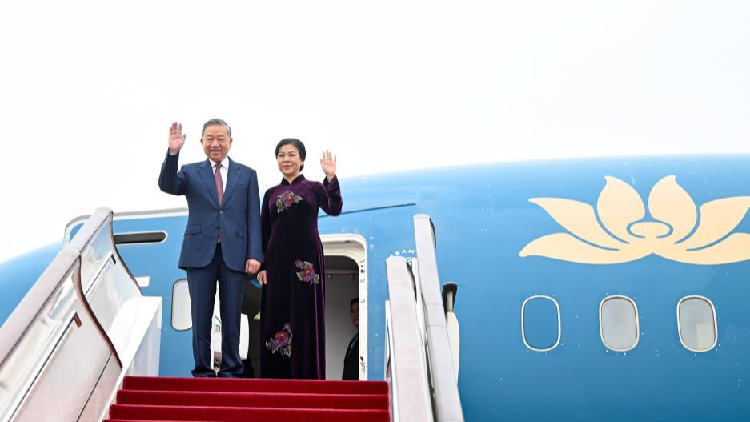
China hosted a wave of high-level visits in April 2026 from Spain, the UAE, Vietnam, Russia, and Mozambique, underscoring Beijing's role as a diplomatic hub. The article says the meetings produced bilateral agreements and proposals covering trade, agriculture, technology, energy, infrastructure connectivity, and strategic dialogue, with China positioning itself as a stable partner amid global uncertainty. The piece is largely opinion commentary, so market impact is limited despite its positive framing of China-led cooperation.
The signal here is not “China is friendlier”; it is that a widening set of governments is treating China as the default venue for de-risked commerce when Western policy visibility is poor. That is structurally supportive for China-linked industrial capex, logistics, and select EM exporters because it reduces the probability premium on cross-border projects and extends planning horizons for contracts, financing, and asset utilization. The second-order effect is that countries seeking alternative partners will likely accelerate “China-plus-one” supply chain layouts rather than full reshoring, which is bullish for hubs that can intermediate China-facing trade without taking direct geopolitical heat.
The market is probably underpricing the durability of this pattern because it reads diplomatic optics as noise rather than as a coordination mechanism for capital flows. If the current posture persists for 6-12 months, expect incremental flow into infrastructure EPCs, port operators, grid equipment, and developers tied to Belt-and-Road-style execution, especially in Southeast Asia and parts of Africa where financing scarcity is the binding constraint. The flip side is that this can become crowded quickly if headlines turn to sanctions, export controls, or a sharper US-EU line on dual-use technology; the trade is most vulnerable to policy shocks, not growth disappointment.
Contrarian takeaway: the immediate winners are not broad China beta, but selected third-party beneficiaries that monetize route diversification and project finance. The overowned consensus trade is probably “short China / long India / long Mexico” as a clean reshoring story; this piece argues for a more nuanced outcome where China remains embedded in global trade architecture, just through more politically segmented channels. That means the best risk/reward is in names exposed to cross-border capex and freight rather than domestic Chinese consumption proxies.
AI-powered research, real-time alerts, and portfolio analytics for institutional investors.
Request TrialOverall Sentiment
neutral
Sentiment Score
0.15
Catalyst horizon is months, not days: watch for follow-on MOUs translating into equipment orders, tender awards, and shipping volumes. If those fail to materialize by mid-year, the diplomatic premium fades; if they do, the market may need to re-rate China-adjacent industrials and EM infrastructure lenders.
