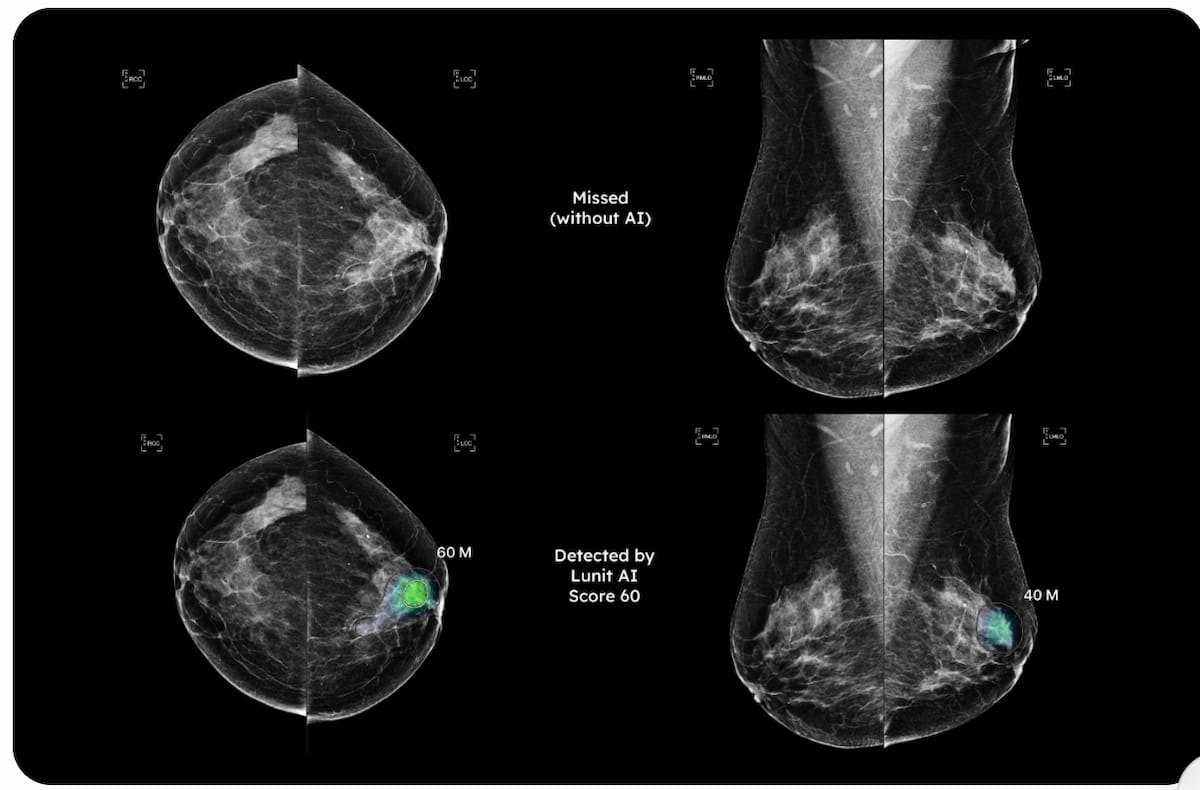
80%: Adjunctive AI exam risk scores (ExRS) increased ~80% between baseline (mean ExRS 15.4) and subsequent screening (mean ExRS 73.9) among 451 women who developed breast cancer in a cohort of ~67,000 women (135,372 mammograms) with mean follow-up of 777 days. Women without cancer showed stable low ExRS (6.7 to 6.4); AI performance was consistent across BI-RADS density categories, indicating potential for risk-based screening stratification and commercial relevance for AI imaging vendors like Lunit.
AI that meaningfully stratifies future breast-cancer risk will shift screening from a one-size-fits-all cadence to a tiered, utilization-driven model. Expect radiology capacity to be reallocated: higher-risk cohorts will pull forward diagnostic MRI/US capacity and biopsy resources while low-risk cohorts reduce routine film volumes, creating lumpy demand for hardware upgrades and consumables over 12–36 months.
Competitive winners are those that monetize recurring inference (SaaS/subscriptions, cloud GPU cycles, edge acceleration) and own the integration path into PACS/EHR; legacy hardware vendors that can retrofit or bundle AI services will convert one-time capital sales into annuities. Losers are mid-sized independent imaging centers and blade-run hardware vendors without software hooks — payers and large health systems will centralize risk-based programs to control pathway costs, compressing margins at fragmented providers.
Main catalysts: payer reimbursement policies for AI-driven risk stratification, prospective multicenter validation, and clear regulatory guidance on prognostic labeling; each can move commercial adoption by quarters to years. Principal tail risks are dataset shift and medicolegal backlash (missed interval cancers in low-risk-labeled patients) that could pause deployments for 6–24 months and force conservative thresholds that blunt commercial upside.
AI-powered research, real-time alerts, and portfolio analytics for institutional investors.
Request DemoOverall Sentiment
mildly positive
Sentiment Score
0.25
