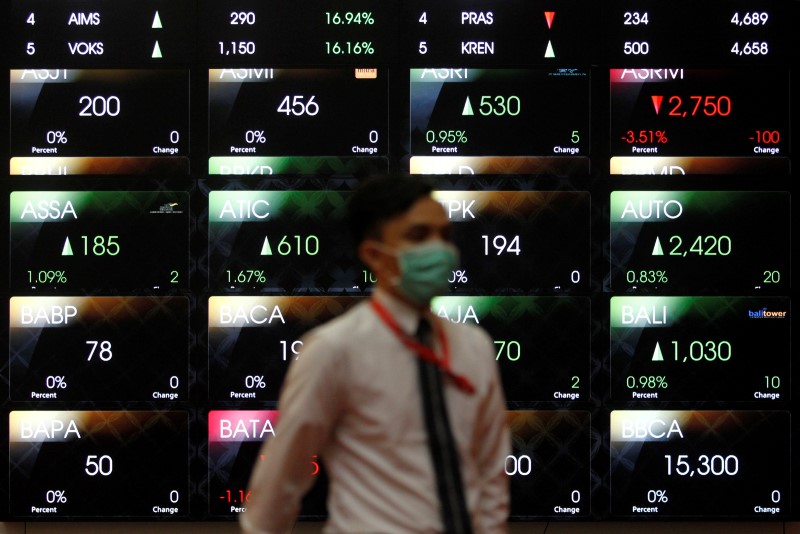
Indonesia's IDX Composite fell 1.91% as losses in Infrastructure, Financials and Agriculture outweighed gains, with decliners outnumbering advancers 557 to 194. Crude oil rose, with Brent June up 1.31% to $103.25 a barrel and WTI June up 1.36% to $94.22, while USD/IDR gained 0.75% to 17,284.90. Kobexindo Tractors and Maxindo Karya Anugerah hit 52-week highs, but broader market sentiment remained weak.
The key market signal is not just higher oil; it is the abrupt repricing of geopolitical tail risk into currencies and local risk assets. A weaker IDR alongside firmer USD and energy prices is a classic squeeze for import-dependent EMs: it raises the local-currency cost of fuel, fertiliser, and dollar debt service at the same time, so the second-order damage shows up first in transport, consumer staples, and leveraged domestic names rather than in energy directly. In that setup, the market often over-penalizes broad beta before fundamentals catch up, creating relative-value opportunities inside Indonesia rather than a clean index short.
The move in Brent above the psychologically important level matters more for behavior than valuation. If prices hold for several sessions, hedgers and physical users typically pull forward cover, which can keep the front end bid even if macro headlines fade; that tends to hurt airlines, chemicals, and input-heavy manufacturers with lagged pass-through. Over a 1-3 month horizon, the more important catalyst is whether the market starts pricing a supply response from sanctioned barrels or diplomatic de-escalation; either would flatten the curve and unwind the panic premium faster than spot moves suggest.
The contrarian angle is that the strongest move may be the most fragile one: commodity rallies driven by headline risk often peak when breadth deteriorates and FX follows commodity prices lower. In Indonesia, the broad selloff while a few small-cap names surge suggests a tape dominated by flow rather than fundamentals, which usually favors mean reversion once local investors stop de-risking. That argues for fading indiscriminate EM beta while staying selective on real beneficiaries of higher commodity prices and USD strength.
From a cross-asset perspective, this is also a stealth support for US upstream and a headwind for import-sensitive EM consumers. If energy stays elevated, the market will increasingly differentiate between producers with natural hedges and end-users exposed to margin compression, especially where local currencies weaken faster than pricing power can adjust. The cleanest trade is therefore not a directional macro bet, but a relative one: long the cash-generating parts of the commodity complex and short the most energy-intensive laggards.
AI-powered research, real-time alerts, and portfolio analytics for institutional investors.
Request TrialOverall Sentiment
mildly negative
Sentiment Score
-0.15
