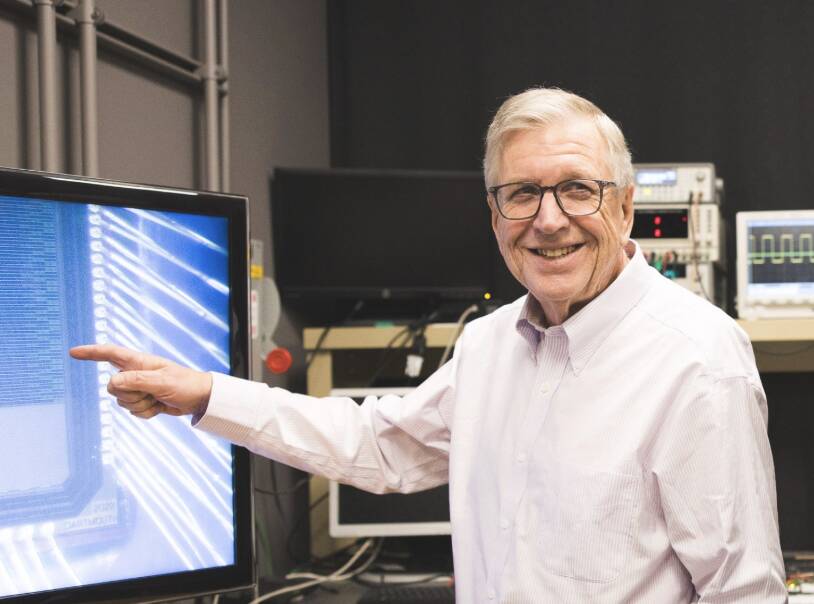
Eric R. Fossum was awarded the 2026 Charles Stark Draper Prize for Engineering for his invention of the modern CMOS image sensor, a technology that consolidated camera functions onto a single silicon chip and transformed digital imaging across industries. He received a $500,000 (approximately ₹4.5 crore) cash prize, and his more recent work includes the development of the quanta image sensor.
Market structure: The Draper Prize is signaling durable, broad secular demand for CMOS and next‑gen quanta image sensors across smartphones, automotive ADAS, medical imaging and defense—sectors that together account for a multi‑billion dollar TAM. Direct winners are Tier‑1 sensor designers and their foundry partners (Sony Group - SONY, ON Semiconductor - ON, ams OSRAM - AMS); losers are low‑margin module assemblers and legacy CCD suppliers whose pricing power will erode as CMOS variants improve. Expect incremental share shifts of 2–5%/yr toward advanced CMOS/QIS suppliers over 3–5 years as adoption in low‑light and high‑dynamic‑range applications accelerates. Risk assessment: Tail risks include a major IP litigation or a breakthrough competing sensor (e.g., LiDAR fusion reducing pure‑camera reliance), both of which could knock 10–30% off vendor revenues in 12–24 months. Short term (days–weeks) market reaction is negligible; medium term (3–12 months) depends on product cycle announcements (phone launches, auto production ramps); long term (2–5 years) reward accrues to firms capturing design wins and licensing. Hidden dependencies include foundry capacity (node availability), optical stack suppliers, and export controls—watch capacity/utilization and Chinese policy shifts. Trade implications: Direct plays: overweight SONY (consumer/phone sensors) and ON (automotive/industrial) while underweight small module suppliers and CCD legacy names. Options: use 9–15 month call spreads (buy 12‑month ATM, sell 12‑month 30% OTM) on ON or SONY to capture adoption without paying full premium. Sector rotation: shift 2–5% from general smartphone OEM exposure (AAPL, 5–10% reduction) into semiconductor sensor names and SOXX ETF over next 3–6 months ahead of autumn product cycles. Contrarian angles: The market is underpricing QIS commercialization hurdles—manufacturability and yield could delay meaningful revenue by 18–36 months, creating buyable dips of 15–25% in suppliers if sentiment pulls back. Conversely, consensus may be underestimating licensing upside: a single dominant IP licensing program could add 5–10% EBITDA to a mid‑cap sensor vendor over 2–3 years. Watch for unexpected regulatory limits on surveillance imaging which could re‑rate multiples abruptly.
AI-powered research, real-time alerts, and portfolio analytics for institutional investors.
Request DemoOverall Sentiment
mildly positive
Sentiment Score
0.30
