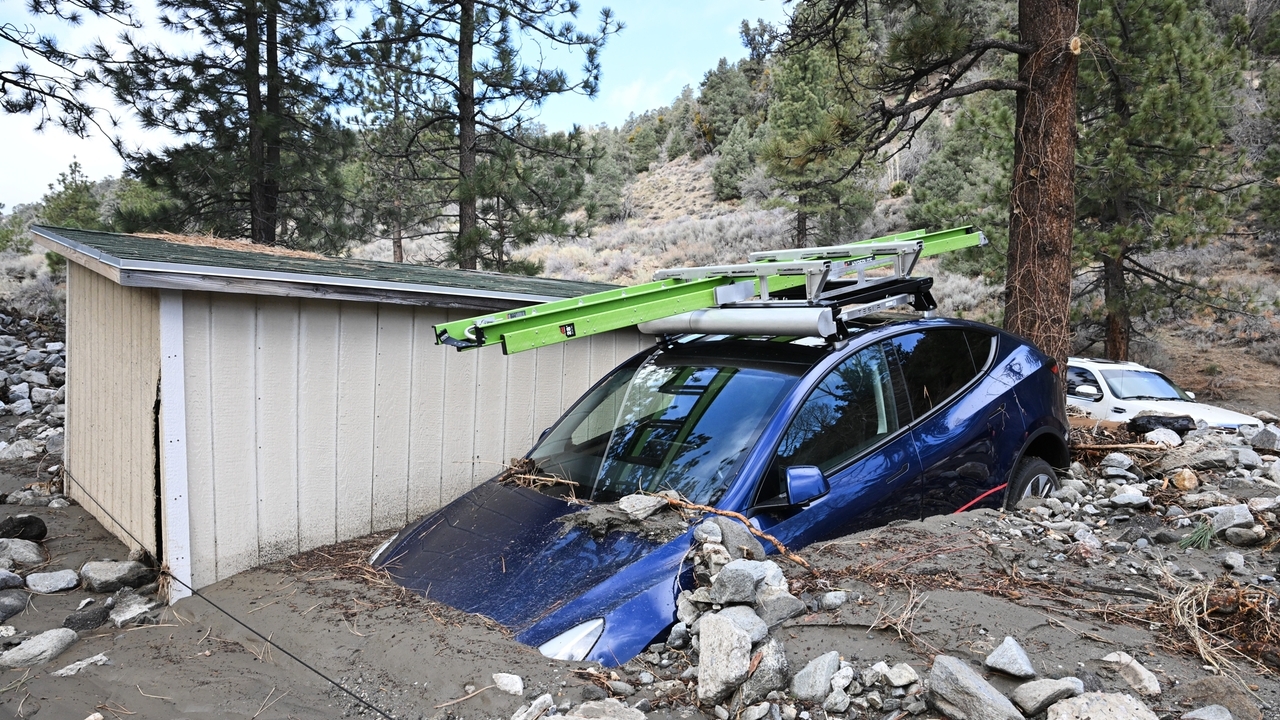
A powerful storm and atmospheric rivers drenched California over the holiday week, producing waves up to 25 ft, 4–8 inches of rain in many areas (versus the seasonal 0.5–1 inch), heavy Sierra Nevada snow, at least two storm-related deaths, and localized infrastructure impacts including power outages, mudslides, flash flooding and evacuations (Wrightwood). Governor Newsom declared emergencies in six counties, the National Guard was on standby and more than 150 firefighters were deployed as officials warned of continued high surf, avalanches and travel-disrupting conditions; the event represents a regional shock to transportation, local commerce, utilities and property exposure that could affect insurers, regional service providers and short-term travel demand.
Market structure: Short-term winners are home-improvement retailers (HD, LOW) and generator/heavy-equipment vendors (GNRC, CAT) because repairs and emergency purchases typically spike 2–12 weeks after storms; losers include regional airlines (LUV, UAL) and local hospitality/short-term rental names (ABNB) from travel disruption and coastal property damage. Insurers writing homeowner flood/wind policies will see elevated claims but private flood exposure is limited versus NFIP, so aggregate insured industry loss should be manageable unless storms cascade into multiple events.
Risk assessment: Tail risks include major infrastructure failures (long-duration outages, bridge/road loss) that could force multi-billion state/federal spending and widen CA muni spreads; probability low (<10%) but impact high over 3–12 months. Immediately expect supply-chain congestion at LA/Long Beach ports and higher diesel/nat‑gas demand for 1–4 weeks; over quarters, repeated atmospheric rivers raise pricing power for construction materials.
Trade implications: Direct plays favor 1–3% tactical longs in HD/LOW and short-dated GNRC call purchases (30–60 day) to capture demand spikes; hedges include buying 30-day puts on LUV/UAL or underweight regional airport-exposed names for 1–4 weeks. Rebalance muni exposure: reduce long-duration CA munis by up to 25% and prefer short-duration Treasuries if county-level damage estimates exceed $1bn in next 30 days.
Contrarian: Consensus fear of large insurer blowups is likely overstated — NFIP and federal aid blunt losses, so insurer equity sell-offs could be overdone if claims remain concentrated; conversely, hardware retailers may underprice sustained margin expansion from higher replacement volumes. Historical parallels (post-storm retail demand spikes) show 6–12% outperformance for HD/LOW in the following quarter versus S&P.
AI-powered research, real-time alerts, and portfolio analytics for institutional investors.
Request DemoOverall Sentiment
moderately negative
Sentiment Score
-0.45
