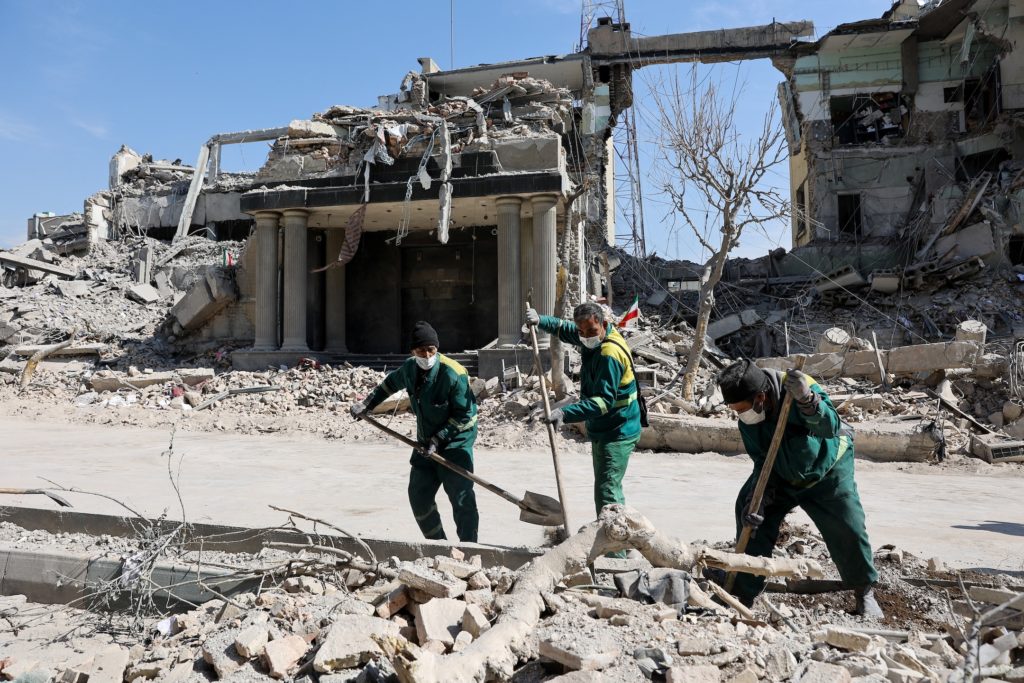
The Iranian Red Crescent reported that U.S. and Israeli airstrikes killed approximately 1,000 people in Tehran, prompting residents to flee the capital. The report, attributed to the Red Crescent and discussed by PBS correspondents, significantly raises regional geopolitical risk and could prompt risk-off positioning, safe-haven flows and potential volatility in assets sensitive to Middle East tensions (notably energy and EM exposure), although independent verification and further developments remain uncertain.
Market structure will favor defense contractors (Lockheed Martin LMT, Northrop Grumman NOC, RTX) and energy producers (Exxon XOM, Chevron CVX, XLE) as immediate procurement and risk premia rise; gold (GLD, GDX) and USD benefit from safe-haven flows while regional equities (EEM, MSCI EM) and travel/airlines (AAL, UAL, JETS) face outflows. Supply/demand may tighten for oil if shipping or Iranian exports are disrupted — a 3–15% effective supply shock is plausible in weeks, shifting pricing power to majors and traders of physical crude. Cross-asset: expect Treasury duration bid (10Y yields down), higher implied vol (VIX), widening EM sovereign spreads, and commodity beta rising; options skew steepens on the downside for EM and upside for oil/defense.
Tail risks include escalation into a wider regional conflict or attacks on shipping/energy infrastructure that could lift Brent $10–30/barrel (15–40%) and trigger sanctions/countermeasures; cyber retaliation and insurance-market dislocations are lower-probability but high-impact. Immediate horizon (days): volatility spikes and liquidity drains; short-term (weeks–months): repricing of energy/defense and EM outflows; long-term (quarters+): persistent higher energy price baseline and altered trade routes. Hidden dependencies: insurance/P&I rates, tanker rerouting costs, and central-bank reaction functions (inflation vs growth tradeoffs) can amplify second-order effects. Catalysts to watch: confirmed strikes on shipping, OPEC+ meetings, US troop movements, and formal retaliatory declarations.
Trade implications: establish tactical, size-controlled positions: modest longs in LMT/NOC/RTX (1–3% NAV each) and XOM/CVX or a 3% XLE position to capture upside if oil rises; hedge by shorting JETS or specific airline tickers (AAL 1–2% short) and reduce or hedge EM equity exposure (trim EEM by 30% from baseline). Options: buy 1–3 month VIX calls (small position 0.5–1% NAV) and a 2-month WTI call spread to $+15–25% strikes to cap cost (example: buy $80 call sell $95 call sized to 1–2% NAV equivalent). Entry: act within 48–72 hours for protection trades, scale into equity longs over 1–4 weeks; exits: take profits on oil/defense +20–30% or unwind if Brent < $85 for 7 consecutive days.
AI-powered research, real-time alerts, and portfolio analytics for institutional investors.
Request TrialOverall Sentiment
strongly negative
Sentiment Score
-0.80
Contrarian angles: consensus may overpay defense equities immediately — use staggered entries and employ call spreads rather than outright longs to limit downside; gold flows could be front-loaded and mean-revert if conflict remains localized — prefer options to spot GLD. Historical parallels (2019–2020 Iran tensions) show sharp initial shocks followed by partial retracement in 4–12 weeks, so allocate small, time-boxed positions and set concrete triggers: increase defense/energy exposure if Brent breaches $100 for 5 trading days; reduce risk if diplomatic de-escalation confirmed or Brent drops >15% from peak.
