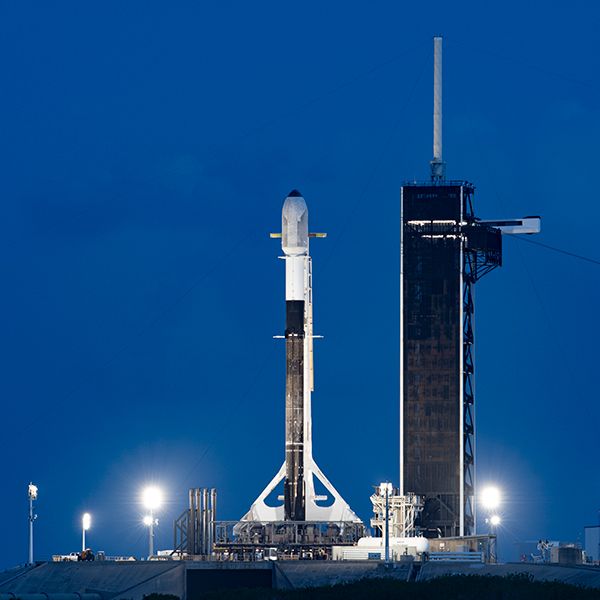
SpaceX is targeting Monday, April 27 for a Falcon Heavy launch of the ViaSat-3 F3 satellite to geosynchronous transfer orbit, with an 85-minute launch window opening at 10:21 a.m. ET and a backup window on April 28. The mission includes recovery attempts for both side boosters at LZ-2 and LZ-40, and the ViaSat-3 F3 payload is scheduled to deploy about 4 hours 57 minutes after liftoff. The article is a routine launch schedule update with no material financial or operational surprise.
This launch is a near-term proof point for reusability economics rather than a one-off event. The meaningful second-order read-through is that Falcon Heavy’s ability to keep turning around heavily flown side boosters supports SpaceX’s cost curve and cadence advantage, which pressures every lower-frequency Western launch provider on both pricing and schedule reliability. The competitive impact is not just on launch market share, but on customers’ willingness to sign multi-year constellation and GEO procurement contracts with incumbents that lack comparable marginal launch economics.
For GEO/comms operators, the key issue is supply-chain and insurance optionality: if SpaceX continues to deliver on schedule, it weakens the bargaining power of traditional launch brokers and can pull future contract awards toward the lowest-cost, highest-fidelity integrator. That can compress margins for legacy launch-adjacent service providers and raise the bar for any new entrant claiming rapid reusability. The other underappreciated effect is on satellite financing: lower launch uncertainty improves bankability for large spacecraft programs, which can accelerate capex approval cycles over the next 6-18 months.
The main risk is binary around launch execution, but the market impact should be modest unless there is a pad anomaly or booster loss that reintroduces concerns about turnaround reliability. Over a longer horizon, the bigger catalyst is not this mission itself but whether SpaceX converts repeated Heavy successes into a broader cadence narrative that forces competitors into price concessions. If that happens, the pressure will show up first in booking rates and margin guidance, then in equity multiple compression across legacy aerospace/defense launch proxies.
From a contrarian standpoint, the consensus likely understates how much this favors SpaceX’s adjacent businesses rather than the launch market headlines. The real opportunity is in downstream monetization—customers seeing cheaper, more reliable heavy lift may expand satellite deployment plans rather than merely reprice existing ones, creating demand elasticity for orbit-based services. That makes this a slow-burn positive for the broader space infrastructure stack even if the immediate launch event is already expected.
AI-powered research, real-time alerts, and portfolio analytics for institutional investors.
Request DemoOverall Sentiment
neutral
Sentiment Score
0.10
