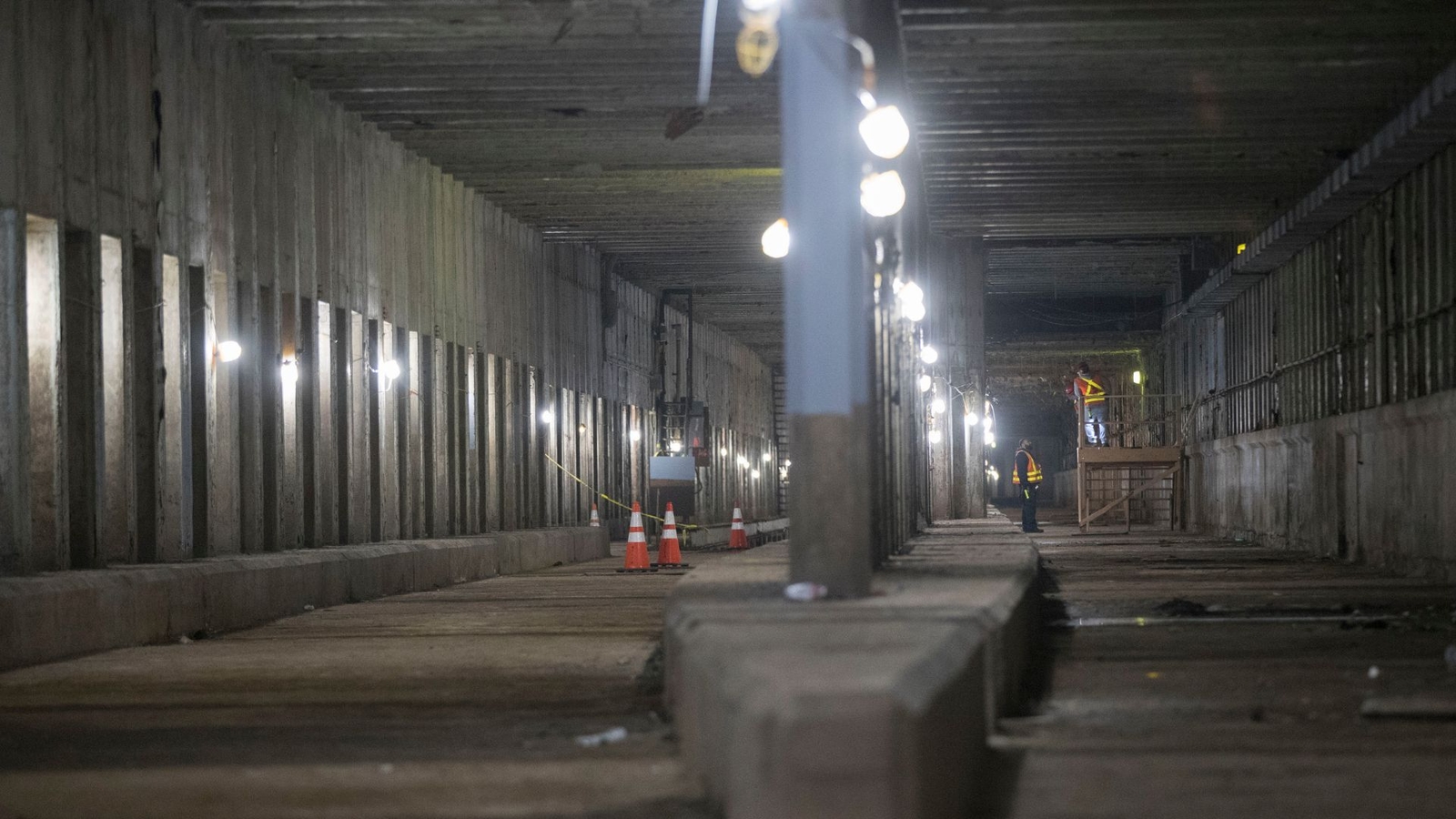
The MTA sued the Trump administration after $60 million in federal funding for the $7.0 billion Second Avenue Subway was frozen, jeopardizing work on the East Harlem extension and thousands of union jobs. About half the project (~$3.5 billion) is expected from the federal government; the extension to 125th Street is scheduled for completion in 2032. USDOT says it is considering legal avenues and the suit follows other court rulings forcing continued funding on related NYC projects, creating execution and political risk for contractors and regional transit financing.
The litigation creates a durable legal channel that increases the odds that contested federal transit dollars ultimately flow, compressing political execution risk into a legal timeline. Recent court rulings in related federal transit disputes set a pattern: preliminary judicial remedies tend to restore cashflows within months, not years, which favors firms with ready-to-deploy labor and inventory over those that must retool or re-certify.
Second-order winners are companies whose operations are fungible across federal projects — diversified engineering firms, national heavy-equipment lessors, and aggregate suppliers — because they can absorb short delays and redeploy crews to other funded work without idling fixed capital. Conversely, smaller regional subcontractors and long-lead suppliers (signals, custom tunnel systems) face concentrated counterparty and liquidity risk: contract cashflows delayed for months can force renegotiations, surety draws, or distressed asset sales, creating M&A opportunities for stronger balance sheets.
Key catalysts are courts granting interim relief (days–weeks), appeals that set binding precedent (months), and the electoral calendar that can either shorten or extend resolution timelines (quarters). Tail risks: a sustained executive policy to condition or re-allocate funds, an adverse higher-court ruling, or federal budgetary re-prioritization could push full project realization beyond multi-year horizons and meaningfully impair subcontractor solvency and municipal credit assumptions.
AI-powered research, real-time alerts, and portfolio analytics for institutional investors.
Overall Sentiment
mildly negative
Sentiment Score
-0.25
