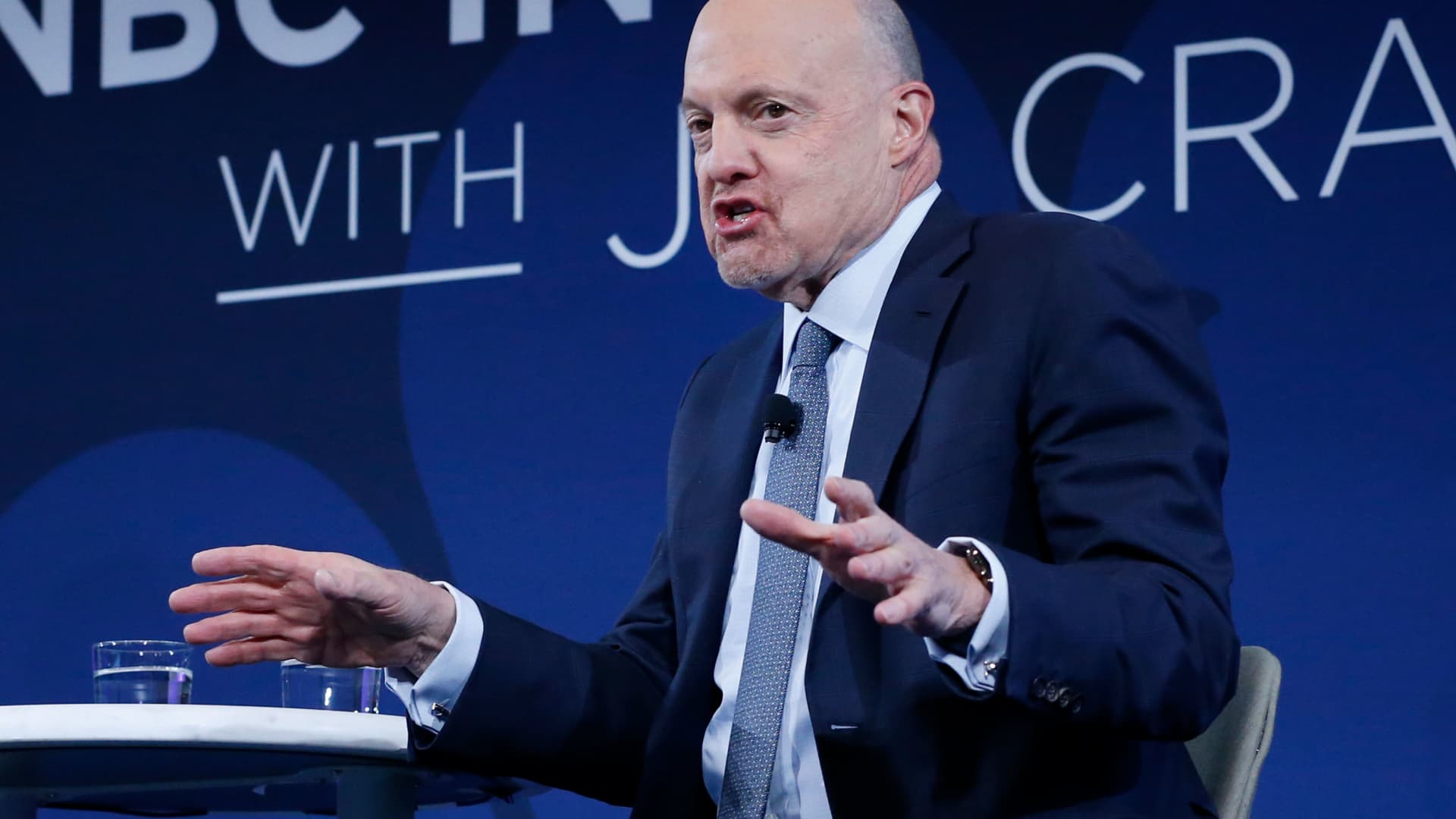
Jim Cramer argues Nvidia's latest blowout quarter was not rewarded by the market and says the stock may need a more aggressive capital-return strategy, including a larger buyback and dividend, to sustain investor enthusiasm. He contrasts Nvidia's current shareholder return profile with Apple's long-running buyback/dividend model and notes that Microsoft, Salesforce, and Nike remain under scrutiny in the Club portfolio. The piece is mostly opinionated portfolio commentary rather than new financial data, but it could influence sentiment around NVDA and other Club holdings.
The clearest second-order signal is not about near-term earnings power; it’s about whether NVDA can transition from a momentum-led compounder to a capital-return compounder before sentiment decays. That matters because mega-cap semis typically trade on narrative durability, and once “beat-and-raise” stops expanding valuation, the stock becomes vulnerable to option supply and systematic selling on any good-but-not-extraordinary print. A larger buyback would not just support EPS; it would reduce float, dampen borrow availability, and mechanically improve the stock’s behavior around earnings and index rebalancing.
A more interesting read-through is for AAPL, which remains the template for how mature platforms can keep multiple support even with slower unit growth. The market has already shown it will reward capital-return discipline plus installed-base monetization over raw growth, so any incremental signal that NVDA is willing to emulate that playbook could re-rate the stock’s ownership base from transient traders to longer-duration holders. That would likely also compress implied volatility over time, making NVDA less of an event-driven trading vehicle and more of a core equity holding.
MSFT and CRM are the indirect losers here. If the market starts demanding stronger shareholder yield from cash-rich software names, the bar for reinvestment-heavy narratives rises, especially when AI spending is being scrutinized for payback. For CRM and NKE, the article reinforces a harsher regime: investors are less forgiving of underperformance when capital allocation alternatives are visible next door.
The contrarian setup is that the market may be underestimating how much buyback intensity can offset slowing growth at NVDA. Even modest float reduction, if paired with a rising dividend and disciplined treasury management, can add several points of annual EPS support and create a persistent bid under the stock on drawdowns. The risk is that management prioritizes strategic investments over returns, leaving the stock exposed to valuation compression over the next 1-2 quarters as enthusiasm cools.
AI-powered research, real-time alerts, and portfolio analytics for institutional investors.
Request DemoOverall Sentiment
neutral
Sentiment Score
0.10
Ticker Sentiment
