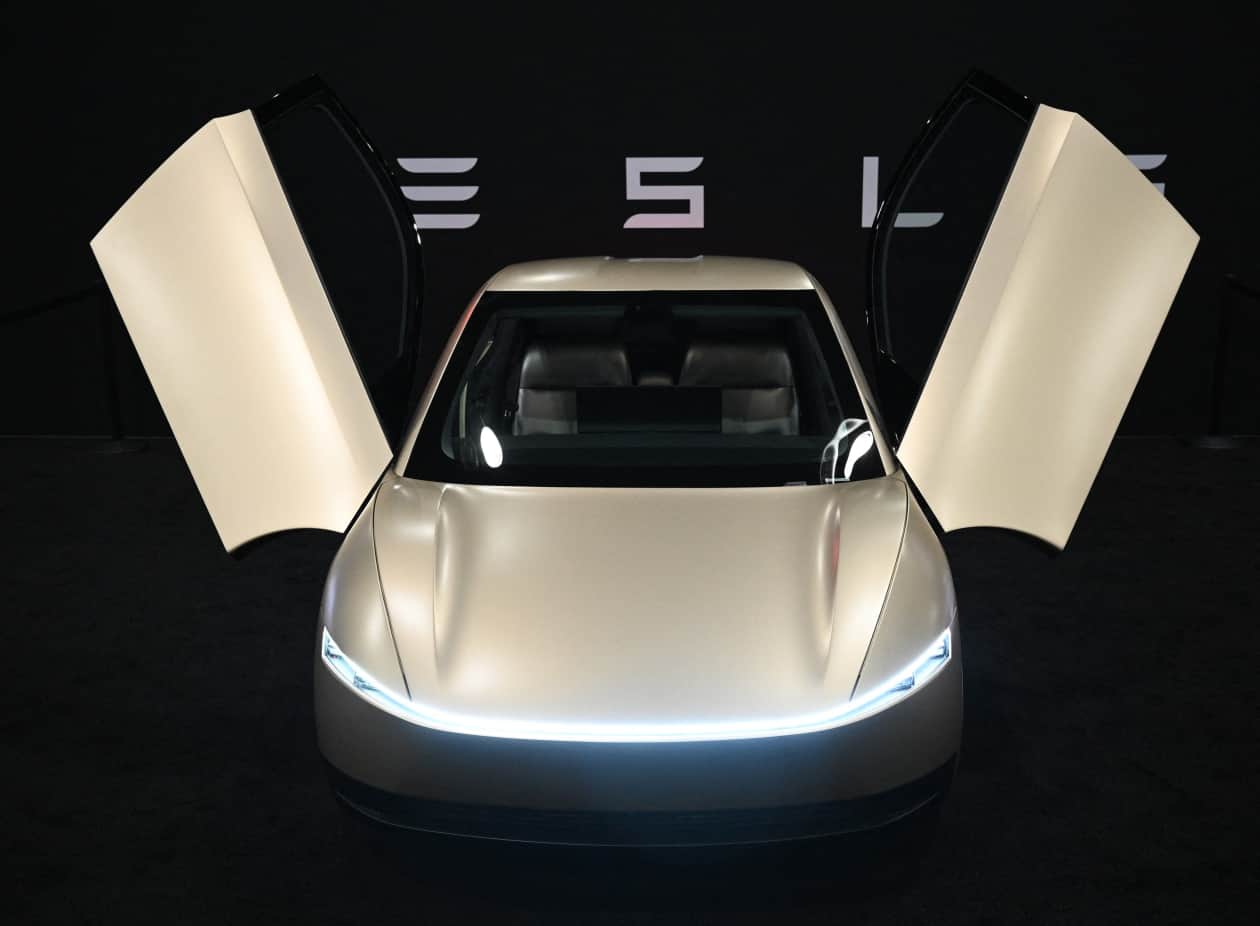
Tesla is reportedly in early-stage development of a compact electric SUV that would be priced below the Model 3 (Model 3 U.S. starting price ~$37,000) and has contacted suppliers about component manufacturing. The effort follows a previously abandoned attempt and remains tentative, so near-term financial or volume impact is uncertain but could modestly strengthen Tesla’s competitive and volume positioning if pursued.
A cheaper Tesla compact SUV materially reorders the low-cost EV segment and the supplier chain that supports it. The real winners are high-volume, low-cost component vendors (LFP cell makers, stampings/castings, simple inverters, and integrated motor suppliers) who can scale production with 12–24 month lead times; losers include premium EV niches that rely on ASPs above $45k and any OEMs that compete on features rather than unit economics. Expect meaningful second-order effects on raw-material flows: a sustained shift toward LFP would lower incremental demand for nickel/cobalt, pressuring those miners while boosting iron/phosphate demand trajectories over a 2–4 year horizon.
Execution risk is front-loaded and long-dated. Tooling, battery contracts and factory reconfiguration take quarters to years — meaningful volume signals will show up in supplier RFQs, purchase orders and Giga reconfig timelines over the next 6–18 months. Tail risks include margin dilution at Tesla if the compact cannibalizes Model 3/Y volumes, or regulatory/antitrust pushback if Tesla ties up critical capacity via long-term purchasing or exclusivity. A rapid spike in Ni/Co prices or a battery supply shortfall could reverse the low-cost push within months.
The common consensus views this as a pure volume play; the market underestimates Tesla’s ability to compress cost curves via simplification (parts consolidation, increased casting share, and software-driven feature differentiation) and to protect per-vehicle economics by migrating revenue to software/aftermarket. That preserves upside for Tesla and select suppliers even as headline ASPs fall. Strategically, monitor supplier contract announcements, LFP cell shipments, and Tesla capex allocation over the next 3 quarters as the primary catalysts.
AI-powered research, real-time alerts, and portfolio analytics for institutional investors.
Overall Sentiment
neutral
Sentiment Score
0.10
Ticker Sentiment
