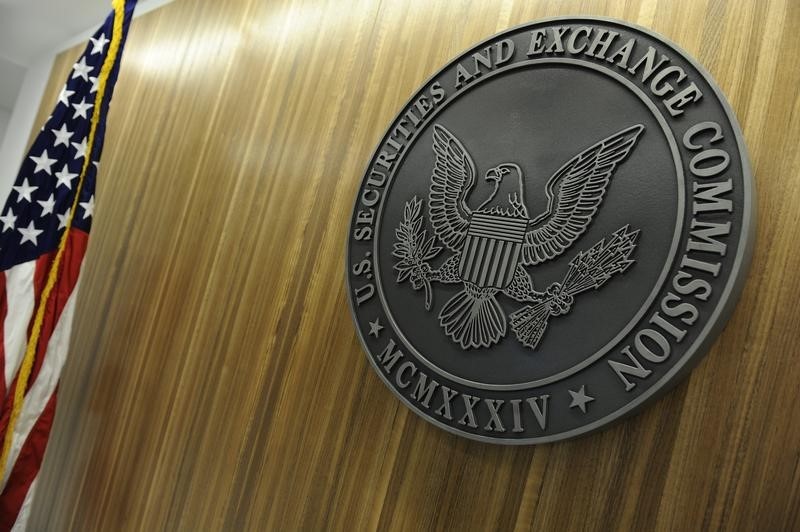
The SEC proposed allowing public companies to file financial reports semiannually instead of quarterly, with a new Form 10-S and continued annual reporting. The move is intended to reduce compliance burdens and increase flexibility, but it could also lower reporting frequency and transparency. The rule is still open for public comment and would affect disclosure standards across U.S. public markets if adopted.
The practical market effect is less about near-term earnings and more about information asymmetry. Semiannual reporting would widen the gap between management and outside investors, which tends to benefit companies with durable business momentum and penalize names that rely on frequent “course correction” narratives; the first-order winners are therefore opaque, high-dispersion growth stories where investors already underwrite a lot of trust in management cadence. That creates a subtle bid for quality growth, but also increases the value of alternative data, channel checks, and guidance credibility as differentiators.
For SMCI and APP specifically, the change is mildly positive if they can sustain strong operating trends, because less reporting friction lowers distraction and may reduce short-term headline volatility. But the bigger second-order effect is valuation: the market typically grants higher multiples to businesses that can compress the time between execution and investor proof points; removing that feedback loop can either stabilize multiples for winners or sharply re-rate serial disappointments. In practice, this is a regime that should widen dispersion across AI-adjacent names rather than lift the whole basket.
The main risk is not regulatory adoption itself but the behavioral response if companies start opting in broadly. If the first wave includes weak reporters, investors may punish the entire cohort with a transparency discount, and that would likely show up first in smaller-cap growth and sponsor-backed issuers over the next 1-2 quarters. Conversely, if only higher-quality issuers adopt the semiannual format, the move may be read as a confidence signal, which would compress volatility and favor longs with clean balance sheets and recurring revenue.
Consensus is probably underestimating how much this proposal increases the premium on management trust. The market may frame it as a compliance-cost story, but the more important consequence is that capital will migrate toward businesses that can monetize optionality without needing frequent validation. That is constructive for names with strong secular tails, but dangerous for companies whose equity story is still being proven.
AI-powered research, real-time alerts, and portfolio analytics for institutional investors.
Request DemoOverall Sentiment
neutral
Sentiment Score
0.05
Ticker Sentiment
