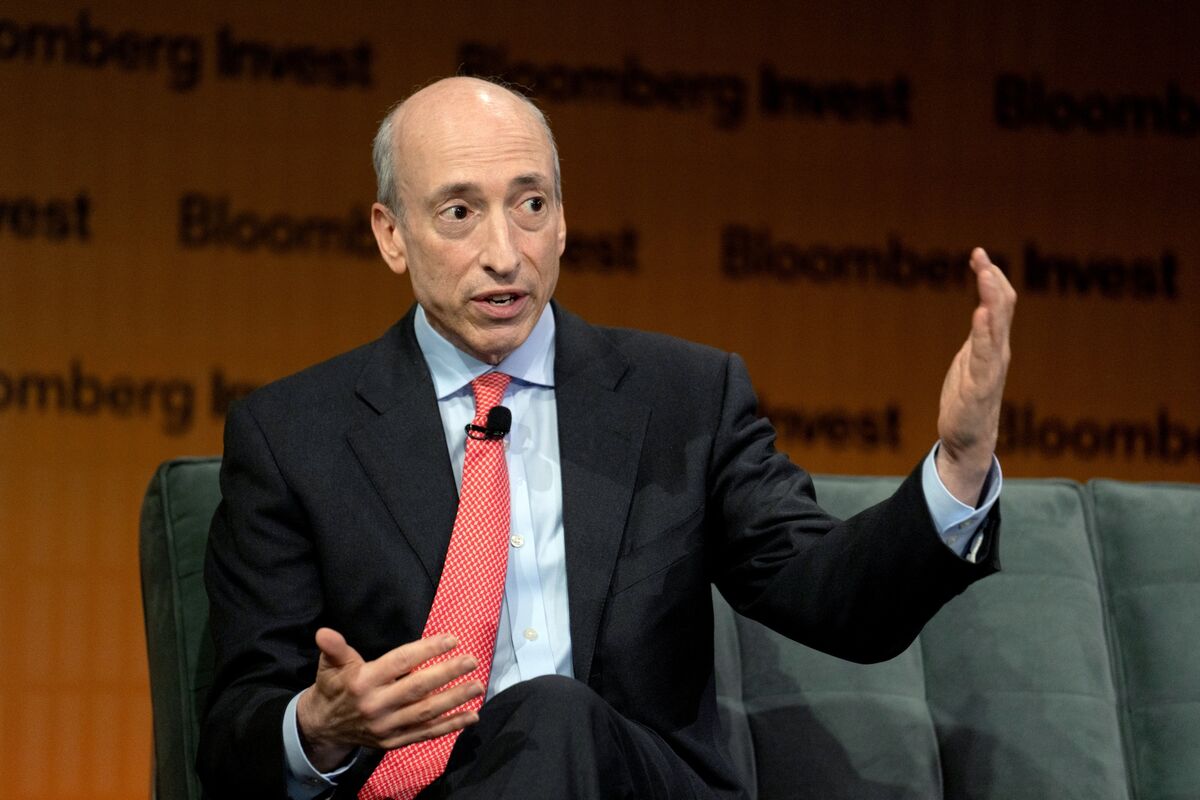
Gary Gensler filed a brief in a federal appeals court in Ohio arguing that sports bets should not be treated as swaps under federal oversight. The article centers on a regulatory and legal dispute involving Kalshi and the CFTC, with potential implications for prediction markets and related derivatives products. The reporting is largely factual and does not indicate an immediate market-moving development.
The important read-through is not the headline legal fight, but that the market structure around event contracts is still far from settled. A narrowing of CFTC authority over sports-linked contracts would likely shift volume away from regulated venues and toward state-regulated gaming operators and offshore/gray-market alternatives, because the economic product is closer to wagering than hedging. That makes the real economic loser any listed platform whose thesis depends on regulatory arbitrage and low-friction retail distribution; if the legal perimeter tightens, the take-rate and customer acquisition math deteriorates quickly.
Second-order, a prolonged court battle creates a volatility overhang for the entire prediction-market stack: liquidity providers, exchange tech vendors, and adjacent fintechs can all see deal slippage if counterparties fear retroactive enforcement or product delisting. The time horizon matters: over days, this is headline risk and likely noise; over months, a court signal that sports contracts are not swaps could force product redesigns, geo-fencing, or withdrawal from the highest-velocity vertical, compressing growth assumptions. The tail risk is asymmetric because one adverse ruling can invalidate the most commercially attractive use case while leaving the broader platform intact but much smaller.
Consensus may be underpricing the policy spillover. If regulators lose the ability to label these products as financial contracts, Congress and state gaming regulators gain leverage, which could accelerate a patchwork regime that raises compliance costs and reduces cross-state scalability. Conversely, if the court leans the other way, expect a fast re-rating in event-contract names and a broader repricing of fintechs experimenting with synthetic, outcome-based products, since the precedent would lower legal uncertainty across adjacent derivatives-like offerings.
AI-powered research, real-time alerts, and portfolio analytics for institutional investors.
Request DemoOverall Sentiment
neutral
Sentiment Score
-0.05
