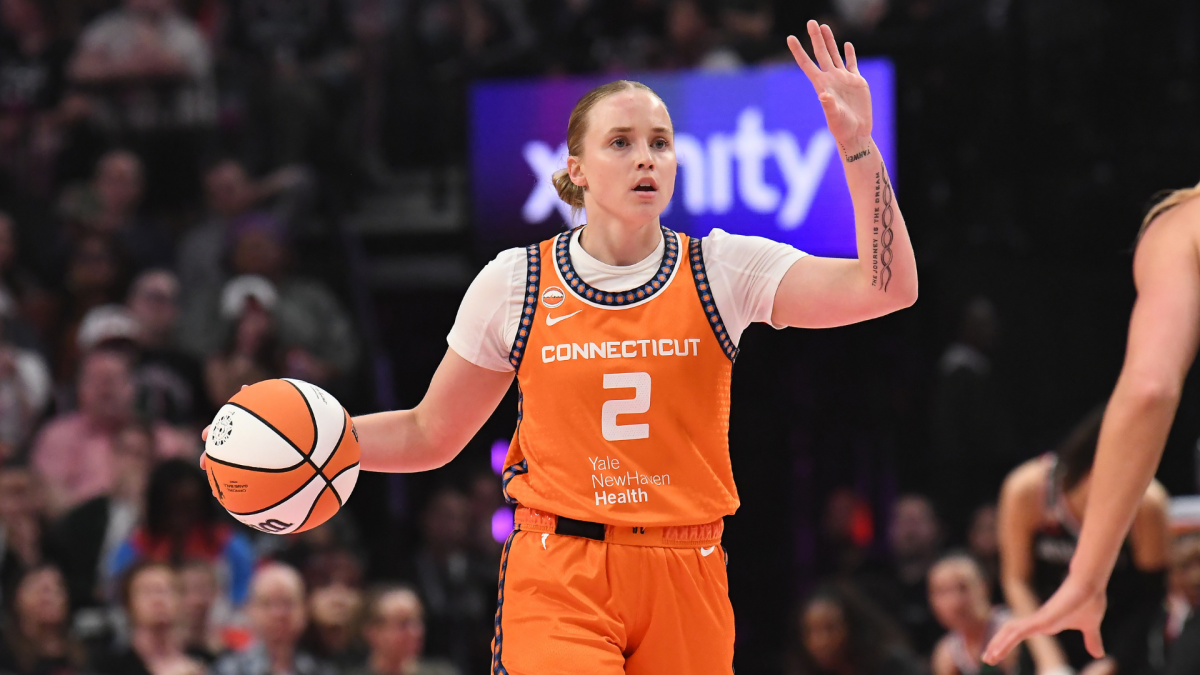
Connecticut waived Hailey Van Lith to clear a roster spot for Leïla Lacan, whose return should help a last-place Sun team sitting at 1-8 with a minus-17.6 net rating. Van Lith, 24, has now been cut twice this month after averaging just 3.5 points and 1.6 assists on 33.9/16.1/74.2 shooting in Chicago last season and cooling off after a strong start in Connecticut. The article is mainly roster/role news with limited direct market impact, though it reinforces Van Lith's short-term employment uncertainty and developmental-deal outlook.
The key second-order effect is that Connecticut is effectively admitting its short-term objective is defensive floor-raising, not player development. That usually improves the team’s live-game competitiveness in the next 2-6 weeks, but it also increases churn risk for fringe guards elsewhere because one roster move can now be justified by marginal defensive upgrade rather than long-term upside. In practice, that makes small-ball, offense-only guards more vulnerable league-wide, while perimeter defenders with any initiation upside become disproportionately valuable.
Van Lith’s situation is less about one player and more about how the new roster constraints are compressing the market for replacement-level guards. With every team forced to carry 12, the old “stash and evaluate” buffer is gone, so minimum-contract players have less structural protection and get cut faster once they stop producing immediately. The important signal is that teams still showed enough interest to cycle her twice; that suggests the market is not closed, but the acceptable performance band is now much narrower and more timing-dependent.
From a catalyst standpoint, the next 1-3 roster windows matter more than the rest of the season. A hardship injury elsewhere could create a temporary opening, but the highest-probability path is a developmental slot on an expansion or thin-guard roster; absent that, she risks being trapped in a waiting game where opportunities arrive too late to matter for the current campaign. The contrarian read is that the recent waiver may be over-interpreted as a pure talent verdict; it is also a roster economics story, and those often reverse quickly if a team gets even one backcourt injury.
For Connecticut, the upside is a cleaner defensive rotation, but the ceiling remains capped unless the replacement meaningfully improves spacing. If the new guard does not bend the floor, the move is only a marginal stabilizer, not a turnaround lever. That means any near-term improvement should be treated as tactical, not structural, and likely fades once opponents adjust to the same offensive pressure points.
AI-powered research, real-time alerts, and portfolio analytics for institutional investors.
Request DemoOverall Sentiment
mildly negative
Sentiment Score
-0.15
