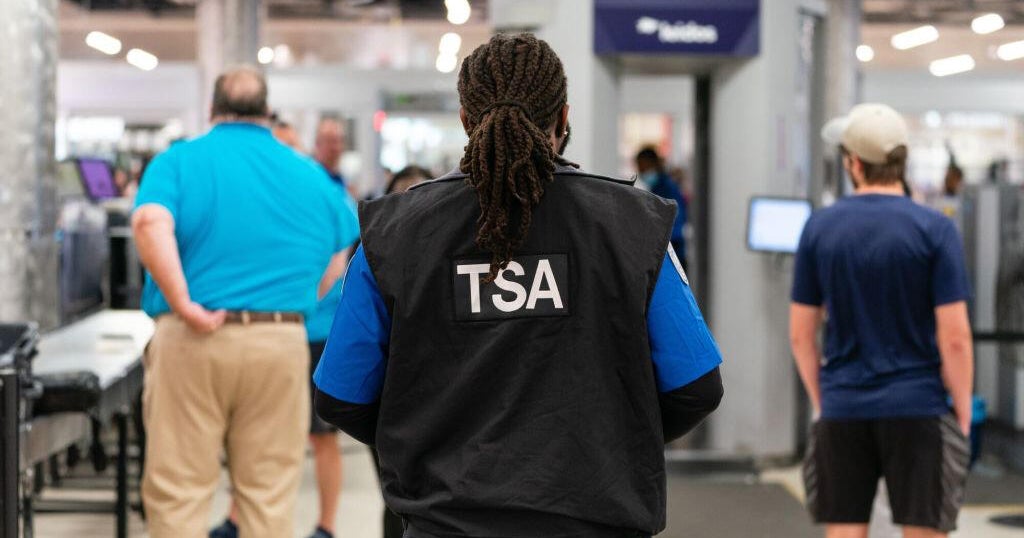
Senate failed to advance a DHS funding measure in a 51-46 vote, marking the fourth time this year and leaving the partial federal shutdown in its third week (the third shutdown in six months). TSA officers—deemed essential—are working without pay and reporting mounting financial distress (eviction risk, utility shutoffs), severe mental-health impacts, and difficulty accessing assistance, posing potential operational and morale risks for airports and the broader travel sector.
The immediate economic lever is personnel risk: unpaid essential staff compresses frontline capacity without an easy short-term substitute, raising the probability of cascading operational knock-ons (delays, higher cancellation tails, increased passenger complaints) that hit airline unit revenue and ancillary income streams within days to weeks. Expect an acceleration in overtime and ad-hoc contracting spend: even a modest 5–10% rise in unscheduled absences at peak airports would force airlines and airports into expensive stop-gap measures (overtime pay, private guard hires, reallocation of staff) that meaningfully widens short-term unit costs.
Second-order demand effects are asymmetric. If visible service failures (long lines, high-profile safety perceptions) cluster over a 2–6 week window around peak travel dates, consumer booking curves could shift forward (short-term cancellations) and yield management will be forced to discount to protect load factors in the following 2–3 months. Conversely, private and public contractors that can be stood up quickly — incumbents with existing DHS relationships — are in position to capture outsized margin expansion as agencies trade speed for cost.
Political and legal catalysts create a tight event calendar: near-term Senate/House votes and any union-organized work actions are binary triggers (days–weeks) that will determine whether disruptions remain localized or become structural (months). The mean-reversion case is also credible: a funded stopgap or emergency appropriations within 2–4 weeks would materially compress downside for travel names but leave a longer-term structural problem (attrition, recruiting) that plays out over quarters rather than days.
AI-powered research, real-time alerts, and portfolio analytics for institutional investors.
Request DemoOverall Sentiment
strongly negative
Sentiment Score
-0.75
