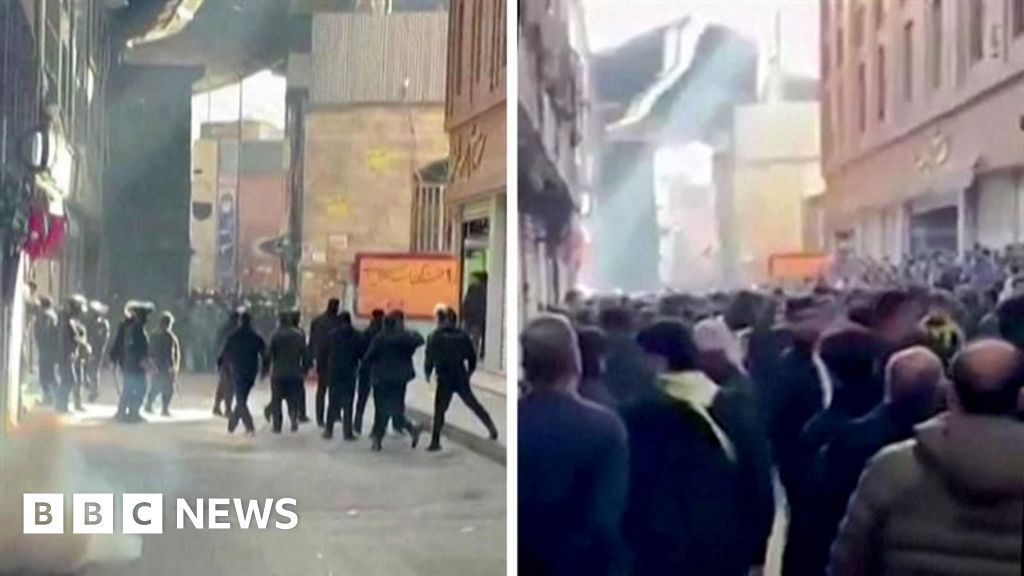
Widespread protests across Iran over the past 10 days have resulted in at least 36 deaths and 2,076 arrests, with HRANA reporting 34 protesters and two security personnel among the dead and BBC Persian confirming 20 identities. The unrest, triggered by a sharp fall in the rial and soaring inflation (around 40%) amid sanctions and economic mismanagement, has spread to 27 of 31 provinces and prompted violent crackdowns—heightening geopolitical and emerging-market risk, increasing the likelihood of further currency depreciation, capital outflows and market volatility tied to Iran-related geopolitical and sanction dynamics.
Market structure: Short-term winners are safe-havens (gold, USD, US Treasuries) and regional defense/insurance underwriters; losers are EM assets with Iran/region exposure and local consumer/retail names due to collapsed domestic demand and capital flight. Geopolitically-driven premium lifts Brent/Brent-volatility if hostilities or sanctions broaden; however material supply shock requires sustained military escalation or Strait of Hormuz closure (low-probability). FX: expect continued pressure on regional currencies and further rupiah/lira-style outsized moves; credit spreads on EM sovereigns widen by +50–200bp in severe risk-off weeks.
Risk assessment: Tail risks include rapid escalation to Iran-US skirmish (weeks) or nationwide violent crackdown undermining regional asset flows (months), each capable of moving Brent >10% and EM spreads +200–500bp. Immediate (days): volatility spikes and local illiquidity; short-term (weeks–months): capital outflows and rating downgrades; long-term (quarters+) if sanctions change, energy trade patterns reconfigure. Hidden dependency: oil market complacency — inventories and spare OPEC capacity can mask true exposure until a shipping-sanctions event triggers a squeeze. Catalysts: credible US military action, major Iranian infrastructure strikes, or mass internet shutdowns that freeze markets.
Trade implications: Favor tactical long gold (GLD) and long-duration Treasuries (TLT) as first-line hedges for 1–3 months; implement EM equity protection via 3-month put spreads on EEM sized 2–4% portfolio risk. Consider a directional, low-cost Brent call spread (BNO or Brent futures) sized 1–2% if Brent breaches +5% in 7 days; buy VIX call spreads for crash protection if VIX >18. Sector rotation: reduce consumer discretionary EM exposure by 50–70% of current weights and increase cash/hedge allocation by 3–6%.
Contrarian angles: Consensus assumes escalation equals persistent EM selloff — but if protests force internal political concessions without external conflict, risk premium could mean-revert in 2–3 months; opportunistic buys in beaten-down EM credit after a 10–15% spread widening can deliver asymmetric returns. Historical parallels (2019/2022 Middle East unrest) show oil spikes were short-lived absent sanctions/strait closures; avoid overpaying for long-dated oil exposure. Monitor casualty counts, internet blackouts, US military posture weekly; treat absence of escalation as buy signal for select cyclicals after a 10% selloff.
AI-powered research, real-time alerts, and portfolio analytics for institutional investors.
Request DemoOverall Sentiment
strongly negative
Sentiment Score
-0.60
