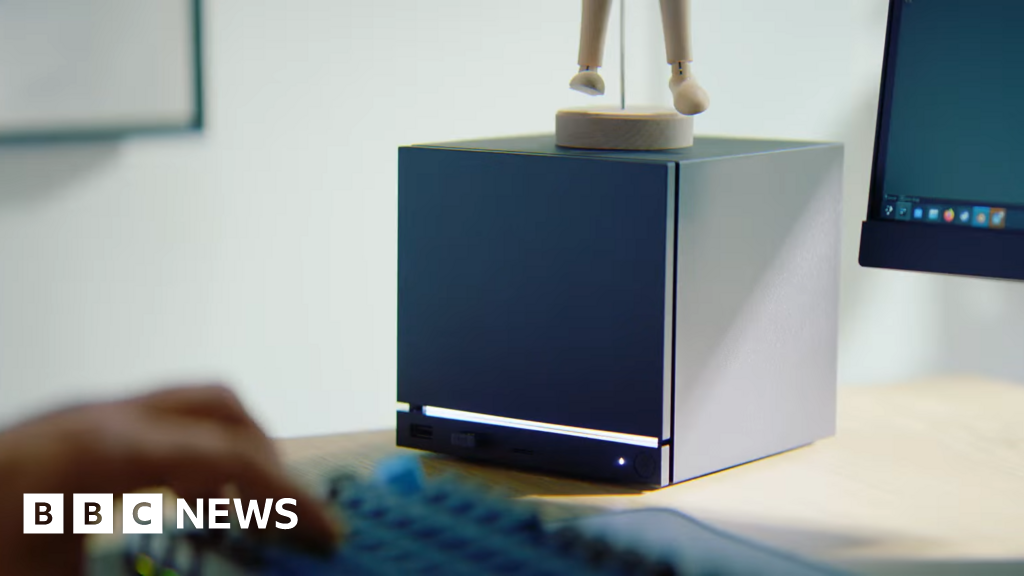
Valve launched the Steam Machine at £879 in the UK and $1,049 in the US, above earlier expectations because of rising RAM and storage costs. The company also priced a 2TB version at £1,149, with a controller bundle at £1,208, reinforcing a broader industry trend of hardware price increases. Analysts said the higher price makes the device more niche and less accessible than initially hoped.
The key market signal is not the product itself but the change in pricing power across the hardware stack. When a niche, enthusiast-facing platform is forced to reprice upward before launch, it implies component inflation is being absorbed first by low-volume, discretionary devices rather than by mass-market incumbents, which usually have more leverage to compress BOM or subsidize via software/services. That makes the near-term loser set broader than gaming alone: any consumer electronics vendor with high memory/storage intensity and weak ecosystem monetization is exposed to margin compression or delayed launches.
For SONY, the implication is mixed but slightly constructive competitively: a higher-priced alternative reduces pressure in the premium-console tier, but it also normalizes higher console pricing into the market, which may help Sony defend ASPs on future hardware revisions. The bigger second-order effect is on demand elasticity for the next console cycle: if enthusiasts balk at a $1K-plus gaming box, publishers may respond by prioritizing cross-platform monetization and subscription bundles over hardware-specific exclusives, which modestly favors platform holders with larger installed bases and stronger digital services. MSFT is least directly affected here, but the broader read-through is that content/services monetization becomes more valuable than hardware margin in an inflationary component regime.
The contrarian view is that the market may be over-indexing the headline price and under-indexing mix. If premium buyers still accept the product, the ecosystem could validate higher-end gaming PC economics and pull demand away from mid-tier PC OEMs rather than from consoles. The real catalyst window is 3-9 months: sustained RAM/storage inflation would matter for holiday 2026 console pricing, but any easing in memory markets could rapidly restore launch expectations and unwind the current bearish narrative.
The biggest tail risk is a second-order slowdown in consumer tech refresh cycles. If memory inflation persists into 2027, device makers will keep raising prices or cutting features, which can suppress unit growth even when revenue holds up; that is particularly negative for Apple on lower-end devices and for Sony on hardware attach rates. If AI-driven memory demand starts to moderate, the entire thesis reverses quickly because component deflation would likely show up first in guided launch pricing and promotional intensity.
AI-powered research, real-time alerts, and portfolio analytics for institutional investors.
Request DemoOverall Sentiment
mildly negative
Sentiment Score
-0.25
Ticker Sentiment
