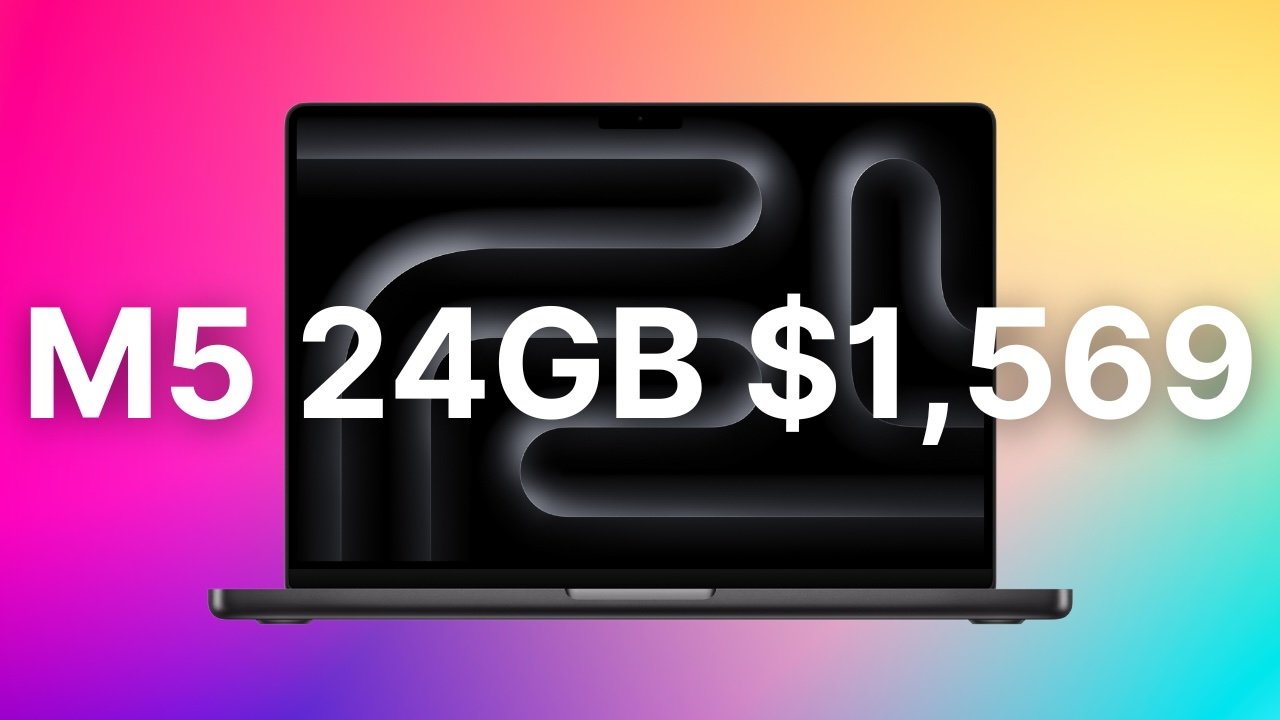
B&H has launched aggressive Black Friday pricing on Apple hardware, cutting $230 off the new M5 14-inch MacBook Pro with 24GB of RAM to $1,569 and advertising limited supply. Additional M5 configurations (16GB/1TB at $1,599; 32GB/512GB at $1,849; 32GB/1TB at $2,029) and several M4 Mac deals are also listed, signaling retailer-led promotions to drive near-term unit demand. The moves are notable for consumer demand and promotional intensity but are unlikely to materially affect Apple’s financials or broader markets.
Market structure: Aggressive sub-$1,600 pricing on brand-new M5 14" with 24GB RAM from a major retailer signals a tactical volume push by channels (B&H) to drive holiday traffic; direct winners are online retailers (AMZN, BBY) and consumers, losers are smaller resellers and PC OEMs that compete on ASP. Competitive dynamics favor scale players who can monetize inventory turns; this will exert downward price pressure on high-end Windows OEM ASPs (DELL, HPQ) over the next 30–90 days. The supply signal is twofold: adequate upstream supply (no shortages) and potential channel inventory build, implying downside risk to near-term sell-through metrics for Apple if demand underperforms expectations.
Risk assessment: Tail risks include a larger-than-expected demand shock (Black Friday-to-December sell-through < forecast by >10%) that forces Apple channel markdowns and a revenue guide-down at the next quarter — a 5–15% downside swing in AAPL stock is plausible in that scenario. Short-term (days–weeks) volatility will cluster around sales reports and weekly retailer data; medium-term (1–3 months) depends on Apple’s inventory commentary and holiday revenue; long-term (quarters) hinges on replacement cycles and services growth resiliency. Hidden dependencies include component supplier cadence (TSM, SK Hynix) and channel financing arrangements that can amplify markdowns; catalysts: weekly sales data, Apple’s Dec-quarter guidance, and competitor promo intensity.
Trade implications: Tactical plays favor short-duration hedges on AAPL and long exposure to scale e-tailers benefiting from traffic (AMZN/BBY) for 30–90 days. Consider pair trades: long AAPL on >5% pullback (1–3 month horizon) vs short DELL to capture brand premium/earnings resilience; use put spreads to cap hedge cost and sell calls only after volatility cools. Rotate modest weight out of cyclical PC OEMs into high-margin services/retail beneficiaries; act ahead of Dec-quarter prints and trim quickly on >8% moves.
Contrarian angles: The market may over-interpret retailer markdowns as a permanent demand problem; historically Apple allowed limited channel discounts to accelerate refresh cycles without systemic margin impairment (analog: post-launch iPad/Mac promos). If Black Friday generates incremental volume >15% YoY for Mac category, Apple could see upside to replacement cadence and services attach, flipping the narrative within 6–8 weeks. Unintended consequence: aggressive retailer promos could compress OEM pricing and margins, creating a transitory buying opportunity in Apple suppliers if inventory clears quickly and Apple maintains services growth.
AI-powered research, real-time alerts, and portfolio analytics for institutional investors.
Request DemoOverall Sentiment
mildly positive
Sentiment Score
0.28
Ticker Sentiment
