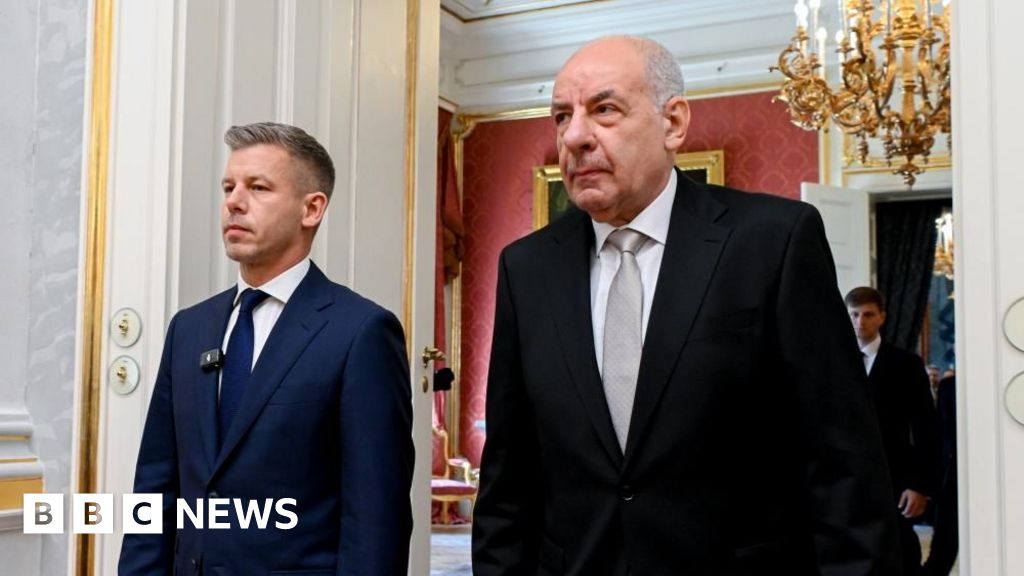
Hungary's new government says it will use its two-thirds parliamentary majority to amend the constitution and remove President Tamás Sulyok, setting up a roughly one-month constitutional clash with Orbán-era institutions. The dispute could delay reforms and potentially affect the unlocking of up to €16.4bn in EU funds tied to democratic backsliding concerns. The article is politically significant for Hungary but is likely limited in direct market impact.
The market-relevant issue is not the personality clash; it is the speed at which constitutional rewiring can convert a political mandate into institutional control. If the new government can neutralize veto points in weeks rather than quarters, the probability of a cleaner EU disbursement path rises materially, which should compress Hungary’s sovereign spread and lower funding costs for domestic banks and utilities that depend on policy stability. The immediate beneficiaries are local duration assets, while the near-term losers are any holders of Hungary risk premised on prolonged institutional paralysis.
The second-order risk is that the confrontation creates a temporary “governability discount” even as it improves the long-run reform capacity. Markets usually punish legal uncertainty first and reward institutional cleanup later, so the tape can overreact in the next 1-4 weeks if court challenges or procedural delays suggest the transition is messier than expected. That matters most for the forint and front-end Hungarian rates, which are the fastest channels for a reversal if Brussels signals that funds will be delayed pending proof of durable rule-of-law reforms.
The contrarian point is that this is potentially bullish for Hungary risk if Magyar uses the conflict to deliver exactly what the EU wants: removal of legacy bottlenecks, stronger checks on patronage, and a credible limit on executive tenure. In that scenario, what looks like constitutional instability becomes a one-time de-risking event, not a regime spiral. The trade is therefore asymmetrical: sell the first headline-driven spike in risk premia unless the stand-off starts to hit the EU funding timetable beyond the next 30-45 days.
AI-powered research, real-time alerts, and portfolio analytics for institutional investors.
Overall Sentiment
mildly negative
Sentiment Score
-0.15
