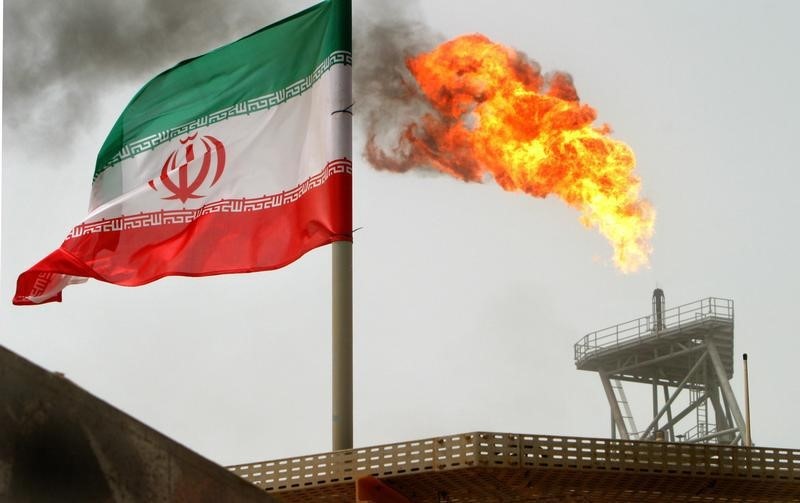
Iran said it is preparing a mechanism to manage and charge fees for traffic through the Strait of Hormuz, with only commercial vessels and parties cooperating with Iran able to benefit. The move heightens the risk of disruption to a critical global energy and shipping chokepoint, while reports indicate President Trump is considering additional military measures against Iran. This raises the probability of renewed U.S.-Israeli-Iran escalation and a market-wide risk-off response, especially in oil and logistics.
The market is still underpricing the difference between a headline blockade risk and a durable chokepoint monetization regime. If Tehran can convert Hormuz from an open transit lane into a managed toll road, the first-order effect is higher freight, insurance, and working-capital costs across every marginal barrel moving out of the Gulf; the second-order effect is a forced repricing of long-duration supply contracts and a slower global inventory cycle. That is bearish for refiners and rate-sensitive importers, but it also creates a persistent risk premium that can stay embedded even if there is no full closure.
The biggest winners are not just upstream energy producers, but also non-Gulf energy supply chains: U.S. LNG, North American pipeline systems, and firms with exposure to non-Middle East barrels. A partial restriction or fee regime is especially constructive for tanker companies and marine insurers in the near term because voyage risk and demurrage rise faster than spot freight capacity can adjust. By contrast, airlines, chemical manufacturers, and Asian import-dependent industrials face a nasty margin squeeze because they cannot immediately pass through fuel and logistics inflation.
Catalyst timing matters: the next several sessions are about headline risk, but the real earnings impact shows up over 1-3 quarters through higher freight bills, inventory precautionary buying, and potentially deferred capex in import-heavy sectors. The main reversal trigger is credible U.S. military signaling paired with a diplomatic off-ramp that restores free passage; absent that, the market will treat each escalation as a premium ratchet rather than a one-day event. The contrarian view is that a full shutdown is still less likely than a calibrated tolling scheme, which means outright crash hedges may be too expensive while relative-value positioning remains attractive.
The cleanest expression is to own volatility in transport and energy inputs while staying selective on outright oil beta. If the mechanism is implemented without immediate kinetic escalation, the winners are the “friction toll collectors” — tankers, marine insurance, and non-Middle East midstream — not necessarily the broad energy complex. That creates a better risk/reward in pairs than in directional index hedges.
AI-powered research, real-time alerts, and portfolio analytics for institutional investors.
Request DemoOverall Sentiment
strongly negative
Sentiment Score
-0.55
