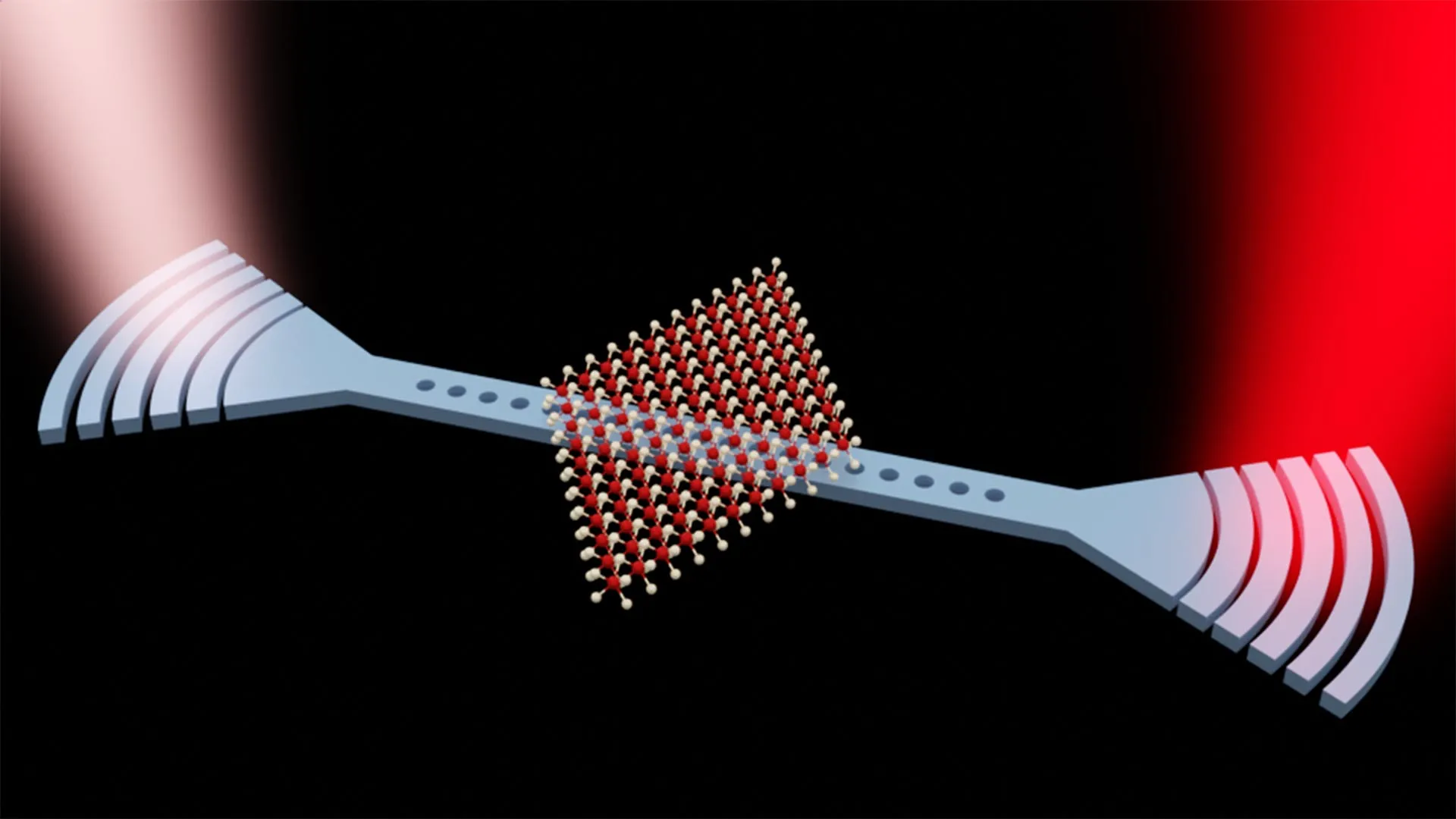
Penn researchers demonstrated an all-light switching approach using exciton-polaritons, consuming only about 4 quadrillionths of a joule per operation. The breakthrough could reduce the energy cost of AI computing and enable faster photonic chips that avoid repeated light-to-electricity conversions. While highly promising technologically, the article is early-stage academic news with limited near-term market impact.
This is an important proof-of-concept for the next compute bottleneck: not raw FLOPS, but joules per inference. The economically relevant implication is that even a modest reduction in conversion overhead inside AI accelerators can compound into materially lower rack-level power draw, cooling load, and capex intensity for data centers. That favors the picks-and-shovels around advanced packaging, photonics integration, and specialty semiconductor materials more than it favors any one “AI chip winner” today.
The second-order winner is likely the infrastructure layer that can monetize power relief before the technology is fully commercialized: optical interconnects, co-packaged optics, and thermal management. If photonic compute moves from lab demo to constrained deployments, it could pressure incumbents whose differentiation depends on brute-force scaling of GPU/ASIC clusters, because the competitive frontier shifts from transistor density to system-level energy efficiency. The near-term beneficiaries are therefore the firms selling enabling components, not the speculative pure-plays promising full photonic replacement.
The market is likely to overestimate the speed of adoption. Scaling from a nanocavity demonstration to manufacturable, yield-stable, wafer-level devices is a multi-year problem, and the biggest failure modes are not physics but integration: temperature sensitivity, fabrication variability, packaging, and compatibility with existing EDA/design flows. That means the stock-market implication is more venture-style optionality than revenue near-term, but it does increase the probability that hyperscalers and defense-linked R&D budgets shift some spending toward photonic programs over the next 12–36 months.
Contrarian view: the headline may look like a threat to electrical compute, but in practice it is a validation of the semiconductor ecosystem’s next upgrade cycle. The more plausible outcome is hybrid architectures where light handles the most power-hungry data movement and switching edges, while electrons still dominate control logic. That suggests the trade is not to fade GPUs broadly, but to own the companies that make GPU clusters less power-constrained and to watch for a re-rating of photonics enablers as the market starts pricing a longer-duration adoption curve.
AI-powered research, real-time alerts, and portfolio analytics for institutional investors.
Request DemoOverall Sentiment
moderately positive
Sentiment Score
0.62
