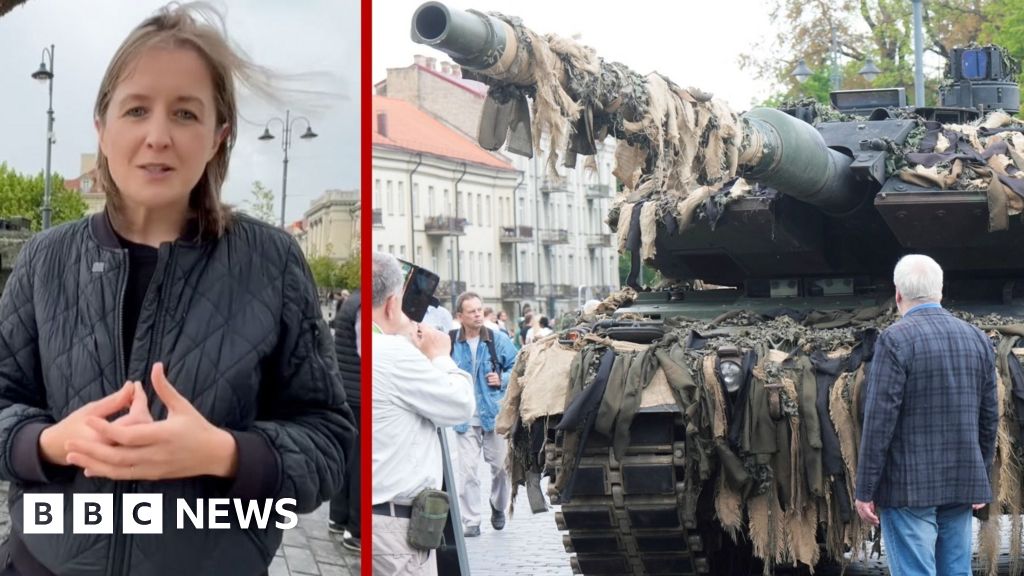
Germany has permanently deployed troops to Lithuania's eastern border, marking its first permanent foreign military deployment since World War II. The move, attended by German Chancellor Friedrich Merz and Lithuanian President Gitanas Nauseda, is a response to Russia's violation of European peace and the need to reinforce NATO's eastern flank, particularly given Lithuania's proximity to Kaliningrad and Belarus.
Germany has initiated its first permanent foreign military deployment since World War Two, stationing troops on Lithuania's eastern border, a development underscored by an inauguration ceremony attended by German Chancellor Friedrich Merz, Defence Secretary Boris Pistorius, and Lithuanian President Gitanas Nauseda. According to Chancellor Merz, this deployment is a direct response to Russia's ongoing violation of European peace and the post-Second World War international order. The strategic significance of this move is amplified by Lithuania's geographical proximity to the Russian exclave of Kaliningrad and Belarus, effectively reinforcing NATO's eastern flank. This event is characterized by a 'mildly negative' sentiment (score: -0.2) and a 'defensive' tone, with a 'market_impact_score' of 0.45, indicating moderate investor attention to the heightened geopolitical landscape. The deployment aligns with the themes of 'Geopolitics & War' and 'Infrastructure & Defense,' suggesting a potential shift in resource allocation and focus towards security and defense capabilities in the region.
AI-powered research, real-time alerts, and portfolio analytics for institutional investors.
Request DemoOverall Sentiment
mildly negative
Sentiment Score
-0.20
