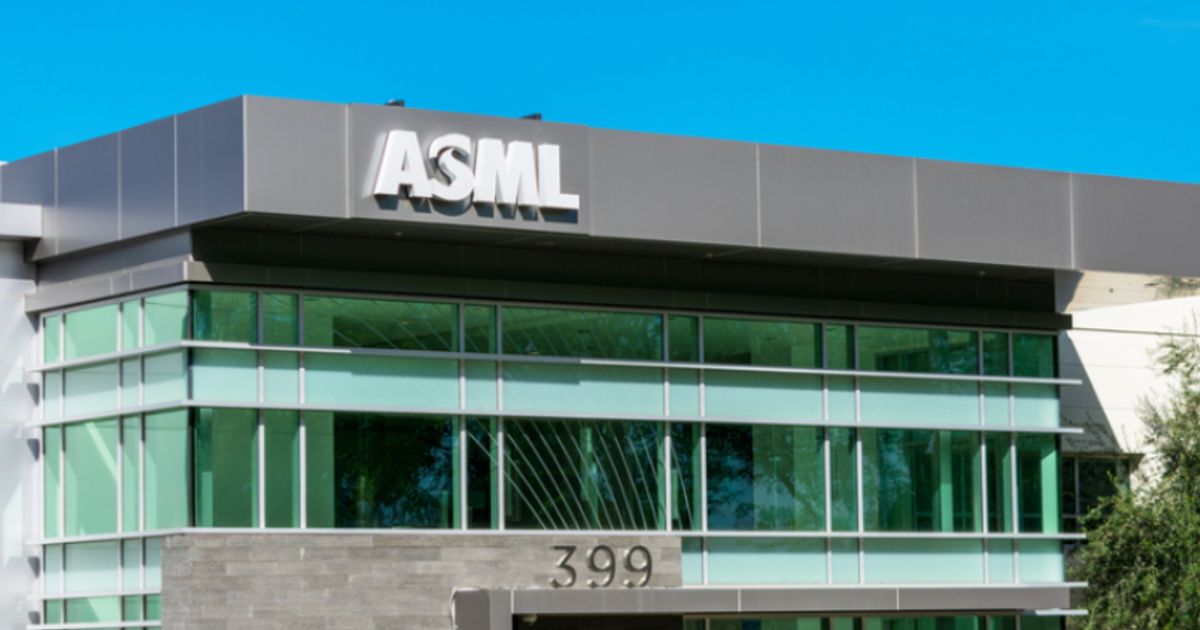
ASML reported stronger-than-expected Q4 bookings of €13.16bn (EUV orders €7.4bn with 14 EUV systems sold) and net sales of €9.72bn, with gross margin at 52.2% and basic EPS €7.35. The company raised its 2026 sales guidance to €34–39bn (midpoint ~16% y/y growth) with gross margin guidance of 51–53%, a record year-end order backlog of €38.8bn, and reiterated longer-term revenue targets of €44–60bn by 2030; it also announced a €12bn buyback through 2028 and plans to cut ~1,700 jobs (~4% of workforce). Despite slightly lower unit shipments (102 systems) and EPS marginally below estimates, the strong AI-driven order flow and expanded capacity plans underpin an improved medium-term outlook, while China accounted for 36% of net system sales.
Market structure: ASML’s record €38.8bn backlog and €7.4bn EUV bookings (14 systems) signal demand > current manufacturing capacity, giving ASML pronounced allocation power into 2026–27 and likely above-industry pricing power for EUV customers (foundries and hyperscalers: TSMC, Samsung, Nvidia/Google/Meta). Winners: ASML, optics/light-source suppliers (Zeiss/Cymer), foundries and AI cloud providers; losers: smaller, lower‑margin tool vendors and memory OEMs facing delayed tool allocation. China (36% of net system sales) is material — both opportunity and regulatory risk.
Risks: Low‑probability/high‑impact tails include tightened export controls or Chinese retaliation that could reduce ASML China revenue >10% within 6–12 months, major supply‑chain disruption on EUV sources (light‑source/optics) causing 3–6 month shipment shortfalls, or a demand pullback if AI capex stalls. Immediate (days) is positive sentiment; short term (weeks–months) conversion risk from backlog to shipments is the key uncertainty; long term (years) depends on EUV adoption curve and ASML’s ability to scale to €44–60bn by 2030.
Trade implications: Direct long in ASML (capitalise on backlog + €12bn buyback) via limited‑risk 9–15 month call spreads or selective OTM put selling; consider a relative value pair: long ASML vs short LRCX/AMAT to isolate equipment‑cycle beta. Size positions to 2–4% portfolio gross with 0.5–1% downside risk per trade; take profits on +20–30% or cut if two consecutive quarters show backlog-to‑shipment misses >€5bn. Rotate into foundries (TSM, 3–5% overweight) and reduce exposure to cyclical memory names (e.g., MU) by 1–2%.
Contrarian angle: Consensus focuses on AI demand but underprices execution bottlenecks — unit shipments already missed expectations despite orders, so backlog is necessary but not sufficient for revenue realization. Buyback and optimistic guidance may be partially priced; downside risk is that ASML prioritises top AI customers, creating concentration risk and slower revenue diversification. Historical cycles (equipment supercycles 2017–19) ended when end‑market demand reversed; watch capex cadence and component supply metrics closely as leading indicators.
AI-powered research, real-time alerts, and portfolio analytics for institutional investors.
Request DemoOverall Sentiment
moderately positive
Sentiment Score
0.55
Ticker Sentiment
