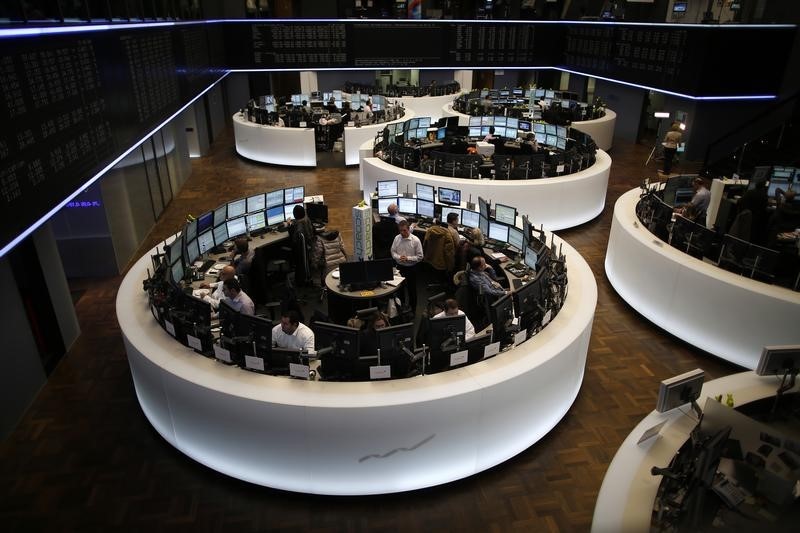
German equities were mixed to weaker, with the DAX down 0.14%, MDAX off 0.33%, and TecDAX down 0.24% as telecom, construction and chemicals led losses. Standout moves included Nagarro surging 87.69% on the TecDAX, while Heidelberg Materials fell 9.35% and Deutsche Telekom dropped 5.45% to a 52-week low. Oil advanced, with WTI up 2.25% to $70.79 and Brent up 1.91% to $73.99, while the DAX volatility index rose 3.50% to 17.96 amid broader geopolitical and market uncertainty.
The immediate read-through is a classic cross-asset de-risking unwind: lower geopolitical tail risk compresses the energy risk premium, while duration-sensitive, rate-like defensives lose their bid as investors rotate back into cyclicals and defense/industrial beta. The fact that volatility is still elevated even with lower realized conflict risk suggests the market is not pricing a clean normalization yet; that leaves room for a second leg in oil-sensitive equities if the ceasefire holds for several sessions.
The biggest second-order effect is not just lower crude, but lower implied inflation over the next 1-3 months, which can pressure the entire “bond proxy” complex. That is structurally negative for telecoms/utilities-style names that already have crowded ownership and limited earnings acceleration, while it is supportive for capital goods and defense names that benefit if investors refocus on fiscal and procurement durability rather than commodity shock hedges.
The move in automakers is likely a more interesting tell than the headline index action: lower energy stress should improve consumer sentiment at the margin, but it also tightens the logic for owning autos as a “commodity relief” trade because their margin sensitivity to fuel is indirect and usually slower to show up in demand data. Meanwhile, the sharp outperformance in select software/industrial tech names looks like a risk-on dispersion trade rather than a macro thesis; those can fade quickly if oil retraces and the market re-prices geopolitical complacency.
The contrarian risk is that this is a headline-driven squeeze rather than a durable regime shift. If crude fails to stay below the recent spike zone for more than 5-10 trading days, the market will likely conclude supply disruption remains a latent risk, at which point the current rotation back into cyclicals should reverse and defensive yield names may stabilize on a lower-for-longer volatility backdrop.
AI-powered research, real-time alerts, and portfolio analytics for institutional investors.
Request DemoOverall Sentiment
neutral
Sentiment Score
-0.05
