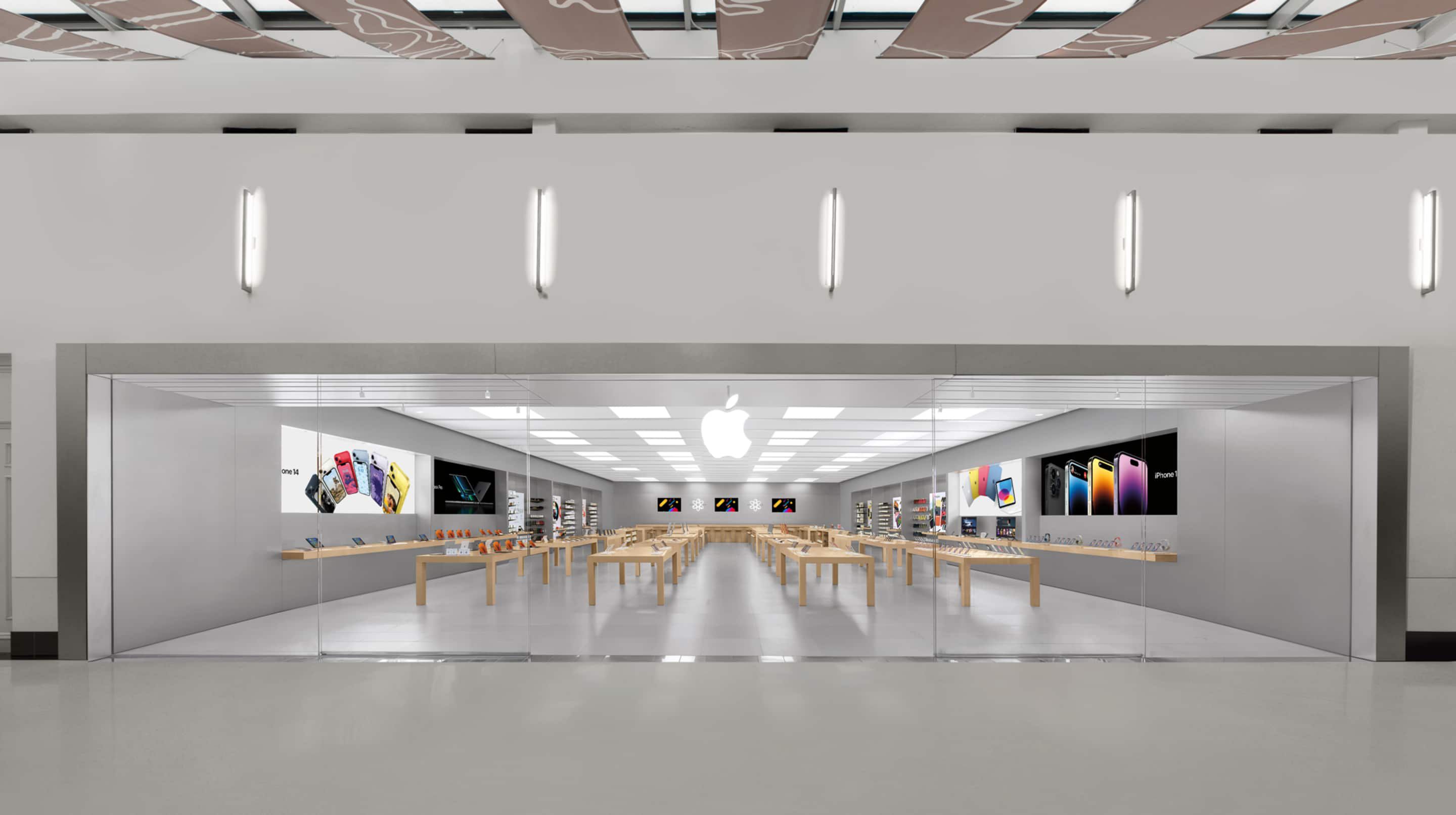
Apple will permanently close three U.S. retail stores in June, including its unionized Towson, Maryland location, with no replacement store planned there. The Trumbull, Connecticut and North County, California employees will transfer to nearby stores, while Towson workers are limited to applying for open roles under the collective bargaining agreement and may receive severance if no nearby store opens within 50 miles. The move is tied to declining mall conditions and has prompted the IAM union to allege possible union busting and consider legal action.
This is a low-dollar direct earnings issue for AAPL, but it is a high-signal governance event because it converts a routine store optimization into a labor-relations and brand narrative. The immediate P&L impact is immaterial, yet the second-order risk is that a unionized closure creates a template for organizing campaigns to frame future footprint rationalization as retaliation, raising the legal and reputational cost of even mundane real-estate decisions.
The most relevant exposure is not retail revenue leakage but margin mix and operating flexibility. If Apple is forced to keep union-facing locations open longer than economics justify, or to offer more generous severance/transfer terms in future closures, the company loses some of the optionality that has historically supported its retail channel as a marketing engine rather than a hard-margin business. That matters most in a weaker consumer backdrop, when mall traffic deterioration can turn into a larger, slower store-repositioning cycle across the sector.
Catalyst risk is front-loaded over the next 1-3 months: any NLRB filing, local political pressure, or media amplification could keep the issue alive into summer while Apple’s broader retail calendar heads into a product-launch period. The longer-term risk is precedent—if unions can successfully litigate store-closure terms, other consumer names with unionized footprints may face higher restructuring friction and richer severance assumptions. The market may be underappreciating that this is less about one store and more about the increasing cost of managing a hybrid union/non-union retail network.
The contrarian view is that the equity reaction should stay muted because Apple can credibly point to real estate deterioration and the limited economic weight of the affected stores. If management contains the narrative and avoids visible conflict with labor, this likely fades into noise. The bigger overreaction risk is in sentiment-sensitive retail peers and mall operators, where headlines like this reinforce the perception that lower-tier malls are still in secular decline.
AI-powered research, real-time alerts, and portfolio analytics for institutional investors.
Request DemoOverall Sentiment
mildly negative
Sentiment Score
-0.28
Ticker Sentiment
