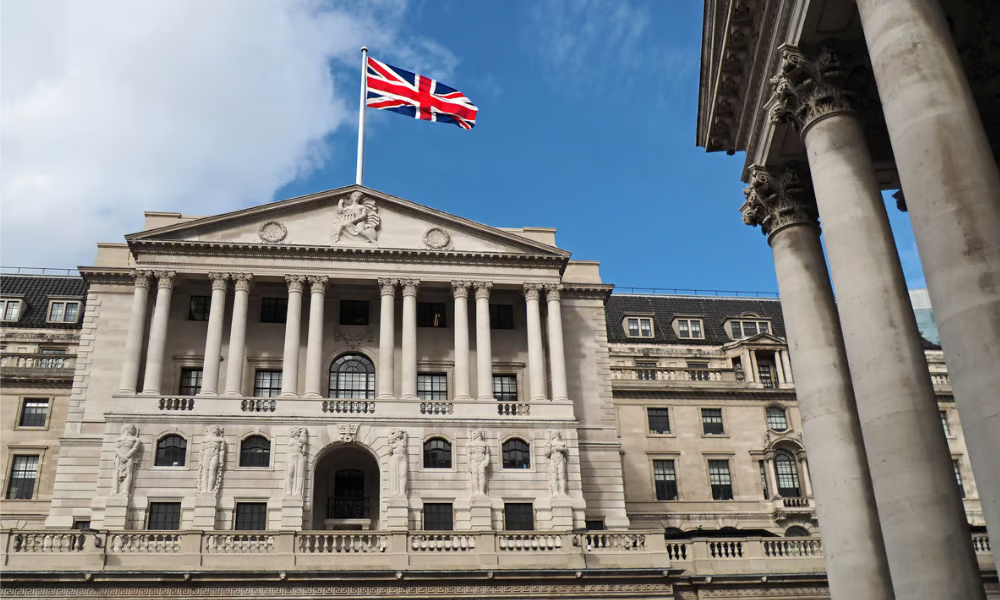
Bank of England officials warned that weakness in the fast-growing private credit sector could trigger a "private credit crunch" similar to the banking credit crunch seen in 2007-08. Sarah Breeden said higher bank capital and liquidity should help contain systemic damage, but a downturn could still create significant turbulence in UK and global markets. Governor Andrew Bailey also highlighted rising losses, US lender failures, and renewed loan slicing/tranching as signs of broader strain.
The market is still treating private credit as a localized underwriting problem, but the bigger second-order risk is a financing channel squeeze: once performance deteriorates, LPs become less willing to re-up capital, managers slow origination, and the weakest borrowers lose refinancing access simultaneously. That creates a self-reinforcing liquidity event rather than a slow spread widening, with the most acute pressure likely showing up first in covenant-lite corporate loans, NAV-backed facilities, and continuation vehicles that rely on benign marks.
The obvious losers are the levered credit intermediaries whose earnings are highly fee-sensitive and whose own balance sheets are exposed to asset marks. Banks with distribution/warehouse exposure should be less vulnerable than 2008, but they are still vulnerable to fee income dilution, delayed CLO issuance, and mark-to-market losses in adjacent structured products; the key transmission is not insolvency, it is a shutdown in new-risk transfer. Pension and insurance allocators with large private credit sleeves may also face a double hit: lower expected distributions just as they need liquidity for benefit payments, which can force secondary sales at discounts.
Timing matters: this is a months-not-days catalyst, and the trigger is likely a cluster of credit events rather than a single headline. Watch for rising amendments, payment-in-kind toggles, and borrower-side sponsor support as early signs that capital is being extended rather than repaid; if those become common, the market may still avoid a broad systemic event, but private-credit returns will reprice lower for 12-24 months. The contrarian view is that the alarm may be overstated for large banks but understated for valuation multiples in private markets: the risk is not a 2008-style bank run, it is a prolonged IRR compression that breaks fundraising and forces markdowns across the ecosystem.
The cleanest trade is to fade fee-dependent private markets exposure against defensive banks that benefit from flight-to-quality deposits and wider secured lending spreads. If the selloff in private-credit-linked assets deepens, the public comps should underperform first because they are the most liquid expression of the same asset class. That makes the opportunity less about shorting banks and more about shorting duration-sensitive, capital-light managers whose AUM depends on continuous inflows.
AI-powered research, real-time alerts, and portfolio analytics for institutional investors.
Request TrialOverall Sentiment
moderately negative
Sentiment Score
-0.45
