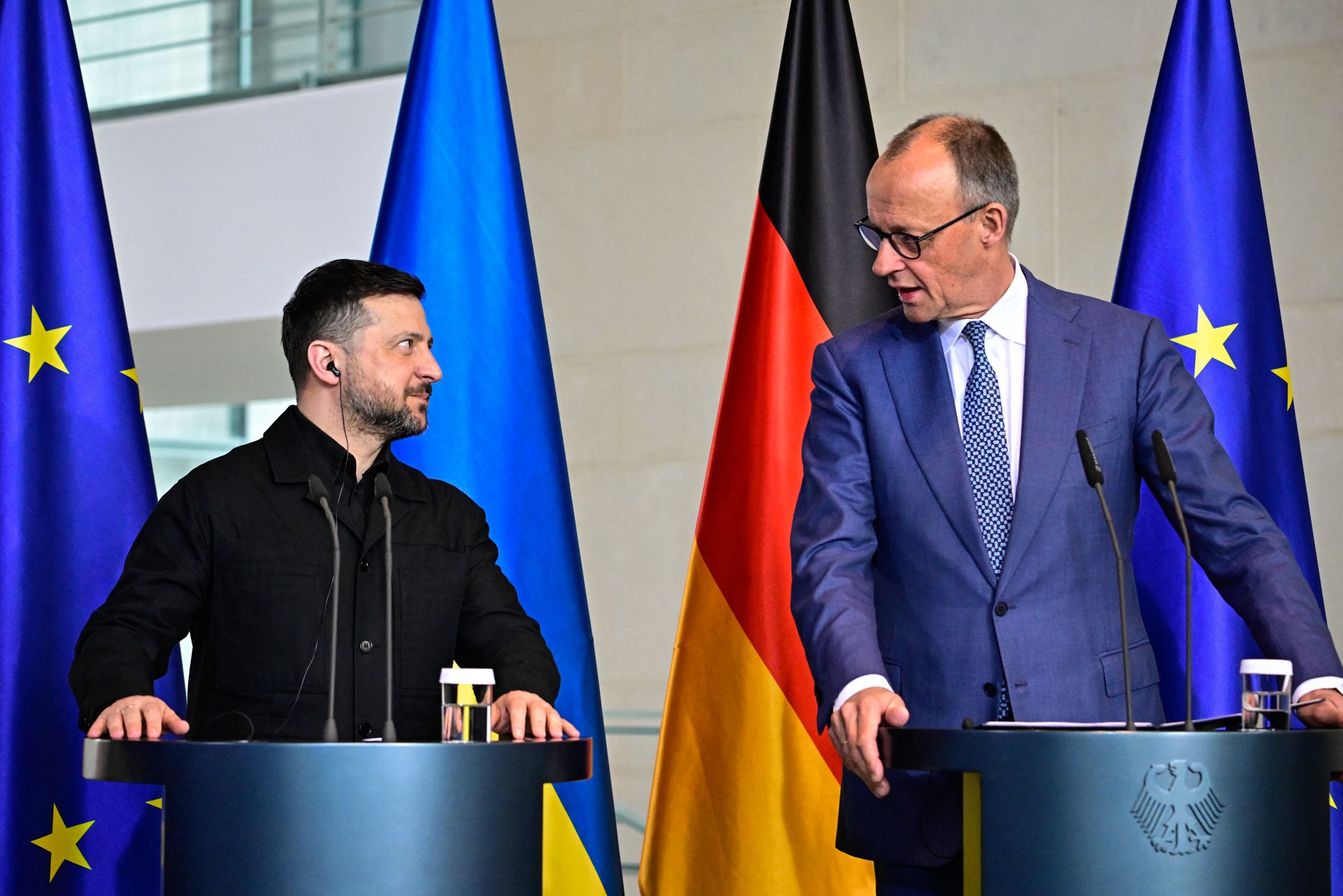
Ukraine and Germany signed a defense cooperation agreement on April 14, elevating bilateral ties to a strategic partnership and expanding collaboration in air defense, long-range weapons, drones, ammunition, and joint drone production. The deal also includes a memorandum on electronic exchange of military data, and Zelensky said 10 cooperation agreements were signed in total that day. The agreement reinforces Germany’s role as one of Ukraine’s key military backers and supports Kyiv’s broader effort to deepen foreign defense ties and grow its domestic arms industry.
The strategic value is less about the headline diplomacy and more about industrial scaling. Germany is effectively helping turn Ukraine into a distributed defense manufacturing node for Europe, which should compress unit costs in drones, EW, and munitions while reducing dependence on slow, centralized procurement cycles. The second-order beneficiary set is likely broader than traditional primes: niche autonomy, sensors, power management, secure comms, and additive manufacturing suppliers should see faster order conversion than legacy armor/aerospace names.
The biggest market implication is a gradual shift from one-off aid flows to recurring production contracts, which is much better for valuation quality. If even a fraction of this partnership becomes joint production inside Europe, it creates a real optionality layer for Ukrainian defense firms and partner-country subcontractors, while pressuring lower-mix legacy ammunition producers that lack software, ISR, or drone exposure. It also increases the probability that drone and counter-drone spend becomes structurally embedded in NATO procurement rather than treated as temporary wartime replenishment.
Risk is execution, not intent. The trade thesis only compounds over months if financing, export permissions, and technology transfer move from MoUs to signed purchase orders; otherwise the market can fade the news quickly. The tail risk is political: any ceasefire talk or election-driven budget pushback in Germany could delay capex and compress the duration of the rerating, while escalation could paradoxically delay deliveries if export controls tighten on sensitive components.
The contrarian angle is that the market may still be underpricing the supply-chain beneficiaries and overpricing the headline beneficiaries. Large European primes already trade on elevated backlog narratives, but the real asymmetric upside may sit in smaller dual-use electronics, drone component, and secure networking names that can scale without the same integration drag. If this becomes a repeatable European production model, the winners are the pick-and-shovel suppliers to distributed warfare, not the legacy platform makers.
AI-powered research, real-time alerts, and portfolio analytics for institutional investors.
Request TrialOverall Sentiment
mildly positive
Sentiment Score
0.35
