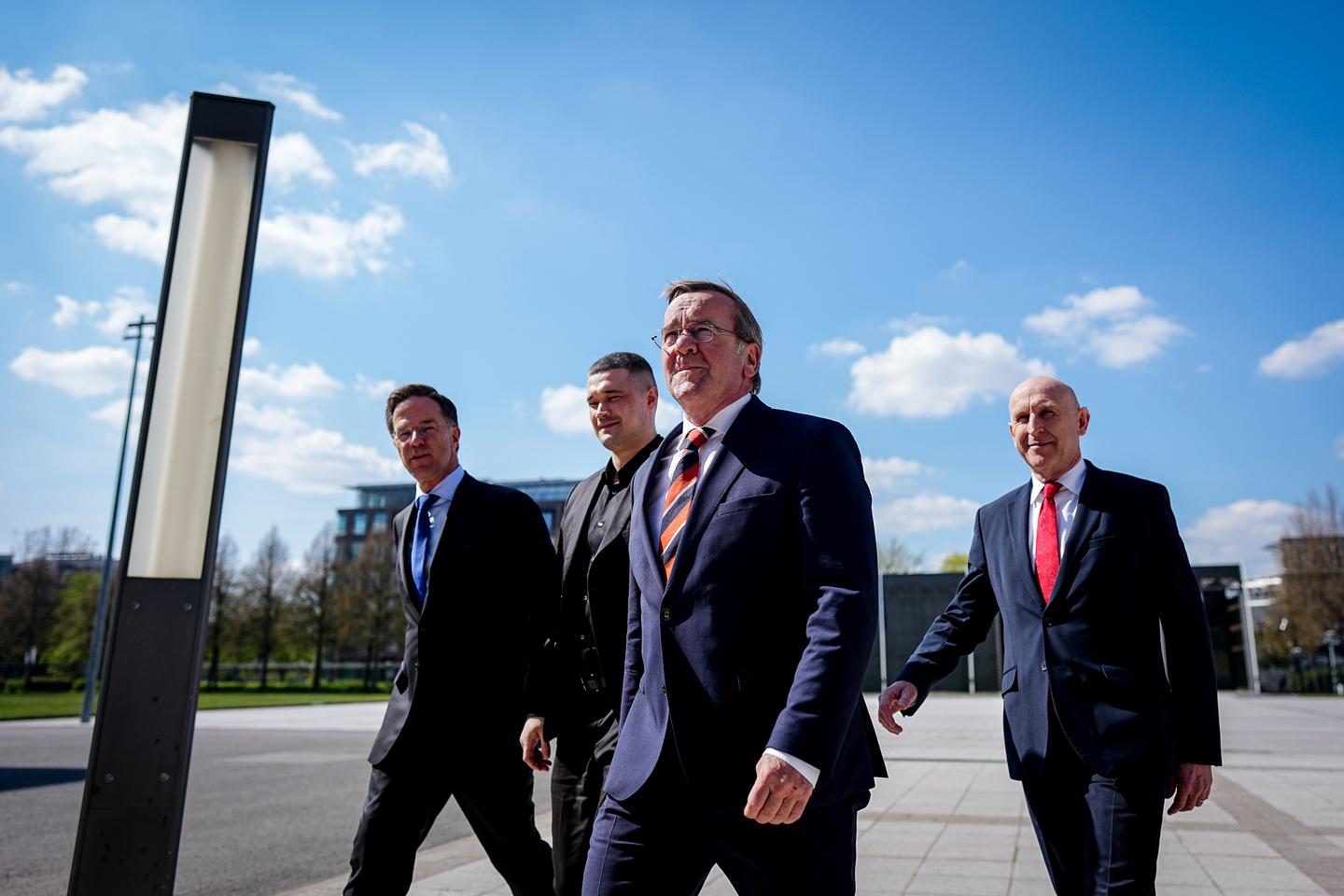
Germany’s defense minister Boris Pistorius presented the Bundeswehr’s first military strategy review on April 22, underscoring the country’s post-2022 rearmament shift under the 'Zeitenwende' framework. The article also notes he remains Germany’s most popular political figure and was retained as defense minister by Chancellor Friedrich Merz in May 2025. The piece is largely political and symbolic, with limited immediate market impact.
Germany’s defense repositioning is less a one-off policy headline than a multi-year industrial demand signal. The first-order winners are not just primes; the bigger edge is in the second-order beneficiaries that sit behind procurement bottlenecks: munitions, sensors, vehicle maintenance, secure communications, and power systems. If Berlin is moving from NATO-referenced planning to an explicitly national framework, that implies a higher domestic content bias, which should incrementally favor German/European supply chains over US-only exposure.
The market is likely underpricing the cadence risk: defense budget headlines tend to hit fast, but contract conversion is slow, meaning the trade works best over 6-24 months rather than days. The key catalyst will be whether the review is followed by binding appropriations and multi-year order books; without that, the move can fade into political theater. The most important tell is whether Germany locks in replenishment and readiness spending versus headline platform acquisitions, because replenishment supports recurring revenue and better visibility.
The contrarian view is that consensus is too focused on “Europe rearming” as a blanket bullishness. Capacity constraints, labor shortages, and permitting can create execution slippage that benefits incumbents with installed capacity while punishing late-cycle entrants and overhyped subcontractors. There is also a fiscal tradeoff: if higher defense outlays collide with weak growth, the market may rotate away from domestic cyclicals into defensives, limiting the broader macro uplift.
From a portfolio standpoint, the cleaner expression is long the picks-and-shovels defense complex against European industrial beta rather than outright index exposure. Optionality is attractive because the political premium can re-rate names quickly on procurement headlines, but the fundamental monetization should be staggered over several budget cycles. The best risk/reward is in names with backlog conversion, pricing power, and exposure to European replenishment rather than platform-heavy contractors dependent on export approvals.
AI-powered research, real-time alerts, and portfolio analytics for institutional investors.
Request TrialOverall Sentiment
neutral
Sentiment Score
0.05
