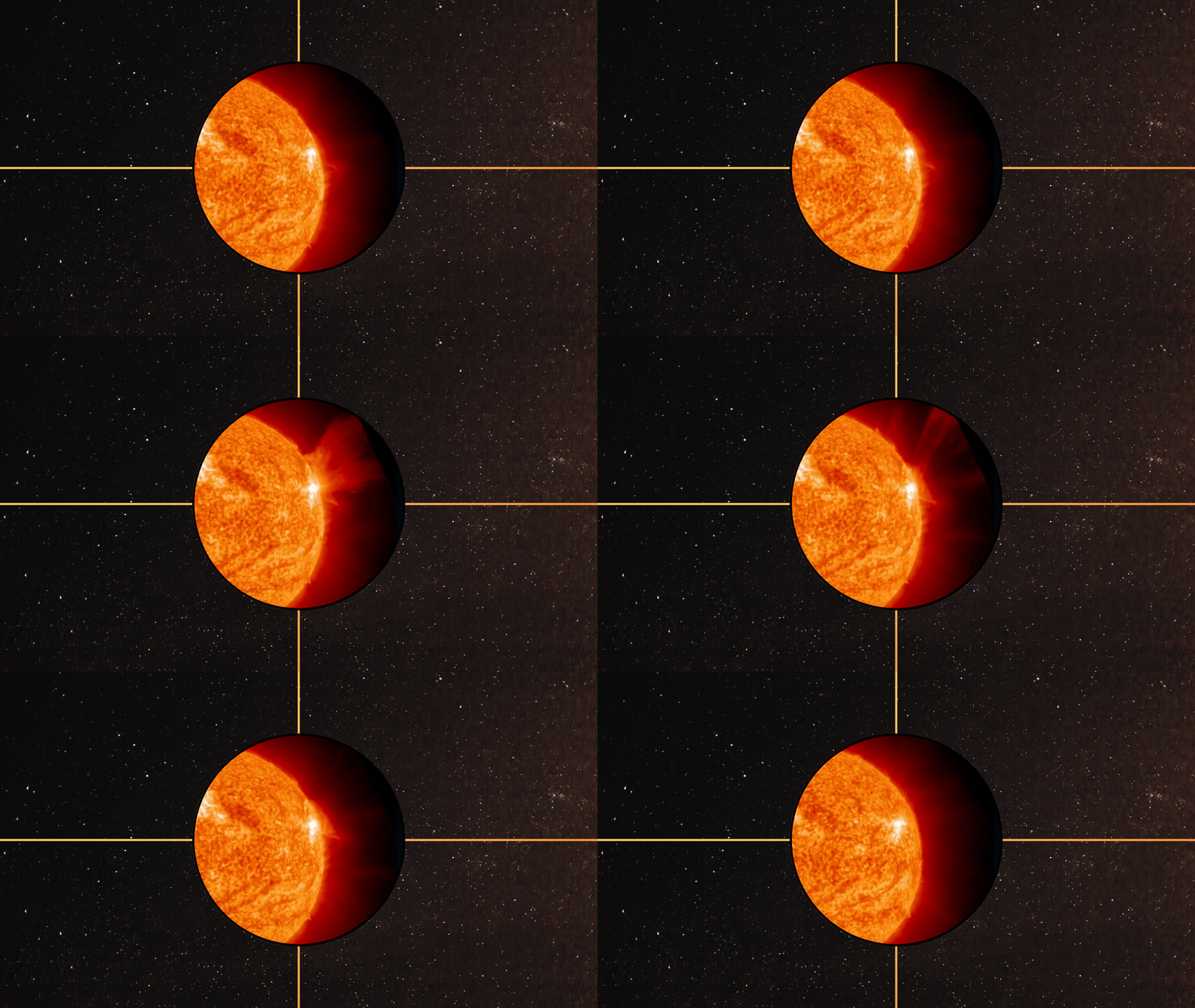
The sun produced two X2.5 flares within 7 hours, the strongest in 78 days, causing brief radio blackouts across the dayside of Earth. The first disrupted parts of the Pacific Ocean and Australia, while the second impacted East Asia. The eruptions may have been accompanied by CMEs, but any direct Earth impact appears unlikely, though a glancing geomagnetic storm remains possible.
The market implication is not “space weather” in the abstract; it is a very short-duration reliability shock to communication infrastructure. The first-order winners are operators with hardened terrestrial networks and resilient routing, while the losers are any business line that still depends on legacy HF radio for maritime, remote logistics, aviation backstop, or emergency coordination. The more important second-order effect is that repeated flare activity tends to push budget conversations forward for redundancy spend: satellite comms, software-defined radios, GNSS augmentation, and backup power all get incremental urgency after a high-profile blackout event.
For equities, the near-term alpha is in picks-and-shovels rather than pure-play “space” exposure. Space-weather headlines rarely move the broad market, but they can create a temporary bid for industrial and defense communication vendors, spectrum management, and critical-infrastructure cybersecurity if operators interpret this as a reminder that physical-layer outages cascade into digital disruption. Any glide path toward a glancing geomagnetic hit would matter more for utilities and pipeline telemetry than for consumer tech, because the failure mode is operational downtime, not demand destruction.
The contrarian view is that the move may be overread if investors extrapolate a one-week hazard into a multi-month earnings story. Unless the activity begins producing a CME trajectory aimed squarely at Earth, the economic damage is mostly nuisance-level and localized, while the spending impulse on redundancy is real but slow-moving. The better way to trade this is as an asymmetric catalyst: buy optionality on infrastructure resilience names, not headline beta to solar activity itself.
AI-powered research, real-time alerts, and portfolio analytics for institutional investors.
Request TrialOverall Sentiment
neutral
Sentiment Score
-0.05
