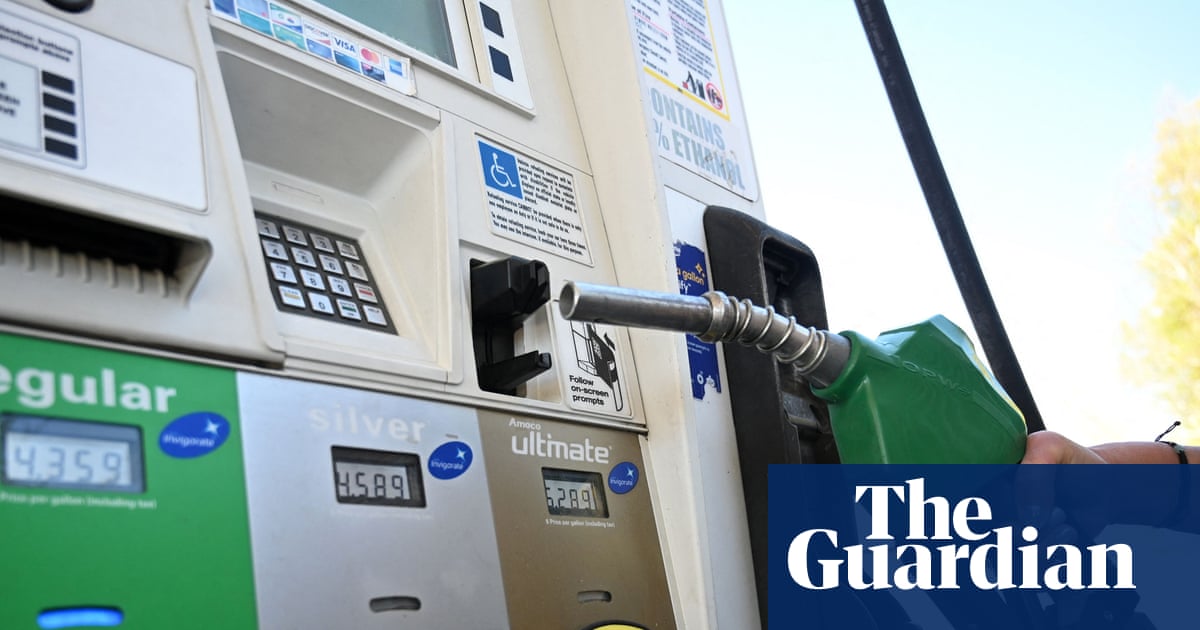
US average gasoline prices hit $4.23 per gallon, the highest since 2022, while Brent crude rose to $114.60 a barrel and was later trading around $119, up nearly 25% from the recent mid-April low. The article ties the spike to war-related disruption risk around the Strait of Hormuz, where transits fell to 35 last week from 78 the week before, versus about 130 per day pre-war. Higher fuel costs are pressuring airlines, with jet fuel up more than 70% since the start of the war in the US and nearly 84% in Europe, raising the risk of rationing and weaker travel demand.
The immediate winners are upstream energy, tanker/shipping, and refinery-dislocation beneficiaries; the losers are the rest of the transport stack and any consumer-facing business with weak pricing power. The more important second-order effect is not gasoline itself but the squeeze on embedded fuel surcharges, route economics, and inventory timing: airlines and parcel/logistics names usually see margin pressure before consumers fully feel the inflation impulse. In the next 2-6 weeks, the market will likely distinguish between firms that can reprice quickly and those with fixed forward bookings, which is where the largest earnings surprise risk sits.
The bigger macro risk is a two-stage hit: first, energy acts as a tax on discretionary spend; second, if prices stay elevated for several weeks, it starts to show up in staples, utilities, and inflation expectations, forcing yields higher and tightening financial conditions. That would be negative for duration-sensitive consumer discretionary, housing-adjacent names, and rate-sensitive growth more broadly even if oil itself stalls. The key catalyst window is days-to-weeks around any shipping disruption headlines; the medium-term reversal would require a credible de-escalation or a meaningful increase in non-Gulf supply, neither of which is likely to be quick.
The market may be underestimating how asymmetric this is for airlines: fuel is the biggest operating cost, and the combination of higher fuel plus softer vacation intent creates a brutal setup for margin compression and weaker load-factor leverage. At the same time, travel demand is not collapsing, so the first response is likely fee inflation and route cuts rather than volume collapse — which makes near-term P&L downgrades more likely than consensus expects. For consumers, the real issue is that a gasoline shock is visible enough to dent sentiment immediately, but slow enough to be absorbed in reported inflation with a lag, giving policymakers little room to react quickly.
Contrarian angle: the move may be overdone in the most crowded long-energy exposure if the blockade risk becomes priced as a binary geopolitical premium rather than a durable supply loss. If flows normalize even modestly, crude can give back a large portion of the spike fast because positioning is likely chasing headlines, not physical balances. The better expression is to fade the weakest end-demand beneficiaries and keep energy exposure selective, rather than assuming every oil beta name deserves to rally equally.
AI-powered research, real-time alerts, and portfolio analytics for institutional investors.
Request DemoOverall Sentiment
strongly negative
Sentiment Score
-0.55
Ticker Sentiment
