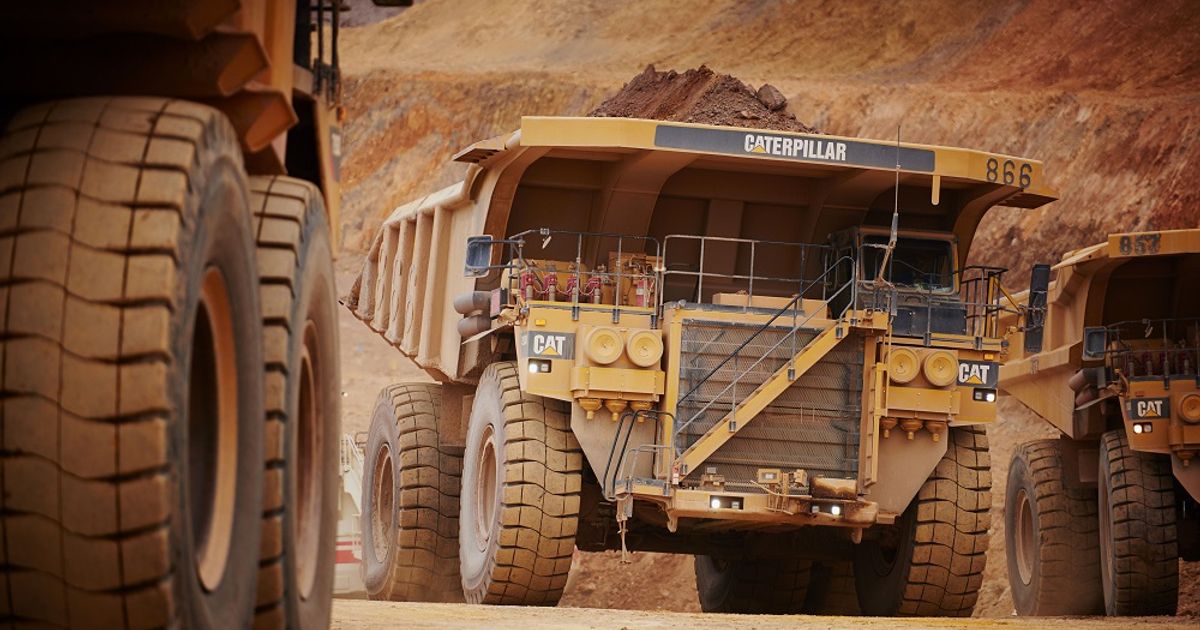
Rio Tinto reported flat underlying earnings of $10.9bn for 2025 as stronger copper and aluminium performance offset weaker iron ore pricing, sending its shares down ~4% amid a broader mining sell-off. Net cash from operations rose 8% to $16.8bn and consolidated revenue increased 7% to $57.6bn, while copper equivalent production climbed 8% (Oyu Tolgoi +61%) and copper underlying EBITDA more than doubled to $7.4bn; iron ore underlying EBITDA fell 11% to $15.2bn. Free cash flow fell 28% to $4.0bn as capex rose 28% to $12.3bn, net debt increased to $14.4bn after $9bn of bond issuance to fund the Arcadium acquisition, and the board maintained a $6.5bn dividend (402 US cents, 60% payout).
Market structure: The near-term losers are pure iron‑ore high‑beta names (Fortescue FMG, some BHP iron ore exposure) while copper/aluminium producers and traders (Freeport FCX, Glencore GLEN, aluminium majors) benefit from Rio’s outsized copper EBITDA gain (+>100%) and volume-led $2.9bn uplift. Pricing power is shifting marginally toward base metals: iron ore weakness (-6% realised to $90/dmt) signals softer China steel demand/supply rebalancing, whereas copper volume growth (Oyu Tolgoi +61%) mutes spot spikes but supports medium-term demand from electrification. Cross‑asset: mining equity weakness should widen CDS by 20–50bps, push AUD/GBP down vs USD in days, raise corporate bond yields (Rio issued $9bn) and lift equity option IV for 1–3 months.
Risk assessment: Tail risks include operational disruption at Oyu Tolgoi or Escondida, a sharper China slowdown that knocks iron ore below $80/dmt, or a credit downgrade if net debt (now $14.4bn) grows while FCF stays near $4bn (FCF/interest and net debt/EBITDA should be watched; trigger: net debt/EBITDA >2x). Time horizons: immediate (days) volatility; short term (weeks–months) driven by China data and copper/iron spot moves; long term (quarters–years) hinges on capex execution and Arcadium integration. Hidden dependencies: dividend maintenance (60% payout) constrains flexibility and raises dependency on capital markets for M&A financing.
Trade implications: Tactical: favour relative exposure to copper/aluminium over pure iron ore for 3–12 months; use pair trades (long RIO vs short FMG/BHP iron-heavy tranche) sized 2–4% portfolio with 3–6 month horizon. Use options: buy 3‑month put spreads on RIO to hedge 8–12% downside and buy 6–12 month call spreads on FCX/S32 to capture copper secular upside. Rotate 3–5% from spot iron‑ore miners into diversified/commodity‑trading names (GLEN) and physical/ETF copper (COPX/DBB) while keeping cash buffer for volatility.
Contrarian view: The market may be over-penalising diversified large caps for iron weakness while ignoring structural copper fundamentals and Rio’s strong operating cash flow (+8% to $16.8bn). The earnings “flat” headline masks portfolio mix — copper EBITDA >$7.4bn vs iron ore $15.2bn — and the dividend signal suggests board confidence, making a measured contrarian buy on dips reasonable if debt metrics remain stable. Historical parallels (post‑China‑softness rebounds) suggest a 3–9 month mean reversion if China stimulus or supply disruptions occur; downside is amplified if management keeps high payout while capex/M&A keeps leverage rising.
AI-powered research, real-time alerts, and portfolio analytics for institutional investors.
Request DemoOverall Sentiment
moderately negative
Sentiment Score
-0.35
Ticker Sentiment
