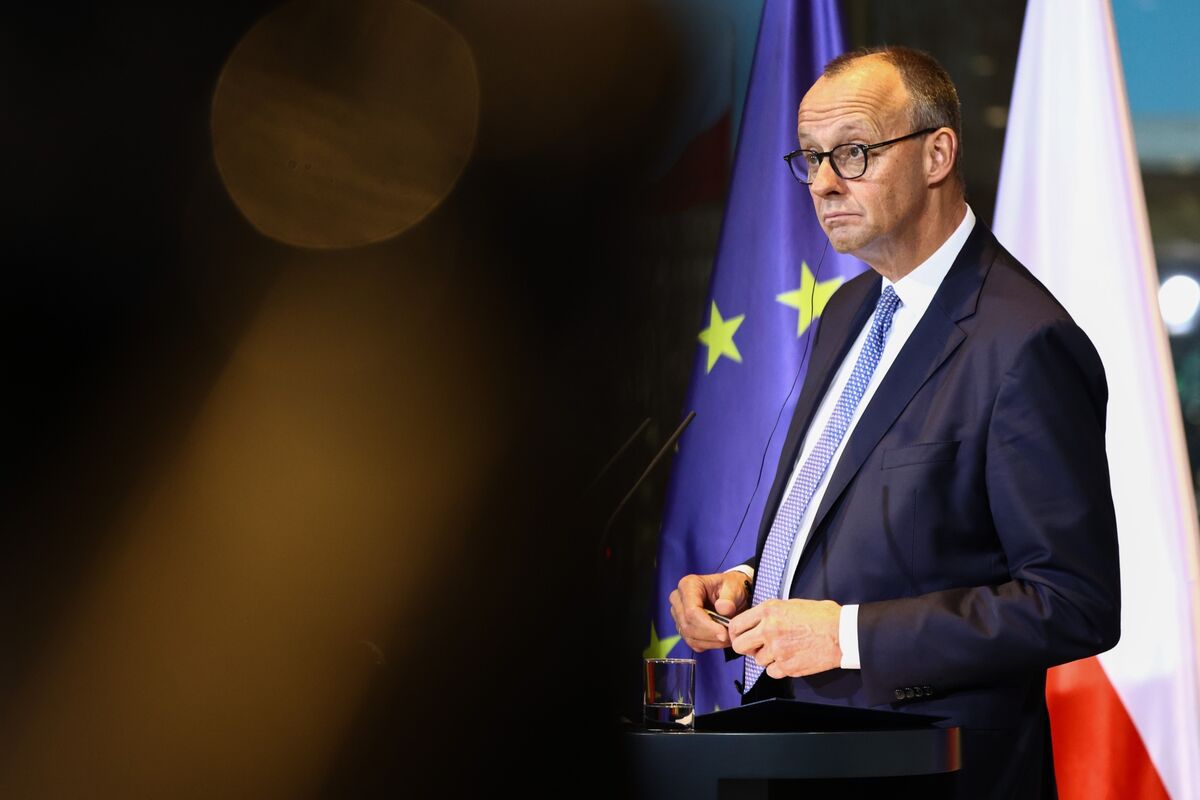
German Chancellor Friedrich Merz and European Commission President Ursula von der Leyen are pressing Belgium to accept an EU proposal to use Russian central bank assets frozen in the EU to fund a large loan to Ukraine. Belgian Prime Minister Bart De Wever is resisting on grounds Belgium could be liable if Russia sues; roughly €210 billion ($245 billion) of Russian assets are immobilized on EU soil, with the majority held at Euroclear in Brussels. Belgium's opposition threatens to stall the scheme and heightens legal and political risk around the treatment of sovereign frozen assets and EU fiscal support for Ukraine.
Market structure: Redirecting frozen Russian central bank assets (~€210bn) toward Ukraine would shift large, latent sovereign collateral into fiscal support — winners: EU defense/aid contractors and USD/CHF/gold as safe havens; losers: Belgian political risk-sensitive assets (Belgian sovereign bonds, local banks) and custodial intermediaries (Euroclear counterparties) due to legal/operational contagion. Pricing power shifts toward sovereigns funding Ukraine (France/Germany) and away from peripheral EU credit if litigation risk raises risk premia. Cross-asset: expect Euro underperformance, Bundesbond safe-haven tightening, peripheral spreads +30–80bp if litigation escalates, and a near-term ~2–4% bump in gold.
Risk assessment: Tail risks include an adverse international court ruling forcing EU compensation (low probability, high impact), or Russian countersanctions freezing non-EU assets; expect legal disputes to unfold over 3–12 months with potential large volatility spikes around EU Council votes (next 30–90 days). Hidden dependencies: Euroclear’s central role creates concentration risk — an operational freeze or reputational hit could impair repo markets and short-term liquidity in EUR-denominated funding. Catalysts: Belgian parliamentary decision and EU legal opinion; negative judicial precedent would widen EUR credit spreads sharply.
Trade implications: Direct plays — establish modest defensive longs: +2–3% position in German Bund futures (EUREX FGBL) and +1–2% in GLD to hedge geopolitical upside; underweight Belgian financials (e.g., KBC.BR) by 2–3%. Relative trades — pair trade long German bank CDS protection vs short peripheral bank CDS (long DB CDS vs short IT or BE CDS) to exploit safe-haven flight-to-quality. Options — buy EUR/USD 3M puts (delta ~0.25) as asymmetric hedge; sell short-dated peripheral sovereign call spreads to collect premium if spreads widen temporarily.
Contrarian angles: Consensus treats this as an EU political inevitability; that's underpriced — Belgian legal liability concerns are substantive and could delay or water down any seizure for 1–2 quarters, limiting immediate market disruption. Historical parallels (asset freezes in 20th-century sanctions) show protracted litigation often reduces recoverable value but avoids systemic seizures, implying assets may be monetized via structured loans, not outright confiscation — favor strategies that profit from prolonged legal uncertainty rather than immediate binary outcomes.
AI-powered research, real-time alerts, and portfolio analytics for institutional investors.
Request DemoOverall Sentiment
neutral
Sentiment Score
-0.10
