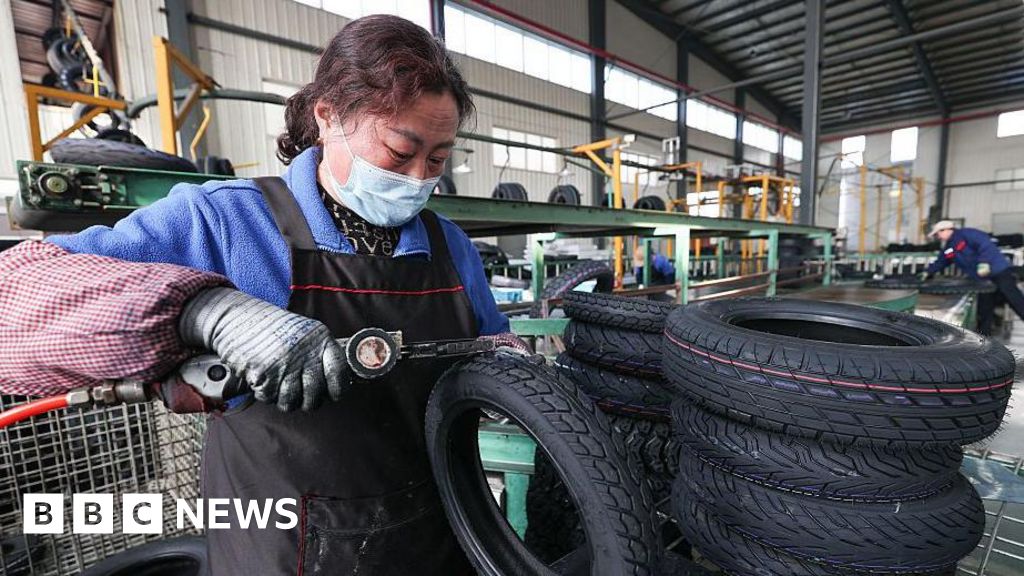
China's exports jumped more than 20% in Jan-Feb (combined), surpassing forecasts and putting the country on track to exceed last year's record trade surplus. Exports to Europe rose 27.8% and to ASEAN nearly 30%, while shipments to the US fell over 10% amid Trump's tariffs; Beijing set a 2026 growth target of 4.5%–5% (down from 5% in 2025). The surge supports export-led growth despite weak domestic consumption and a property slump, but upcoming Trump-Xi talks and Middle East-driven energy market disruptions add geopolitical and market risk.
The headline export strength has produced a tactical re-routing of global order flows: procurement managers are shifting shipments away from the US corridor toward Europe and Southeast Asia, creating near-term capacity stress on container tonnage, ports and regional logistics providers. That creates a two- to six-month window where spot freight rates, short-term charter rates and port handling premiums can spike even if factory output normalizes — a classic transit-bottleneck squeeze rather than a persistent demand shock.
Second-order winners are the hardware contract-manufacturers, EMS suppliers and semiconductor supply-chain participants that can flex capacity into Europe/ASEAN channels quickly; losers include US-focused importers and any business model that relies on low-margin, tariff-exposed access to the US consumer. A material trade surplus swing also increases the probability of pro-cyclical FX pressure on the RMB, complicating PBOC choices and raising the odds of either capital-controls/tightening or stepped-up liquidity injections to smooth volatility.
Key catalyst windows: the upcoming bilateral summit (~days-to-weeks) can prompt rapid policy de-escalation that would normalize flows and collapse the freight premium, while any escalation in tech export controls or new tariffs (months) would entrench rerouting and favor non-US end markets. Monitor short-lead indicators — port throughput, container re-positioning rates, freight derivatives, export orders in the next two reporting cycles — for early confirmation or reversal.
Tail risks include a sharp correction in global electronics demand or an energy-driven growth slowdown from the Middle East shock; either would reverse the export arbitrage quickly and leave stretched logistics names exposed to a >50% drawdown. Conversely, persistent domestic weakness in China means export channels remain a primary growth lever, so positions that capture transient logistics/factory reallocation are higher-probability, shorter-duration plays than structural China-equity longs.
AI-powered research, real-time alerts, and portfolio analytics for institutional investors.
Request DemoOverall Sentiment
mildly positive
Sentiment Score
0.25
