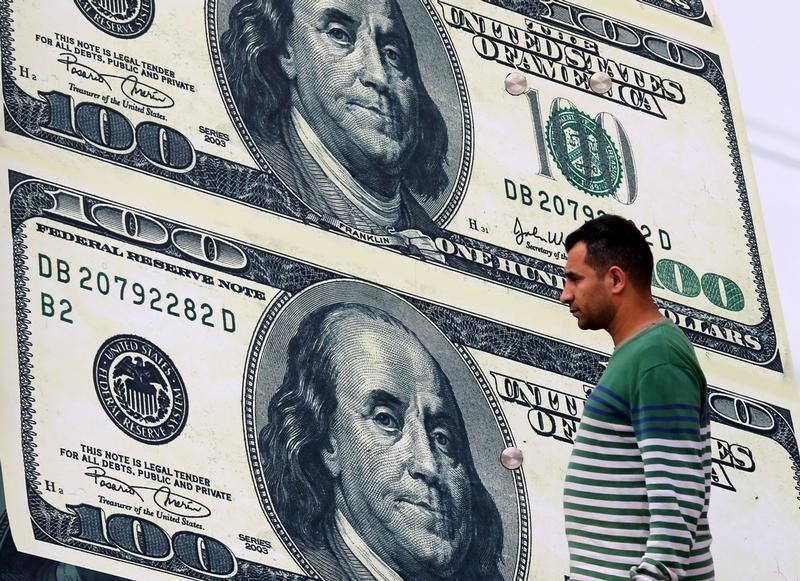
U.S.-Iran peace talks fell through, with Washington preparing a blockade of Iranian ports and the Strait of Hormuz, triggering risk-off flows into the dollar. Most Asian currencies weakened, including the AUD (-0.3%), JPY (+0.3% USD/JPY), CNY (+0.1% USD/CNY), KRW (+0.2% USD/KRW), SGD (+0.2% USD/SGD), and INR (+0.1% USD/INR). Last week’s hotter U.S. CPI also reinforced expectations that the Fed may keep rates unchanged longer, while traders now await U.S. PPI and key China/Asia growth data.
The market is pricing a classic first-order risk-off impulse, but the more durable setup is a cross-asset inflation shock with uneven transmission. If energy logistics are disrupted even modestly, the biggest marginal losers are EMs with structural fuel deficits and current-account sensitivity; India is the cleanest near-term underperformer, but the second-order hit is to manufacturing-heavy Asian exporters via higher input costs and softer global trade demand. The more interesting winner is not just the dollar broadly, but USD against low-yielding Asia FX where policy flexibility is limited and capital flight can accelerate quickly. The key catalyst path is the data calendar colliding with geopolitics. Inflation prints over the next 1-2 weeks can keep front-end rates elevated even if the conflict does not broaden, which means the dollar can stay bid without needing a full military escalation. That creates a bad regime for rate-sensitive growth assets: higher real yields plus energy pass-through compress multiples while also raising the odds of defensive factor leadership. The market may be underestimating how fast a contained blockade narrative can morph into a global macro trade if shipping insurance, rerouting, or inventory hoarding starts to show up in freight and refined product spreads. Conversely, if there are no follow-on strikes and China/U.S. data softens, the move can reverse quickly because positioning will likely be crowded into long USD and short EM FX. The asymmetry is best expressed tactically, not as a structural thesis: headline risk is high over days, but the true P&L driver over months is whether energy prices feed into sticky services inflation and delay easing cycles. The contrarian angle is that the initial FX reaction may overstate medium-term damage outside the most energy-vulnerable importers. If the blockade is narrowly enforced and supply chains adapt, commodity exporters and shipping-adjacent equities could reprice less negatively than consensus expects, while the U.S. dollar rally may fade once markets realize the Fed’s reaction function remains data-dependent rather than geopolitics-dependent.
AI-powered research, real-time alerts, and portfolio analytics for institutional investors.
Request DemoOverall Sentiment
moderately negative
Sentiment Score
-0.35
