


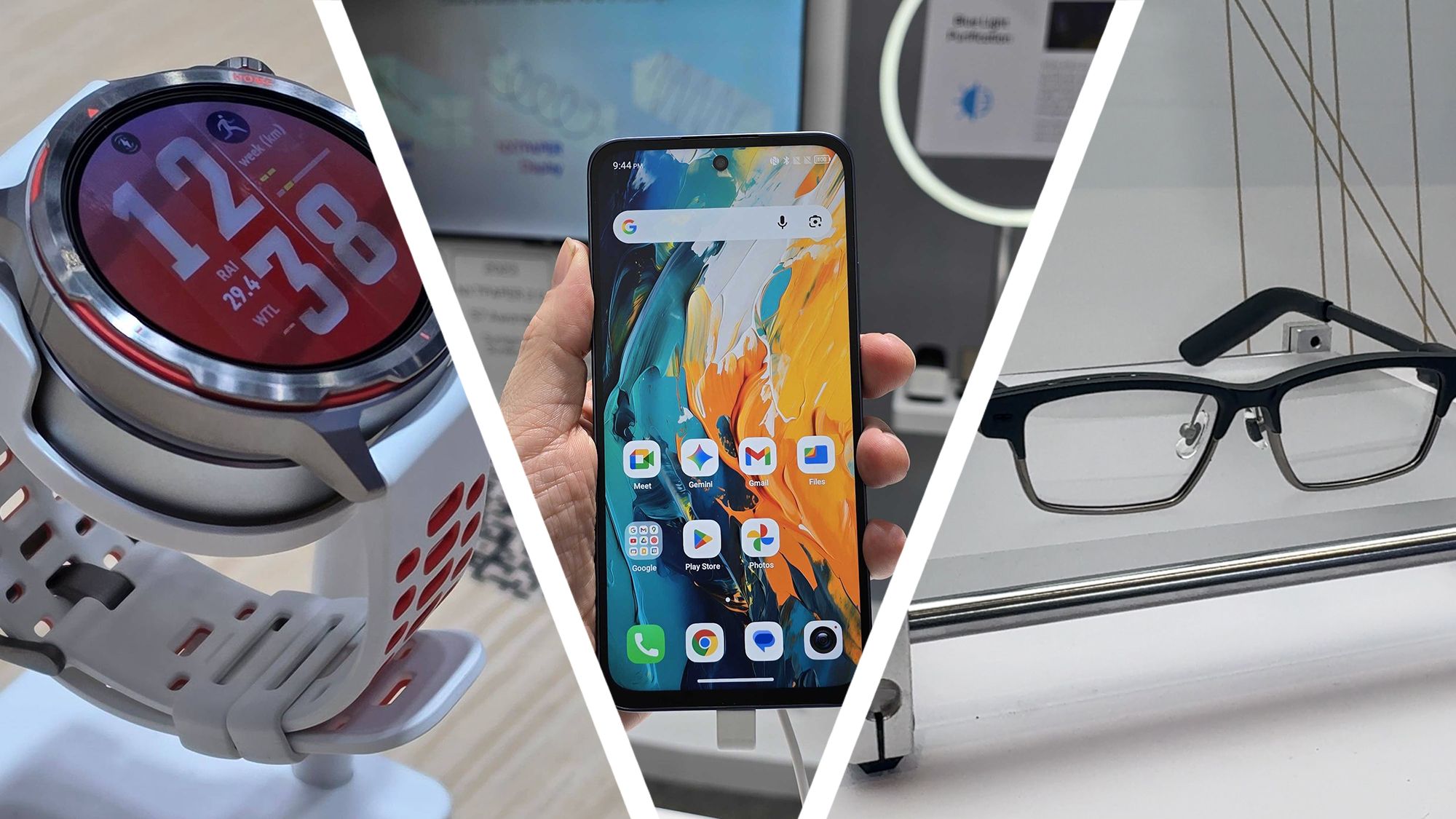
At MWC 2026 vendors showcased a range of consumer hardware innovations that are likely to affect competitive positioning in smartphones, wearables and storage rather than near-term market fundamentals. Highlights include TCL's NXTPAPER 70 Pro with a next-gen color e-paper display and stylus support; Xiaomi's globally launched Watch 5 running Wear OS 6 with access to Gemini AI and a 1.54-inch, 1,500‑nit circular AMOLED; XGIMI's MemoMind One smart glasses with dual-eye displays and integrated AI; Biwin's CL100 Mini SSD measuring 15 x 17 x 1.4 mm offering up to 2TB and PCIe 3.0-like speeds; Oukitel's WP63 rugged phone with a 20,000 mAh battery; and Huawei's Watch GT Runner 2 (1.32-inch AMOLED). An Ericsson–Intel push on 6G was also emphasized, underscoring continued investment in next‑generation connectivity—these developments signal incremental competitive and supply-chain implications but are unlikely to be major market-moving events on their own.
Market structure: MWC reveals accelerate demand for niche hardware (e-paper phones, micro SSDs, smart glasses) and early-stage 6G capex. Direct beneficiaries: semiconductor and network-equipment suppliers (INTC, ERIC) and high-density NAND/SSD suppliers; losers are mature-margin consumer incumbents if competition compresses ASPs (AAPL wearable revenue risk ~1–3% headwind over 12–24 months). Expect modest share shifts (1–5% revenue redeployment across device OEMs) and higher capex intensity boosting semi cyclical demand next 12–36 months.
Risk assessment: Tail risks include geopolitics (US-China bans hitting Huawei supply chains) and a 6–12 month oversupply from accelerated 6G investment causing a semiconductor inventory correction (-10–20% rev shock to suppliers). Near-term (days–weeks) moves will be news-driven; medium-term (3–12 months) driven by product rollouts; long-term (12–36 months) by standards adoption and capex cadence. Hidden dependency: small-form SSD adoption hinges on NAND wafer pricing and controller supply, not just demand.
Trade implications: Primary trade: bias toward select semis and infrastructure — establish durable positions in INTC (see specifics) and communications-equipment suppliers; hedge consumer hardware exposure via AAPL downside protection. Use options to buy time (12-month LEAP calls on INTC; 3–6 month put spreads on AAPL). Rotate 3–5% portfolio weight from consumer hardware into semis/networks over next 3 months.
Contrarian angles: Consensus underestimates fragmentation gains for low-cost OEMs (Xiaomi, TCL) in wearables and e-paper niches; market may be underpricing small-form SSD TAM growth (addressable 2–3% of global external storage in 24 months). Reaction is underdone for infrastructure suppliers and marginally overdone against AAPL — favor targeted long semis/infra vs tactical AAPL protection. Historical parallel: early 5G capex surge (2018–20) created a 24–36 month supplier cycle with eventual consolidation; expect similar dynamics for 6G.
AI-powered research, real-time alerts, and portfolio analytics for institutional investors.
Request TrialOverall Sentiment
mildly positive
Sentiment Score
0.30
Ticker Sentiment
