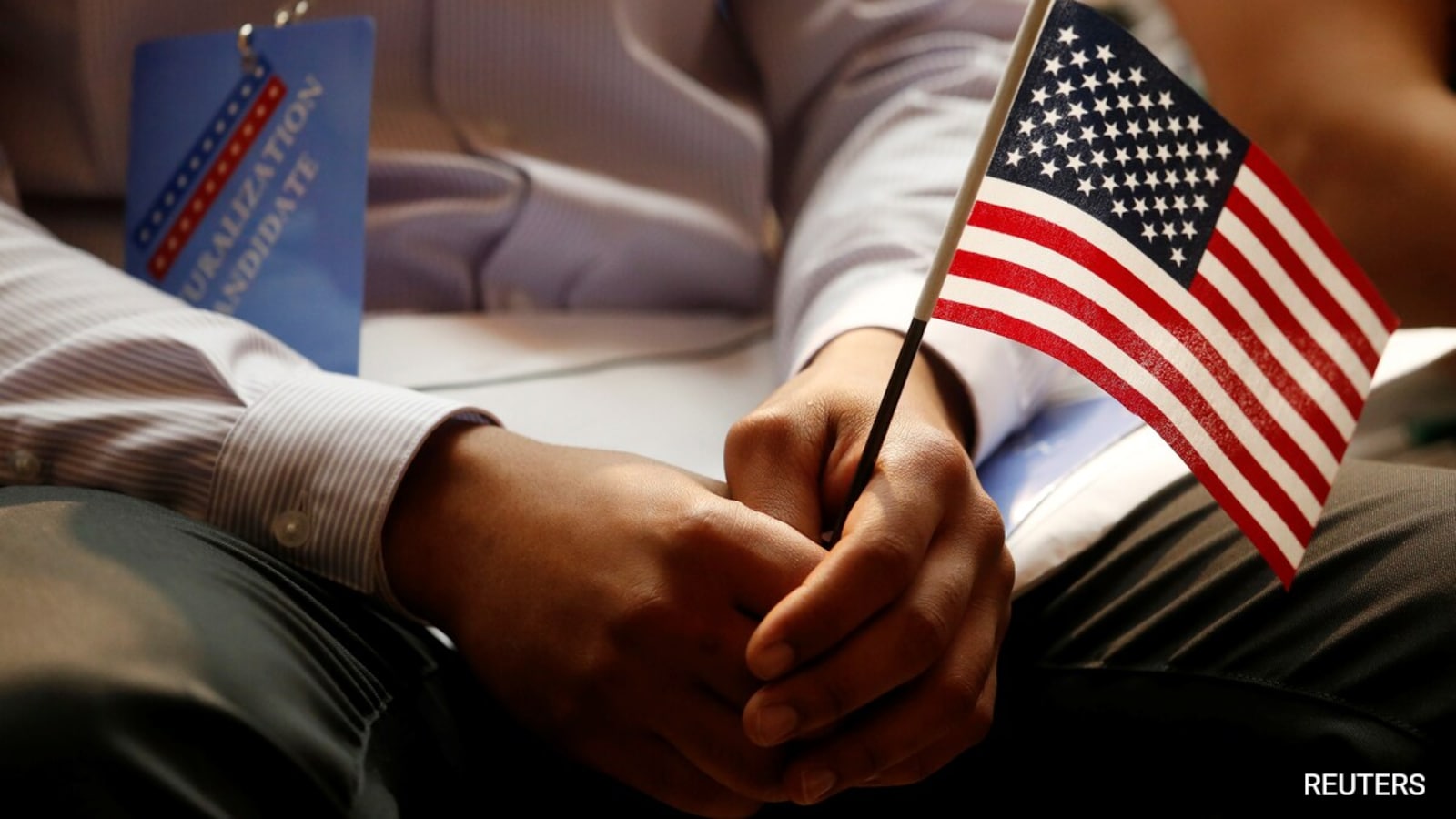
USCIS has issued a new policy memo requiring most temporary visa holders seeking Green Cards to apply through consular processing abroad, limiting Adjustment of Status to exceptional cases. The rule affects students, tourists, and temporary workers in the US and is intended to reduce overstays and enforce original immigration law intent. The change is policy-significant but is unlikely to have a broad immediate market impact beyond immigration-adjacent sectors and labor-sensitive industries.
This is not a broad macro shock, but it is a meaningful friction increase in one of the highest-beta labor allocation channels in the US: international students, early-career STEM workers, and temporary professionals. The first-order effect is administrative delay; the second-order effect is a tighter conversion funnel from temporary status to permanent residency, which should reduce the expected value of US-based career planning for foreign talent at the margin. Over 6-18 months, that can lower the attractiveness of US universities and employers versus Canada, the UK, Australia, and select Asian hubs, especially for applicants who view post-study immigration optionality as part of the ROI calculation.
The most exposed businesses are not the obvious ones; it is the ecosystem that monetizes the “study, work, stay” pathway. US higher-ed institutions with heavy international enrollment, student housing, test prep, education agents, and visa-adjacent professional services face a subtle but durable demand headwind if prospective students discount the probability of remaining in-country after graduation. In labor markets, the policy can slightly increase wage pressure in tightly supplied STEM and healthcare-adjacent roles by reducing the ease of status transitions, though the effect will likely be gradual because existing pipeline cohorts are already in the system.
The main risk to the thesis is that the change functions more as a deterrent than a hard constraint: if approvals remain case-by-case and processing is slow, behavior changes immediately even if actual denials are limited. The reversal catalyst would be court injunctions, operational bottlenecks at consulates, or business lobbying from universities and large employers if talent recruitment frictions become measurable in hiring conversion rates. In the near term, the market should treat this as a sentiment and flow issue rather than an earnings event; the bigger P&L impact emerges only if enrollment yield data, H-1B applicant quality, or international student visa demand weakens over the next 2-3 admission cycles.
AI-powered research, real-time alerts, and portfolio analytics for institutional investors.
Request DemoOverall Sentiment
mildly negative
Sentiment Score
-0.15
